‘hoy
Throughout history, stories have been told of good and evil. Two halves of the same coin. A villain goes out to disrupt the status quo, and a hero rises to stop them. This can be seen in any media and is a concept that everyone is intimately familiar, no matter race, creed or language, good vs. evil is overused for a good reason. Video games are no exception, For every Mario there’s a Bowser to fight, Megaman has Dr. Wily, and Link (sometimes) has Ganondorf. You start the game and gather your gumption to fight the good fight and send evil packing. but what happens after happily ever after? What future awaits the hero once they’ve had their time in the limelight? Not many properties go into this detail, but the ones that do often leave things very bleak. But before I get into things,
SPOILER WARNING FOR THE FOLLOWING GAMES/PROPERTIES, you’ve been warned.
- Ni No Kuni: Wrath of the White Witch and Ni No Kuni: The Movie
- Fire Emblem Binding Blade
- Legend of Zelda Majora’s Mask
With that out of the way, let’s get into it with the first on the docket, Ni No Kuni.
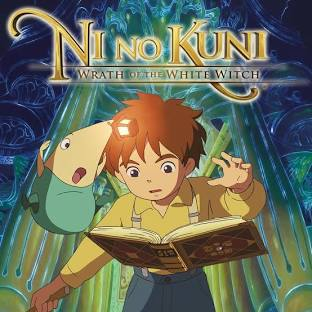
Released by Level-5, it was initially a Japan only game called Ni No Kuni: Dominion of the Dark Djinn in December 2010 and led to a remake of sorts that was released internationally as Ni No Kuni: Wrath of the White Witch. This game and it’s sequel were put up by yours truly between my game trade with Mr. Cosmia, and his opinions on it were fairly favorable, praising the unique artstyle provided by Studio Ghibli and the myriad of tameable familiars that dot the game’s various environs, taking note of the very aesthetically pleasing sewers. You play as Oliver, a young boy in Motorville (an analogue for 1950’s Detroit, Michigan) who lost his mother to a heart attack. Devastated at losing his beloved parent, his tears awaken a stuffed toy that his mother gave him known as Mr. Drippy, and the two set off on a quest to hopefully bring back Oliver’s mom.
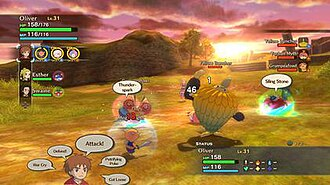
It truly is a unique take on an RPG, with so much charm and a unique battle system akin to Pokémon, but that’s not what we’re talking about. Following the battle against the titular White Witch, Oliver elects to return to Motorville and resume a normal life (which, is the wrong choice, but he’s a kid, maybe a mundane life is what he wants as opposed to spending his days fighting sentient piles of bananas and taking orders from obese anthropomorphic felines). Beyond this point though, we never really know what exactly happens to Oliver, but the movie gives a few hints.
Right at the very start of the film, we see an old man thrusting his cane in the air, performing very specific gestures and thrusts to no avail. A nearby nurse expresses concern for him, but he brushes her off stating that he’s just invoking some magic. She tries to bring him down from atop the box he’s standing on, but he grumpily tells her off. He then explains he’s trying to cast “gateway” (the first spell you ever use in the first game as a matter of fact) and open a portal to another world. He’s a minor character that’s largely separate from the rest of the narrative, not even given a name but he does serve one role in the film.
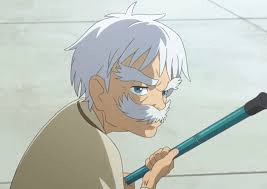
When Yu (one of the main characters) is about to give up, this old timer wanders onto the scene, musing that using Gateway takes a while to do at his age. He then presents his cane to the young hero after testing his resolve, which turns into Mornstar a legendary weapon in Ni No Kuniverse, sometimes a wand, mostly taking the form of the sword) and then takes his leave. While the movie doesn’t outright say that it is the protagonist from the first game, the similarities are too apparent to ignore.
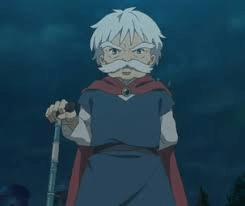
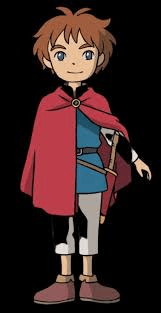
Same cloak, same tunic, same jewel and even the same eye color and hairstyle. And honestly, I like that they don’t even say it but fans of the series can pick up on it. So many movies beat you over the head with “remember this from the source material!” but no, this movie adds things in and moves on, leaving the audience to get the reference or appreciate the details. But back to the topic at hand, because I could go all day. What does this say about the young wizard who set out to save his mother’s life once all was said and done?
Short answer: not much.
We learn next to nothing between the game and movie, rightfully so because the movie isn’t focused on telling the old man’s story. That being said, we can extrapolate some bits of info on what likely happened.
At some point after the events of the first game, Oliver returns to Motorville having matured after venturing through the other world and gaining the courage to confront whatever comes his way. He elects to burn/tear up the Wizard’s Companion (basically an in universe guidebook) and scatter them about his house as evidenced by Ni No Kuni 2’s DLC and swears off magic to live a normal life. Given the setting and what happened in the first one, he likely loses the house and has to move in with someone as even if he can fight evil, he’s still 10/11 at this point and can’t get a job in 1950’s Detroit. He and Phil eventually go off to college, major in mechanics and build the Philmobile that they created at the start of the game.
Life after college is where things get fuzzy, as he eventually has to leave the U.S for some reason and move all the way to Japan. My guess is that he was drafted into war (presumably Vietnam?) and was horrified at what he saw there. Swearing off the country of his birth he fled on the first flight out of there and ended up in Japan, where the ravages of time eventually got to him. And as he got older, his talks of another world laden with cat kings, fairy folk and dragons were becoming less and less like fanciful tales from an imaginative young man and looking more like crazed ramblings of a man losing his mental functions. Trapped in the hospital he knows of only one way out: Gateway. But even doing that raises suspicion from doctors and nurses.
Honestly, a pretty bleak existence for someone so kind and powerful. His story has him fighting literal nightmares and fixing mended hearts only to end up in a hospital in the real world. Glad he got a happy ending through Gateway shenanigans. But another hero isn’t so lucky, and that is Eliwood, hailing from the Fire Emblem franchise.
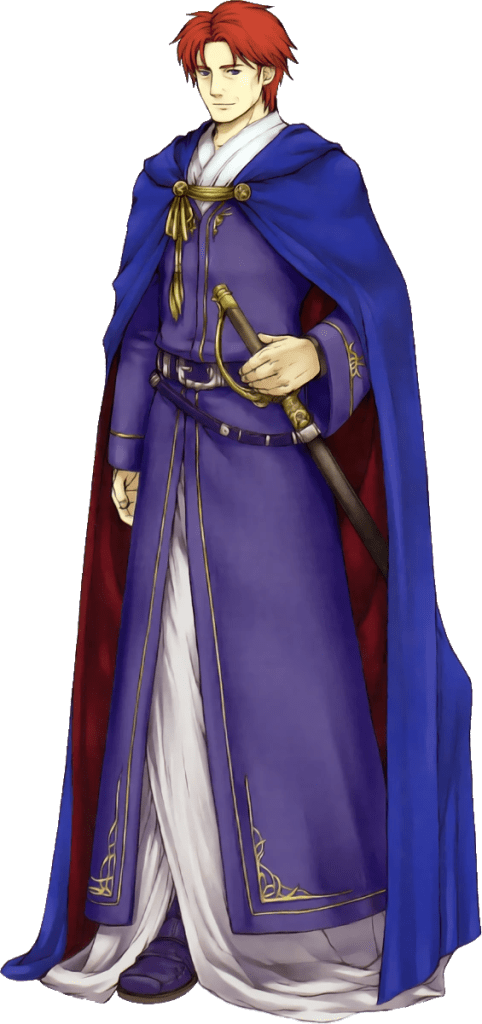
Eliwood is a strange case for a protagonist in that he was an NPC first, then a playable lord in the game’s “sequel” (It’s more a prequel, but it definitely is an improvement compared to Binding Blade, as Mr. Cosmia can attest). During the events of his game (Blazing Blade, or Fire Emblem 7 officially in Japan) he embarks on a journey to save his father from the dread isle, only to get wrapped up in a bigger conspiracy that threatens the land of Elibe. Realizing that there’s no one else who can stand up to this evil, Eliwood recruits many warriors across the land and take a stand against Nergal, the Dark Druid. Following the defeat of Nergal, he and his allies return to their homes and live peaceful lives, though cognizant of a growing threat in the near future forewarned by an old sage.
Come Binding Blade (the game’s prequel, which focuses on his son Roy) Eliwood is strictly an NPC, and has no combative role in the story as he is stricken with (Insert debilitating dark age illness name here). While we’re never told what he has, it’s enough to deprive him of the ability to mount a horse and go into battle with his son. Personally, I think it might’ve been some infection that Ninian brought with her by accident (assuming that she’s his canon spouse) and while it doesn’t kill the host, it does weaken them. Perhaps St. Elimine was right, dragons are evil and can’t be trusted, and to quote this blog’s owner, “Fucking dragon people”. Silly tangents aside it forces him into a more administrative role, with his son having to bear the brunt of the actual combat, and what a campaign that is. Perhaps someone else will tell that tale on this blog? Who knows.
In any case this is arguably a better fate for a hero, even if forced retirement is something not a lot of people want to do. In Eliwood’s case, him being incapable of action puts him in a position where he has to do what all parents fear, send their child off to combat in their stead. That being said, he does survive till the end of the game which can’t be said for a lot of characters in the FE franchise so there’s that. But what of heroes whose legacies are completely undone by time itself? I’m of course talking about Link, more specifically young link from Ocarina of Time and Majora’s Mask.
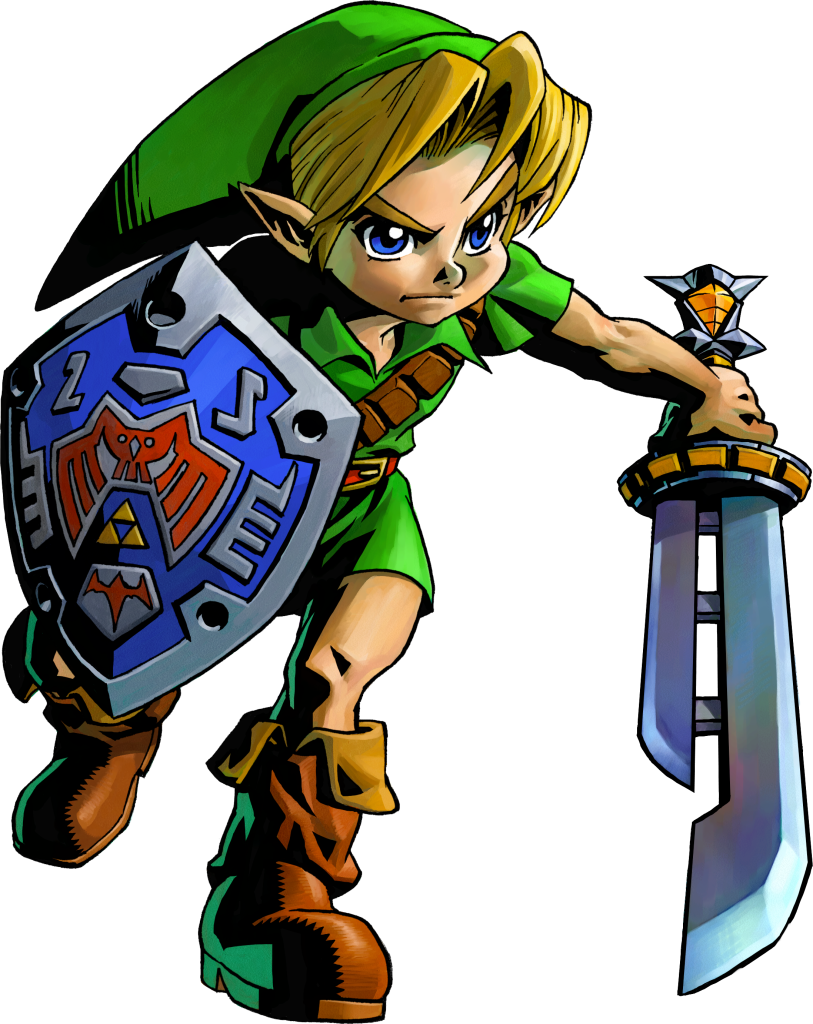
Ocarina of Time and Majora’s Mask need no introduction. They were released on the Nintendo 64 in Japan on November 21, 1998 and April 27, 2000 respectively. They’re household names for a reason and are considered some of the best games of all time. In Ocarina of Time, You play as Link, a young boy born in Kokiri forest, a species of forest folk who all resemble children, as they are an ageless species. The guardian of the woods, the Great Deku Tree summons Link for an important task: Slay the monsters inside of him and hurry to Hyrule Castle to meet with the princess. From there an epic journey across the land of Hyrule commences, with time travel being used to perform actions as Link when he is a child or an adult seven years later. But that’s not what’s important, what’s important is the ending, which again, you’ve been warned about spoilers.
After the defeat of the big bad, an adult Zelda sends Link back in time to relive his childhood and warn the king of Hyrule of Ganondorf’s eventual coup. Through this action, everything that Link would do for Hyrule is undone as there’s no evil threat to the land for him to rise up against. With little reason to stay in the land of his birth, Link saddles up on his horse and ventures into the Lost Woods, a location that in Zelda canon can curse anyone into a monster if they stay too long. And it isn’t too long into the trek that he’s mugged, got his horse stolen and turned into a Deku Scrub by the skull kid, a mischevious little imp with the eponymous Majora’s Mask over his face.
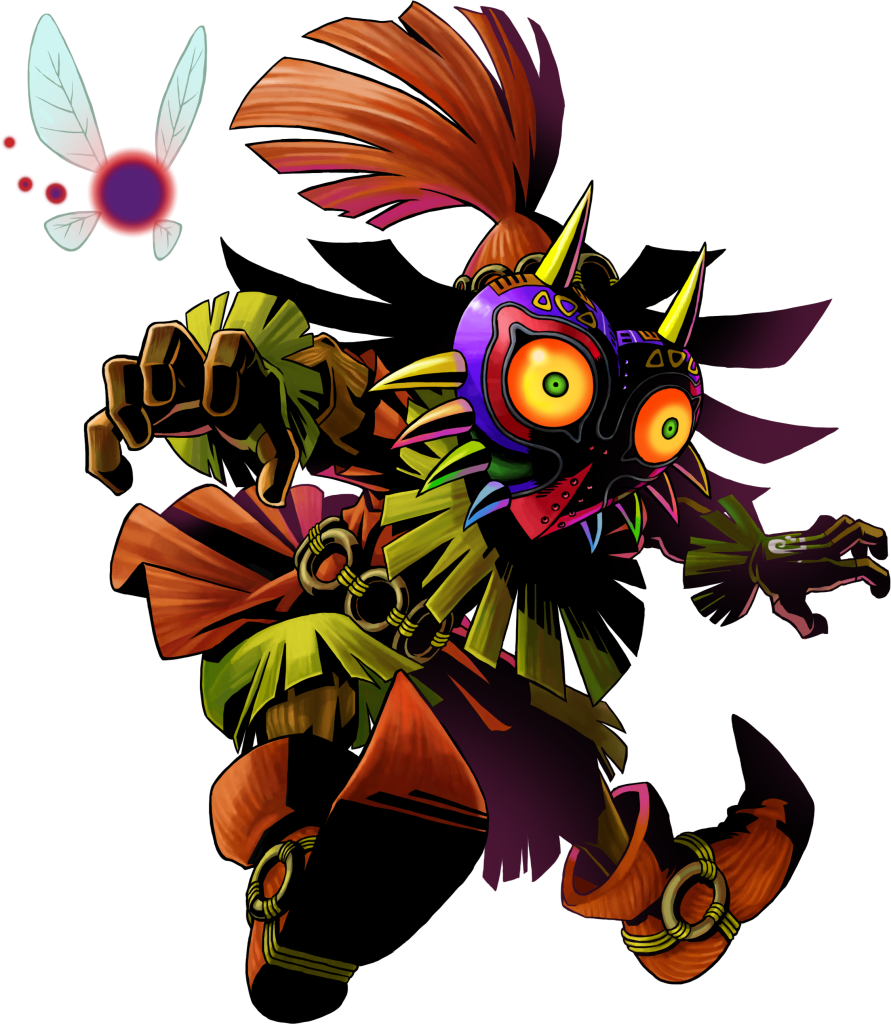
Chasing the perpetrator through a long, winding road ends with Link arriving in Termina, a bizarre land separate from Hyrule but possesses a lot of familiar faces that Link encountered in Ocarina of Time, raising questions as to the true nature of this place. But all is not well in this ominously named overworld as the moon is slowly falling closer and closer towards Clock Town (the dead center of the land) and will crash into it in 3 days time. With time literally on his side after recovering his ocarina from skull kid, Link has an infinite 3 day cycle to gain the help of the 4 guardian giants of Termina to stop Skull kid before everything is leveled to the ground from the impact. It’s a simple plot, but effective in execution. But what happens after all is said and done?
Once the day has been saved and the moon is no longer a problem, Link stays in Termina for a bit before wandering off into the woods again, resuming his search for a dear friend once more. And that’s the last time Young Link was ever playable in the series in any capacity, because the next time he’d be encountered, it wouldn’t be until many years in the future, but that’s a story for another day. But Young Link’s tale is definitely the worst out of all heroes, the one who never had one. He would go on to be unremarkable young boy in Kokiri Forest after Zelda sent him back, and no one in that part of the Zelda timeline would be aware of the name of the hero of time. His journey was forfeit and though Link is by design a blank slate character, would understandably be pissed to learn that he has no legacy. Honestly, if I were him I’d hightail it out of Hyrule too, let them deal with whatever catastrophe on their own.
Conclusion
It’s uncommon for a property to elaborate on what happens beyond happily ever after. Some stories are better left unsaid after all, but it’s admirable to see developers attempt to tell them. There’s no doubt that there are countless other examples I could’ve chosen, but these were the ones that immediately stuck out to me from recent memory. Perhaps this will be a more common trope in the future? who’s to say? But what I will say is this, stick around on the Cosmia blog and there might be more stories to tell.


One response to “At Journey’s end, what happens to the hero?”
Great piece! Really enjoyed this one. I’d love for you to check out my latest work at storefrontsubway.com, if you’re interested!
LikeLike