‘hoy folks, Spartan here with another exciting continuation of the much tolerated game trade, where me and blog owner Cosmia recommend games for each other to play and write a review on them. It’s been a while since the last one, so I hope that I’m able to evade another FromSoft game….
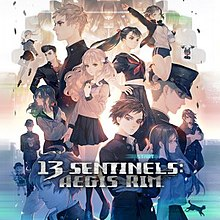
An Atlus game eh? yeah, I can do this! they were partly responsible for the first ever game trade (the fated Kingdom Hearts X Persona 5 trade) that started all of this. I also expect to hear a lot of familiar VAs in this one from previous ventures that Mr. Cosmia might not be familiar with.
The Story
Our story begins in the thick of it in 1980s era Japan, where a large unidentified object made impact in Ashitaba. It begins to wreak havoc, destroying everything in its path while the populace run in fear of it believing it to be the end of the world. One girl in particular however, doesn’t run from the titan but towards it, standing beneath a crossway over a once busy street. This is one of 13 protagonists, Iori Fuyusaka who without hesitation, lifts up the hem of her skirt above her right leg and swipes over her calf with her left arm, “initiating” a blue light to emit from the area. Electricity crackles behind her as a colossal mech forms in the space, standing in position as glass windows shatter and dust is kicked up from it’s impact. A blue light envelops Fuyusaka and she warps inside of the mech, prepared to battle the monster and save Japan.
All of this happens within the first minute of the game, so needless to say it immediately leaves an impact. I went into this game not knowing anything, none of the characters or how to even play it, so after an explanation of the basic plot from one Juro Kurabe (another one of the 13 protagonists) we learn a few things: Mechanical monsters called Kaiju are arriving in Japan and destroying it, and it’s up to a chosen few to battle them and save humanity in a struggle that they were fated to do.
After that monologue, we’re thrown straight into the action. On May 27th, at 4:30 PM in the evening, Iori Fuyusaka lands her mech (called a sentinel) in the middle of the street for the first time,
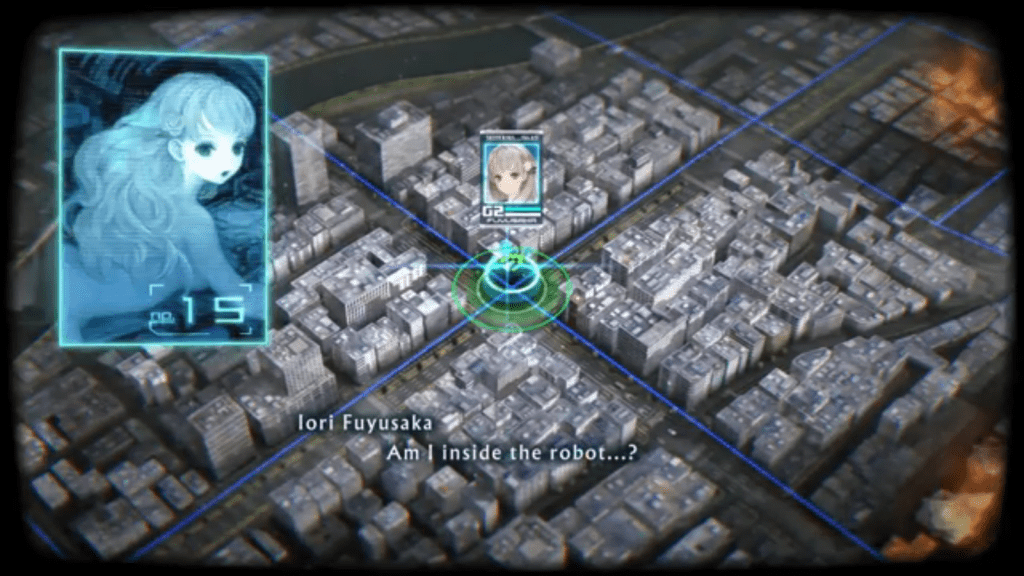
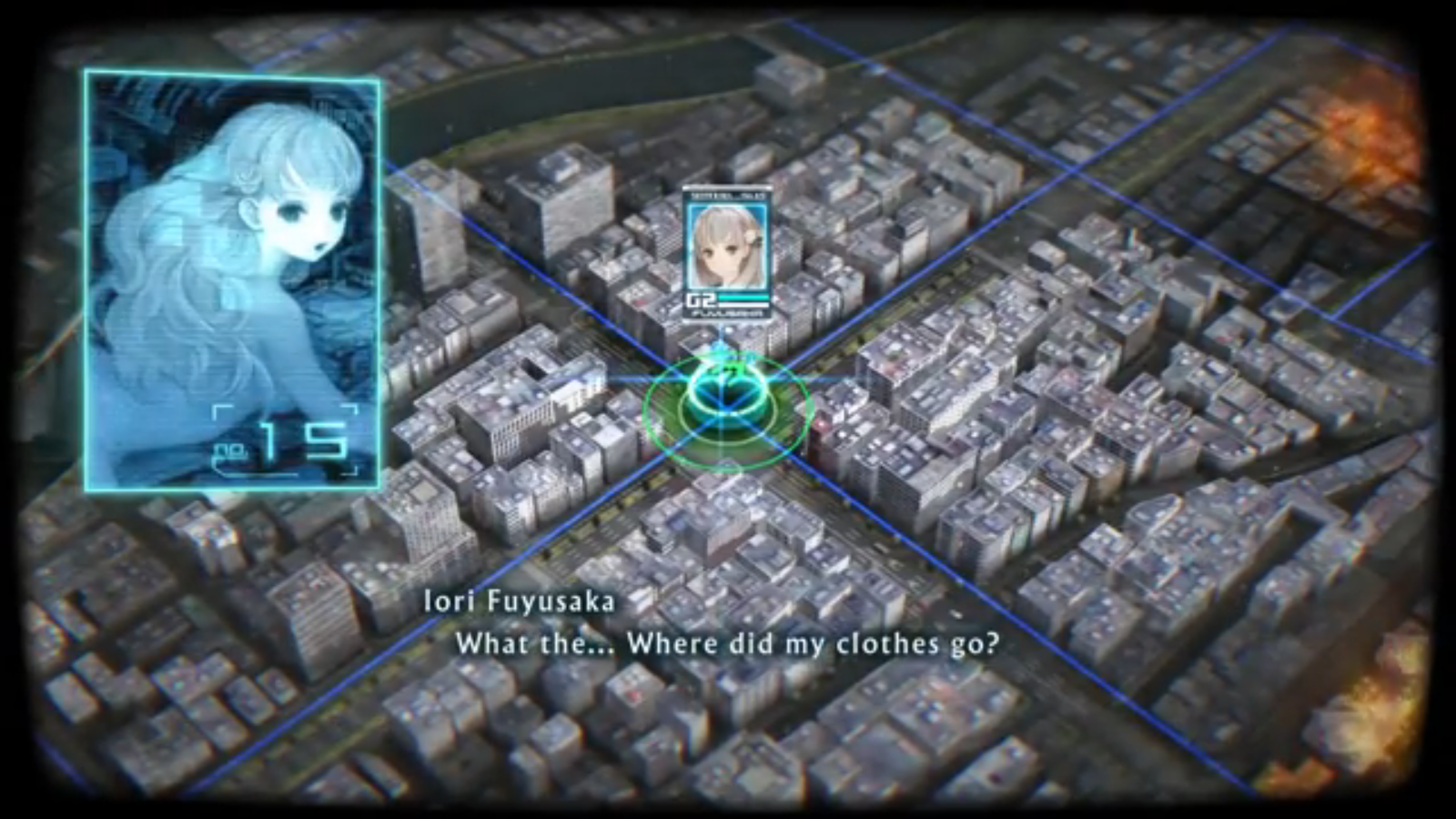
And it’s at this point that I (and likely you, dear reader) feel as though we’re going to be put on a list for playing this game (in my case) or reading this review (in your case) because within five minutes of this game we already have a prepubescent girl lying naked in a giant mech. Believe me, I am aware that this game was made in Japan, where the age of consent is wildly different than that of the U.S (in the US it is 18 years of age) but even with that in mind, playing these games as a grown adult man and seeing this kind of stuff always puts me at unease. And believe me, there are MANY instances of this across Japanese media to the point I have to mention my belief that there is a double standard of sorts. All I know is that Atlus can create this game and Persona 5 Dancing in Starlight that have underage girls either naked as the day they crawled out of the womb or in risque outfits and receive worldwide acclaim and millions of dollars, but the minute an American developer does this he runs the risk of having people call him out for his interests at best, or have the FBI break into his home and put him in prison. This is a whole discussion that I KNOW Mr. Cosmia doesn’t want me having so I’ll end it here, but I wouldn’t be able to sleep at night if I didn’t bring it up.
So the naked Fuyusaka takes control of the sentinel, and we’re introduced to how the main gameplay works when controlling sentinels. You move along a grid based path (certain sentinels can move independent of that) and target any enemy that comes your way. Every action has a cooldown, with some actions taking one second or many seconds depending on upgrade levels and what the specific attack is. Even walking takes time to get from point A to point B. There’s a lot more to it, but I think this review will only touch on some of the aspects of the game, and leave the rest of it a surprise.
Gameplay
There are two main gameplay modes that you’ll be dealing with in 13S: remembrance and destruction and I’ll go over each. Remembrance is the mode where you play as individual characters on their routes and learn about how they fit into the complex narrative, learning about their interests, friends and roles that they will have in the coming battles. This mode takes place in one of the four sectors that the game designates as time periods and are portrayed with a watercolor aesthetic (I could be wrong about that, as i’m not artistically inclined) where everyone looks as though they are paper dolls or something. Most of the gameplay involves talking to people and bringing up certain topics using the thought menu.
Destruction on the other hand, is a different story. You’re forced to play a game of tower defense where you have to defend a terminal from the advancing kaiju with six possible pilots as your main mode of offense. 13 S makes use of the eponymous giant robots by not allowing you to use all thirteen at a time on any level. Instead, you can only control up to six at a time, with the remaining seven being used as secondary support: they’ll stay near the tower and defend it, but their ability to do so diminishes the more you progress and the enemy AI gets smarter. Or, if you’re a madman, you can elect to just choose a single character and try defending the terminal with the other twelve as secondary support, but I don’t recommend that option.
The sentinels are divided into 4 generations, each with their own strengths and weaknesses. I’ll go over them briefly below
- 1st Generation Sentinels are your heavy hitters, they are capable of hitting like freight trains and are front line fighters. They comprise sentinel numbers 1-12, but only the last three of the generation (10-12) are piloted, by Nenji Ogata, Ei Sekigahara and Takatoshi Hijiiyama in that order. The main use of these guys is to use demolisher blade, which is a wide attack that ignores the armor of enemy sentinels. Very useful against bosses. However, they struggle to hit anything airborne, needing to rely on allies or EMPs to down aerial kaiju.
- 2nd Generation Sentinels are more balanced in comparison to their predecessors, capable of hitting with physical and ranged armaments. They’re more in line with summoner classes in an RPG though, as they can create stationary turrets or decoy sentinels to draw fire away from themselves and their comrades. As such, they don’t have any weaknesses, but they don’t really excel in one particular area either. They comprise sentinel numbers 13-15, and are piloted by Juro, Ryoko and Iori in that order.
- 3rd Generation Sentinels are all about range, and can shoot the head off a wayward sentinel 15 blocks away (or however we’re supposed to interpret the cityscape grid that the battles take place on) and his buddies behind him. They excel at precision fire and striking from a distance, but close quarters combat is their Achilles heel, so more often than not they’re losing against melee kaiju that get too close. They comprise sentinel numbers 16-19, with Tomi Kisaragi, Natsuno Minami and Keitaro Miura piloting 16, 17 and 19 respectively. Interestingly, sentinel number 18 has a pilot (Tamao Kurabe, Juro’s grandmother) but she doesn’t participate in the final battle. And no, random reader I’m not going to disclose why, play the game because it’s weird and hard to understand, just like me.
- 4th generation Sentinels are your eyes in the sky, capable of taking flight due to their lightweight metal composition. They can fly anywhere on the battlefield and are not locked to the grid in any way, making them ideal for scouting out hordes of kaiju. They’re great with support abilities, creating shields and summoning mini drones to help with fighting. They comprise numbers 20 through 23, and are piloted by Amiguchi, Takamiya, Goutou and Yakushiji. Overall they’re great at dispatching grunt Kaiju of both terrestrial and aerial varieties, but aren’t recommended for bosses or tougher enemies.
In addition, the pilots also learn skills every five levels until level 30 when they receive their last skill, and all are different. These provide passive buffs like increased armor or decreased weight, or overall strength depending on the circumstance. For example, Amiguchi has a skill called “Playboy” learned at level 10, which increases his stats for every girl on the strike team, which is appropriate given his voyeuristic tendencies. That being said though, a character’s true strength is dependent on who they’re with, and for certain characters that’s more of a hindrance than anything else. Megumi Yakushiji has three abilities tied specifically to Juro Kurabe, and require him being on the strike team in order to function. It doesn’t inherently make her useless without him around, but it does require certain team lineups to get the most out of the characters.
But even I have a problem with the skill system, in that it’s paradoxically a flaw to make them flawless individuals. What I mean is that all of the skills do good things for the team, and don’t pose any risk towards having certain characters in the party, making them effectively perfect soldiers who happen to be underage kids with mechs. Even though this is an absurd story, I can’t help but hate that. Mr. Cosmia and I have been doing this game trade for so long that both our horizons have expanded with each iteration, and one of the games that he provided handled personal skills in a way that made sense, but also served narrative function: Valkyria Chronicles 4
Taking place in a pseudo European landscape embroiled in the flames of war, you take control of Commander Claude Wallace and Squad E of the Federation Army as you fight back the imperial assault on Galia (their home country). While I won’t go into specifics, one of the gameplay elements that I highly praised is the potential system. Each character has a unique set of attributes to them that can trigger depending on various factors, like a nearby unit who they are good friends with or a certain situation that puts them in a good position to fire. One woman who is a lancer (very durable unit responsible for destroying tanks) had an abusive relationship, and as such being in the presence of men lowers her accuracy. Another soldier is very proud and dislikes dishonest combat, so surprise attacks from the enemy will cause her to stop attacking. While you can engage with these characters in mini chapters (upon completion will often add a potential or rewrite an existing one (the aforementioned lancer women replaces the skill that lowers her accuracy, aptly titled Done With Men and gets Team Mom, which increases her accuracy when other female units are nearby). The game treats these playable characters not as perfect killing machines, but rather as individuals with their own wants, desires and flaws. Their imperfections make you have to second guess your choices especially on hard mode, as one mistake can cost you a battle that you otherwise would’ve won with strategy. Here, these teenagers have zero problems that would be debilitating on a battlefield with giant robots trying to kill them, and become near invincible in certain circumstances when that’s the age demographic that would be at their most imperfect point in their lives. Tell me why a game with a literal WAR featuring adults gets that idea right and this one doesn’t?
Characters
13 Sentinels has quite the expansive list of main characters, 13 total with their own individual stakes, friendships and relationships with one another. It tells an interlocking story over the course of days, months and years where characters frequently appear in one another’s stories, and you get to see their perspectives on a situation individually. For example, Juro Kurabe is friends with Shu Amiguchi, and frequently visits the latter’s house to play video games and watch Kaiju movies. On both of their routes they will be in the same room at certain points and despite you playing the same scene, you see things from both of their views separately. Normally an area ranking is provided in these reviews, but in lieu of that I’ll do character ranking with my least favorite characters first working my way up to the top. For the sake of time, I’m not going into a full play by play of every character’s route, or we’ll be here for hours. Just a few paragraphs and noteworthy scenes. Do know that not every biography is created equal: I’ll naturally have a lot more to say about some characters and less on others.
13: Shu Amiguchi

Born with a silver spoon in his mouth and constantly flirting with those of the opposite sex, Shu Amiguchi’s story begins at the Keyaki-Cho shopping district in 1985, where he encounters a gang of Japanese delinquents from Kuri high (a rival high school) led by Takemi Wajima (who is… we’ll get into him later) about to beat up Yuki Takamiya, another one of the main characters. Takamiya can handle herself, but Shu Amiguchi refuses to leave a damsel in distress, much to Takamiya’s annoyance.
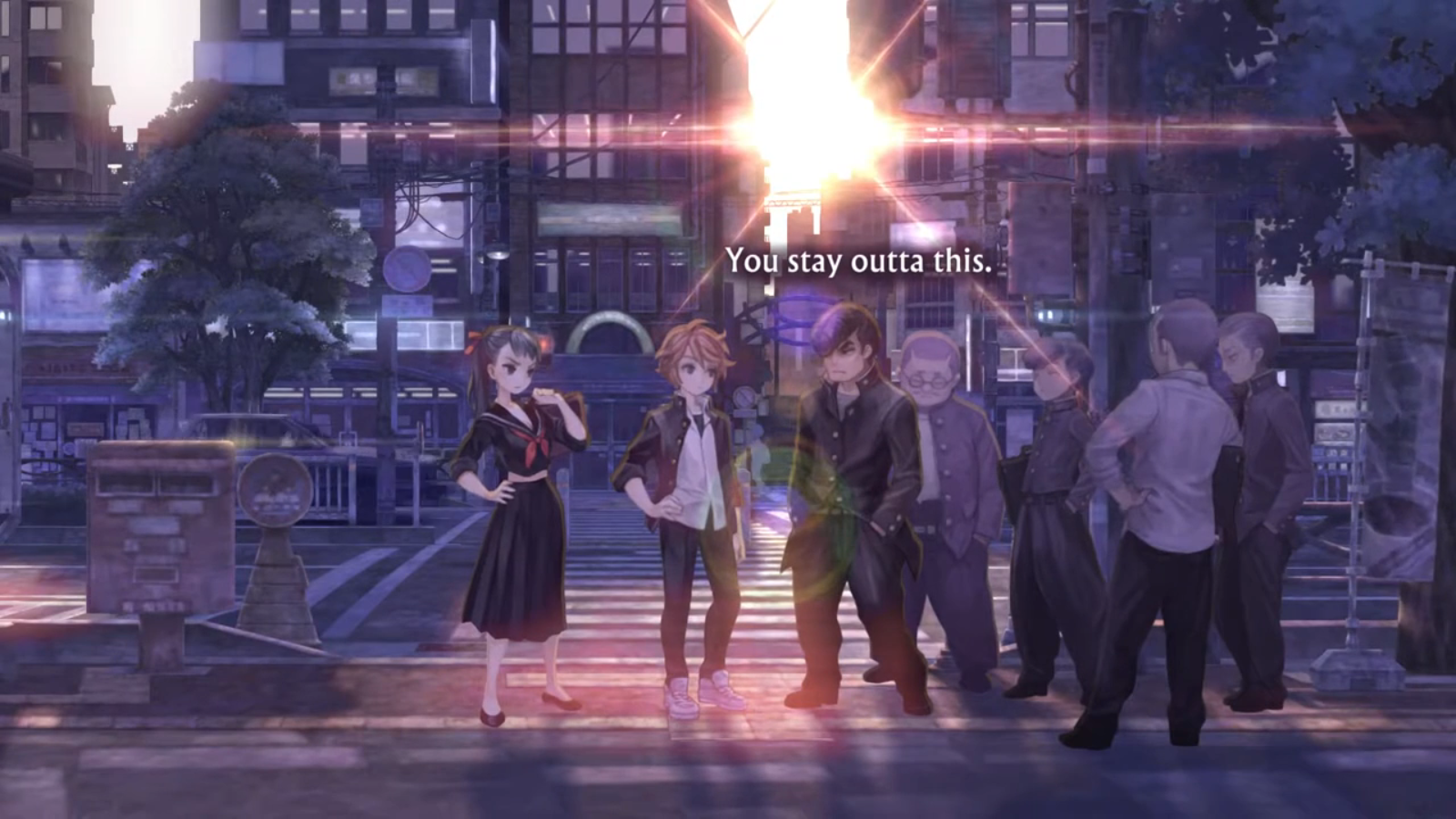
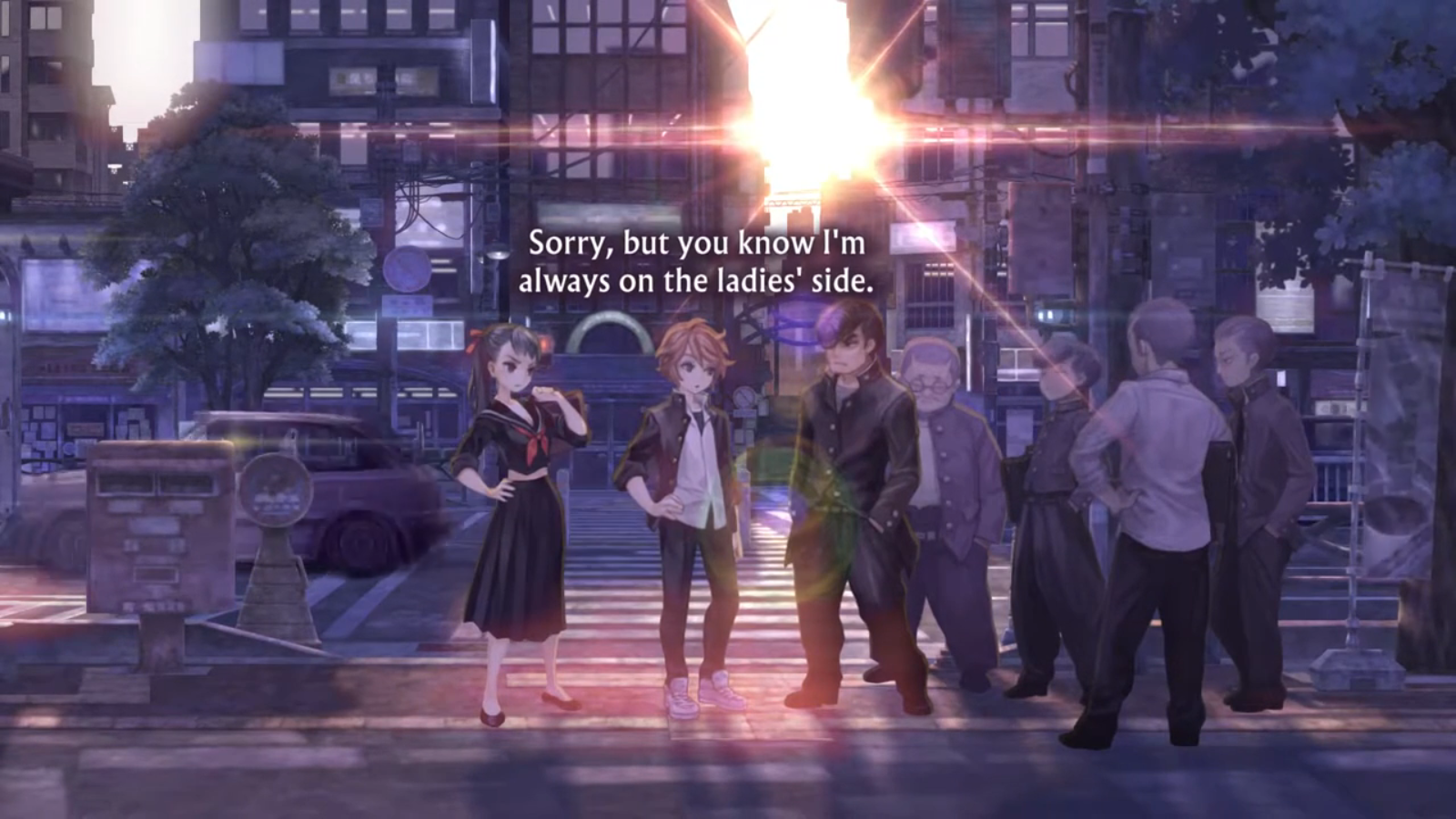
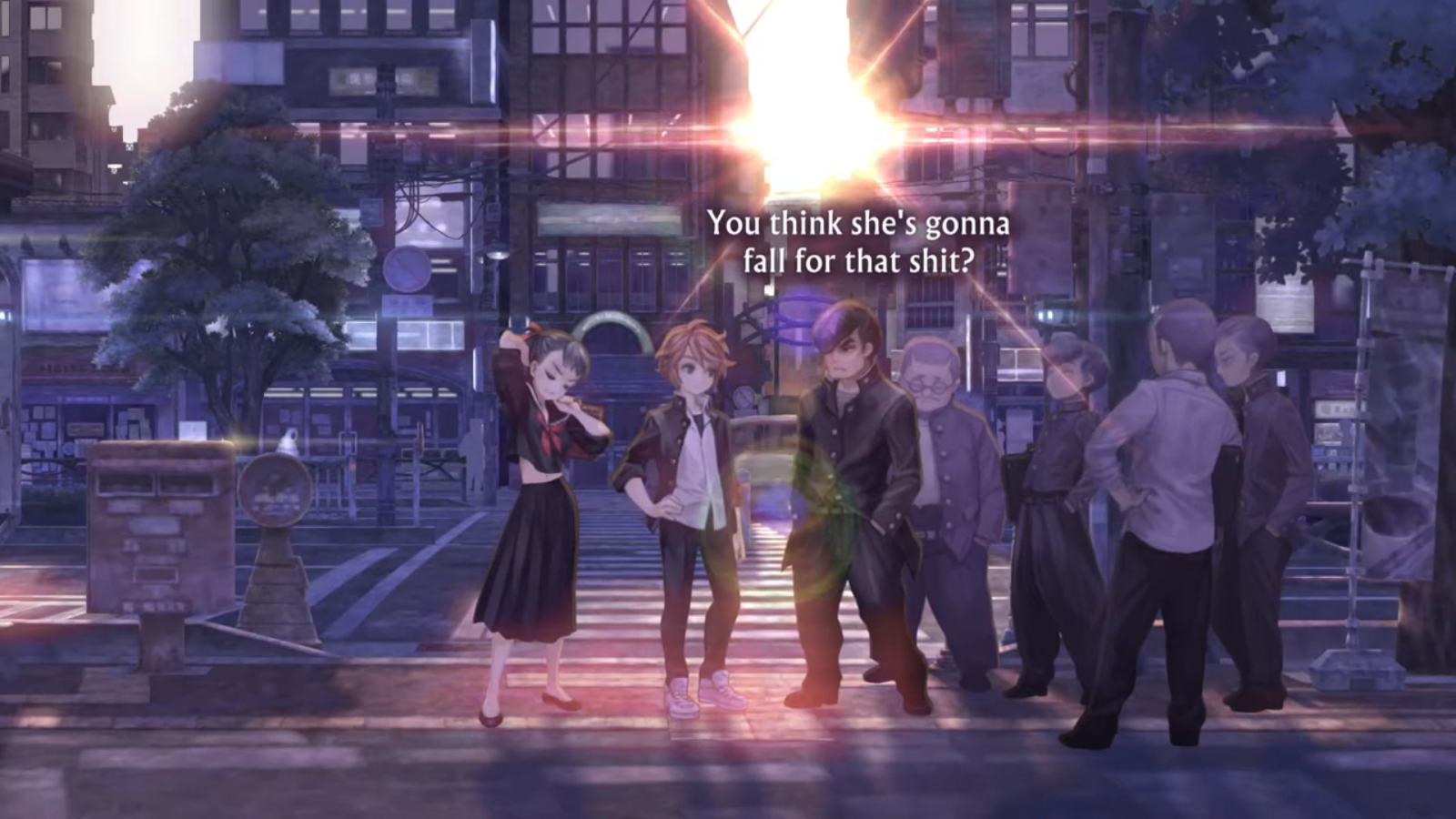
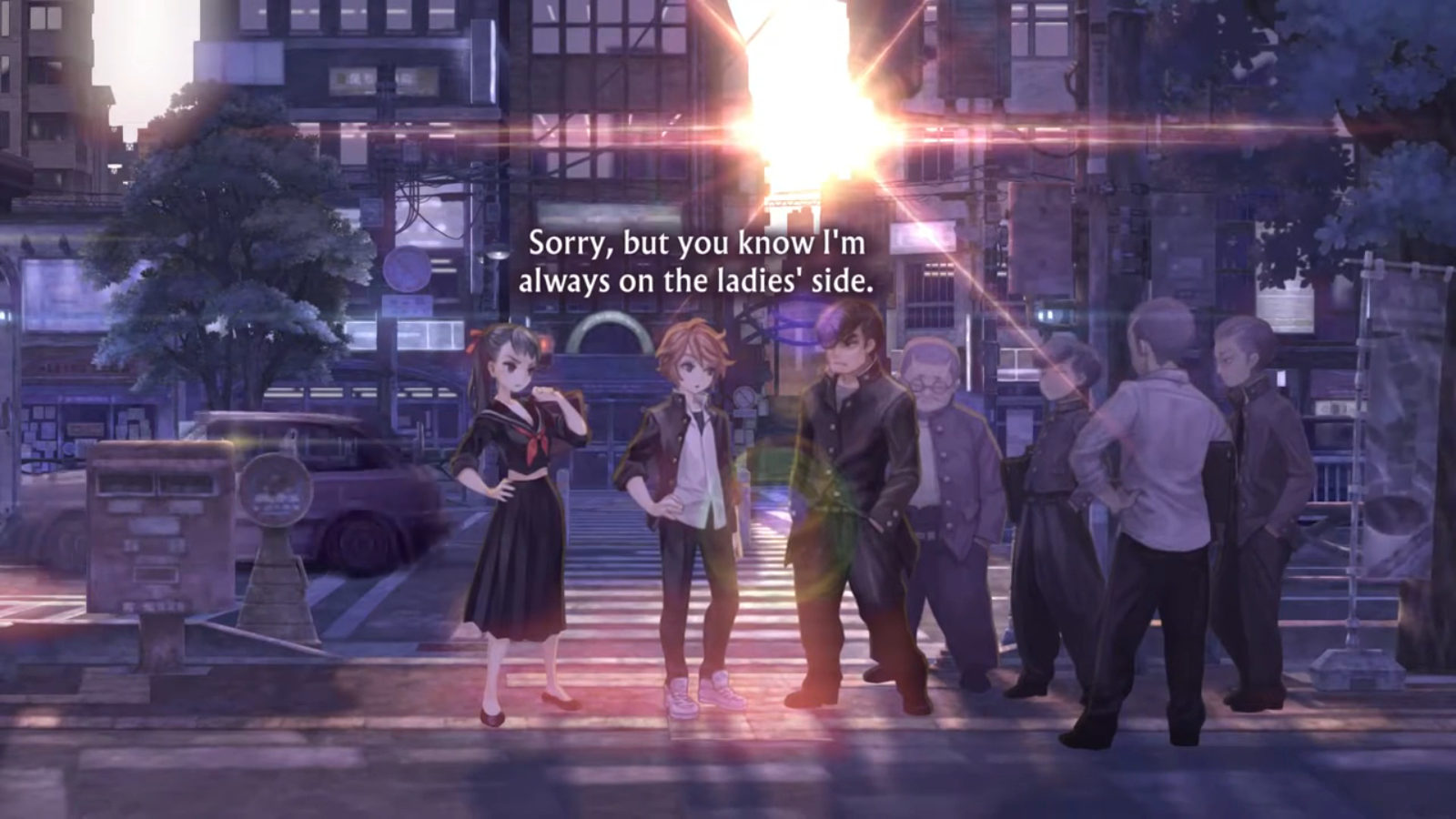
Things get heated though when Takemi grabs Takamiya by the collar, and Amiguchi intervenes, throwing the first punch. Understandably, this aggravates the gang leader so both Amiguchi and Takemi flee on his motorcycle. I like how this one scene only lasts about two minutes and it already says so much about him as a character. He’s chivalrous to the point of defending ladies on the street, but mainly to serve his own goals. He’s confident in the face of danger, but also a smidge reckless when he starts fights with people he shouldn’t be messing with. Most of his route involves him getting closer to Yuki through their investigation of beyond the city limits, his bizarre dreams of a ruined cityscape with the school nurse and his conversations with the Japanese idol that communicates with him through his television set (yes, really).

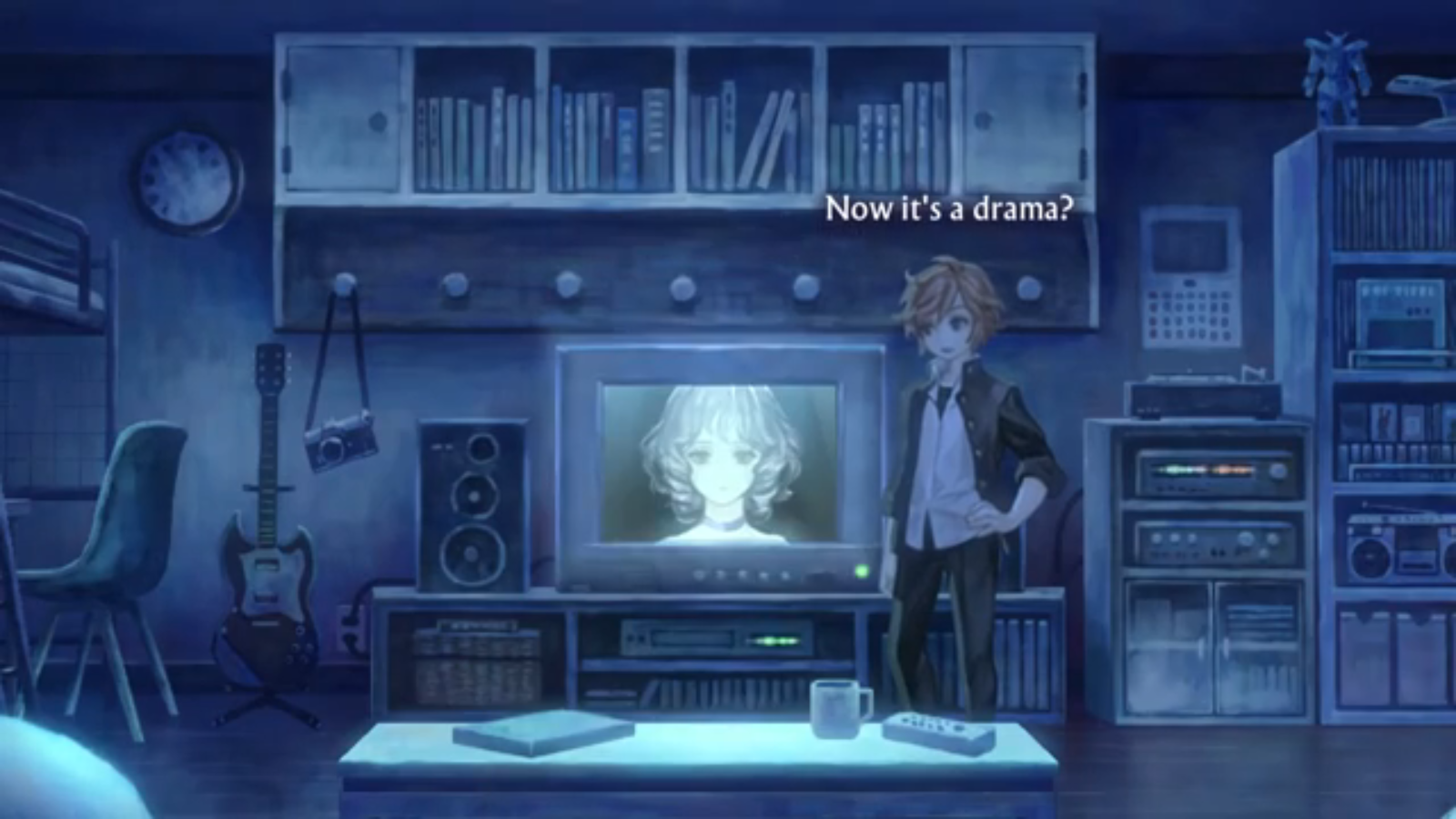

Amiguchi understandably, starts to turn away from the desperate dolled up diva, but when she states his full name that gets his attention. She asks for him to save her, and he has no choice but to listen. From there he also goes through his daily life that’s interrupted by very strange dreams of an older version of him in a bunker, working on building an android of Tomi Kisaragi
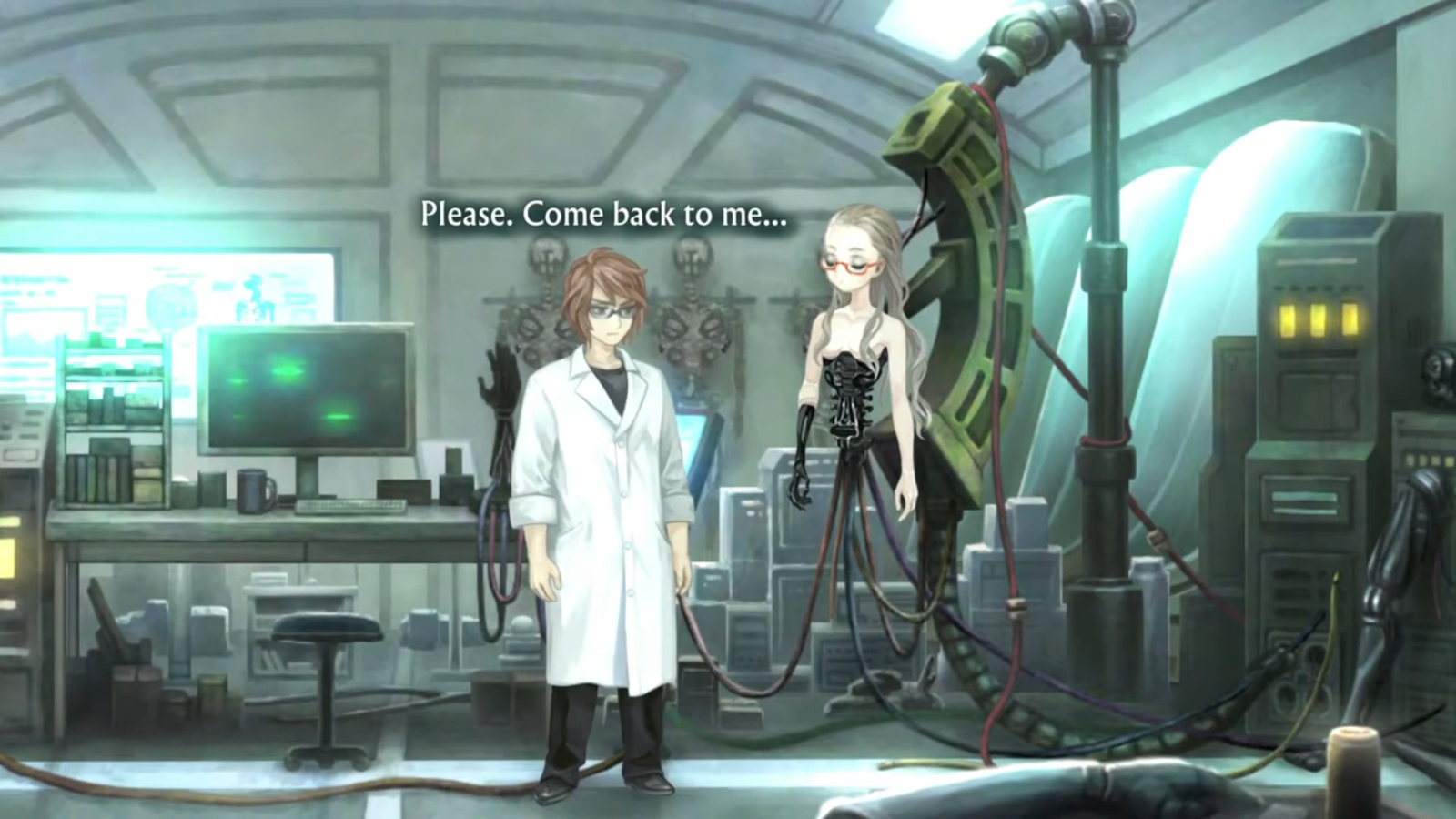
He also routinely meets with Juro Kurabe who shares his passion for Kaiju movies and video games, but most of his story revolves around his “budding” relationship with Yuki Takamiya. And boy do these two go through a journey, one might even say to the ends of the world and nearly die multiple times. This all cumulates in a faceoff with the big bad that results in Takamiya taking him and another MC away from their isolated location, and for Natsuno Minami to enter.
While I like Amiguchi, he’s kind of hard for me to relate to. He’s got a certain smarmy womanizing quality to him, not helped by the fact that he’s wealthy and likely wouldn’t need to work a day in his life. It also doesn’t help his pestering of Takamiya that makes it feel less cute and more like he’s trying his damndest to see another side of her (If you know, you know). So here he sits at #13.
12: Renya Gouto
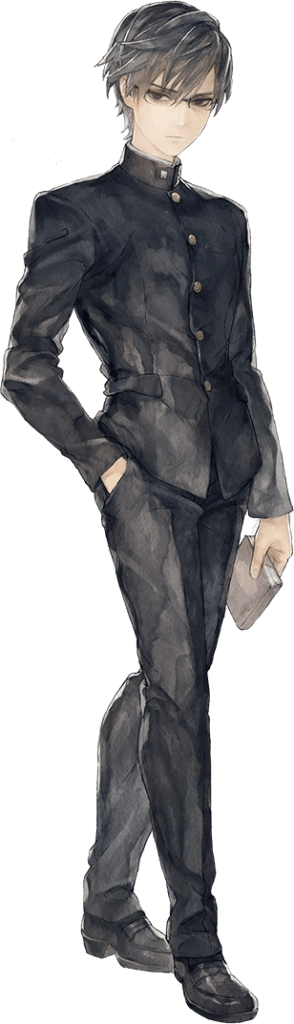
Oh boy, this guy.
Alright, I’m putting him a slot above Amiguchi for pettiness, but let it be known I REALLY don’t like this guy. His cold, calculating persona and unflappable presentation irritate me, and his route isn’t any better. To finish his route you need to have at least 11 stories completed, meaning his route is the most spoiler heavy and reliant on tying everything together. His story begins in 1985, in the school’s science room, where Chihiro Morimura finds and reprimands him. He responds accordingly

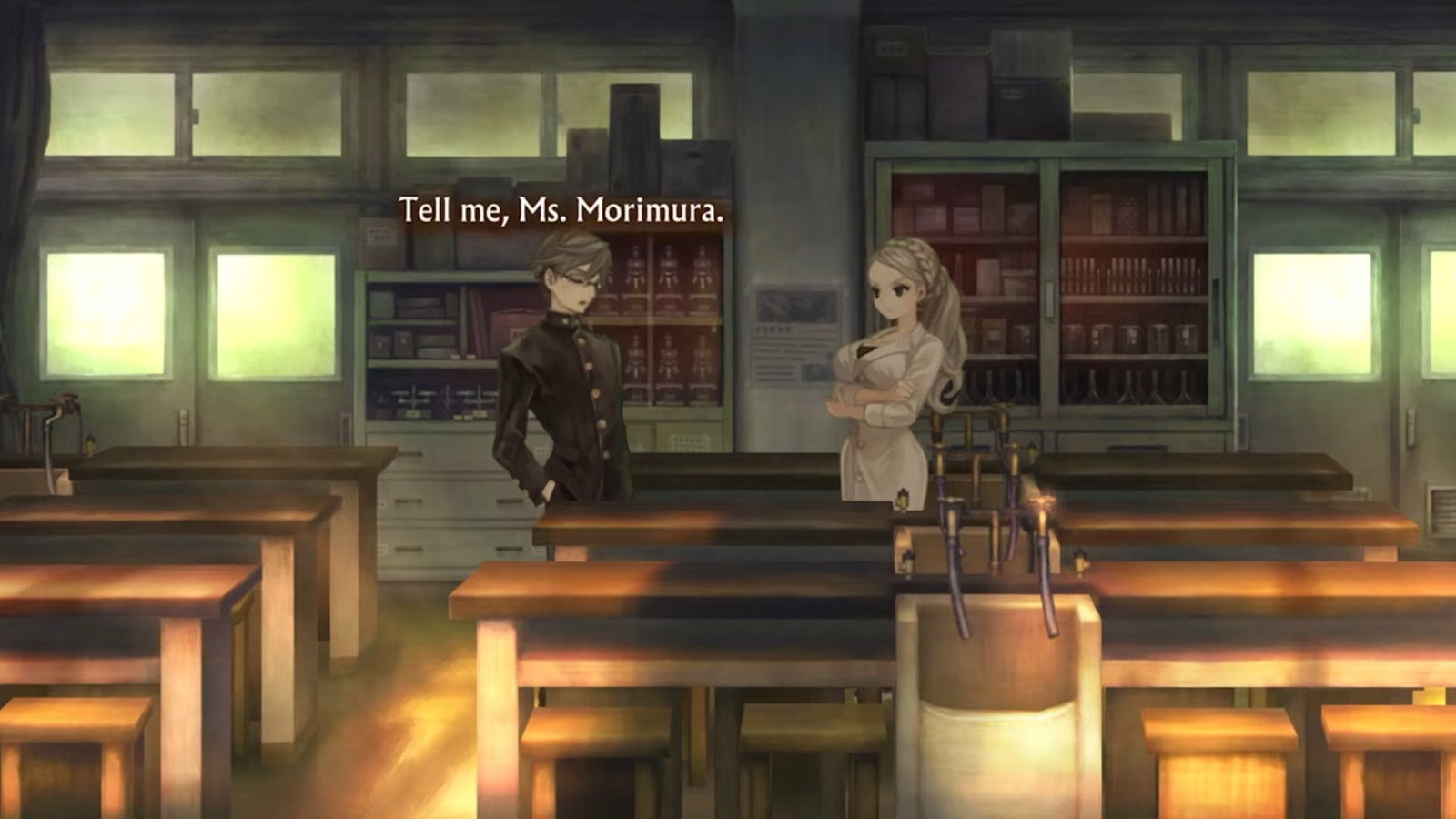
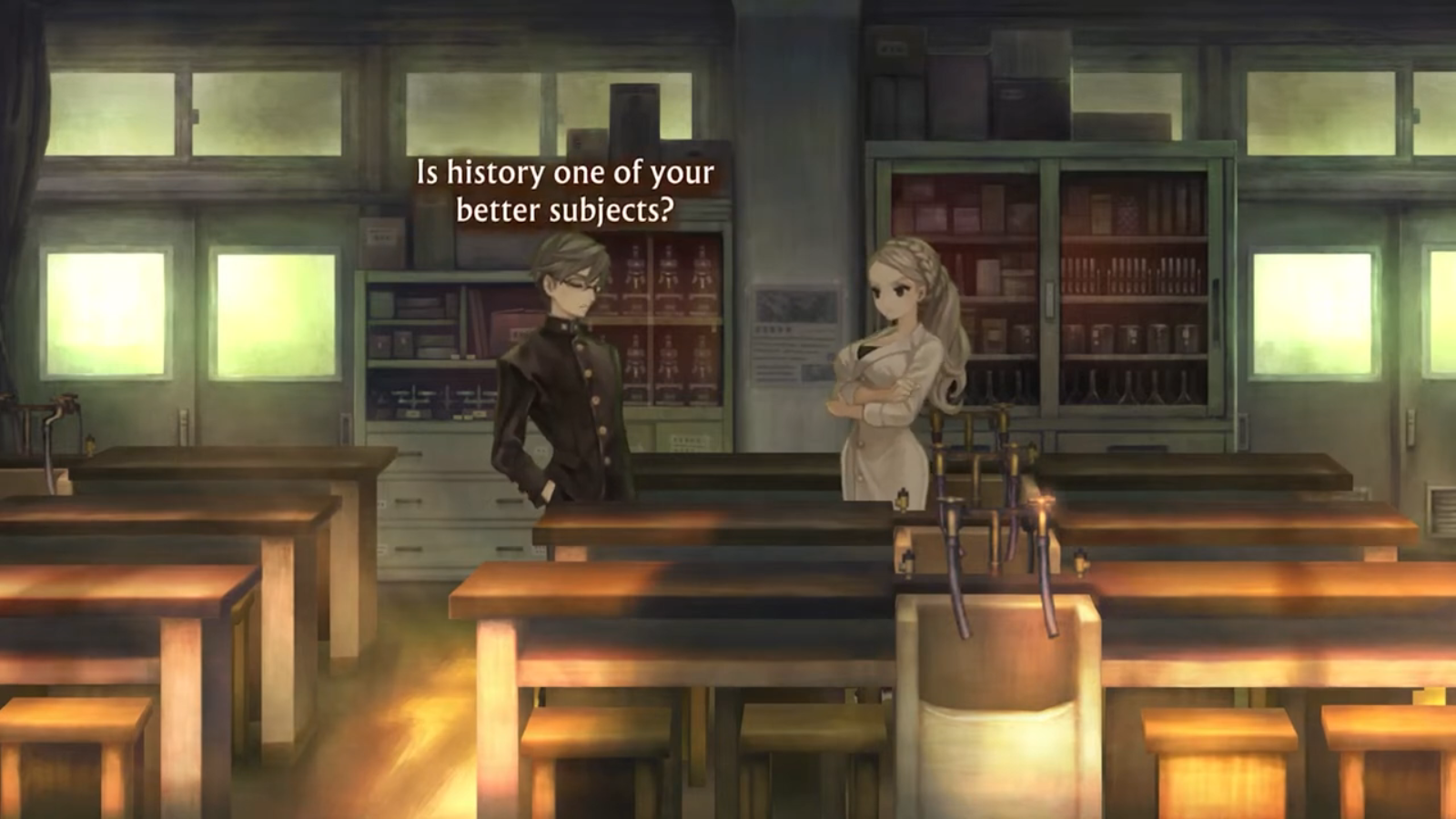

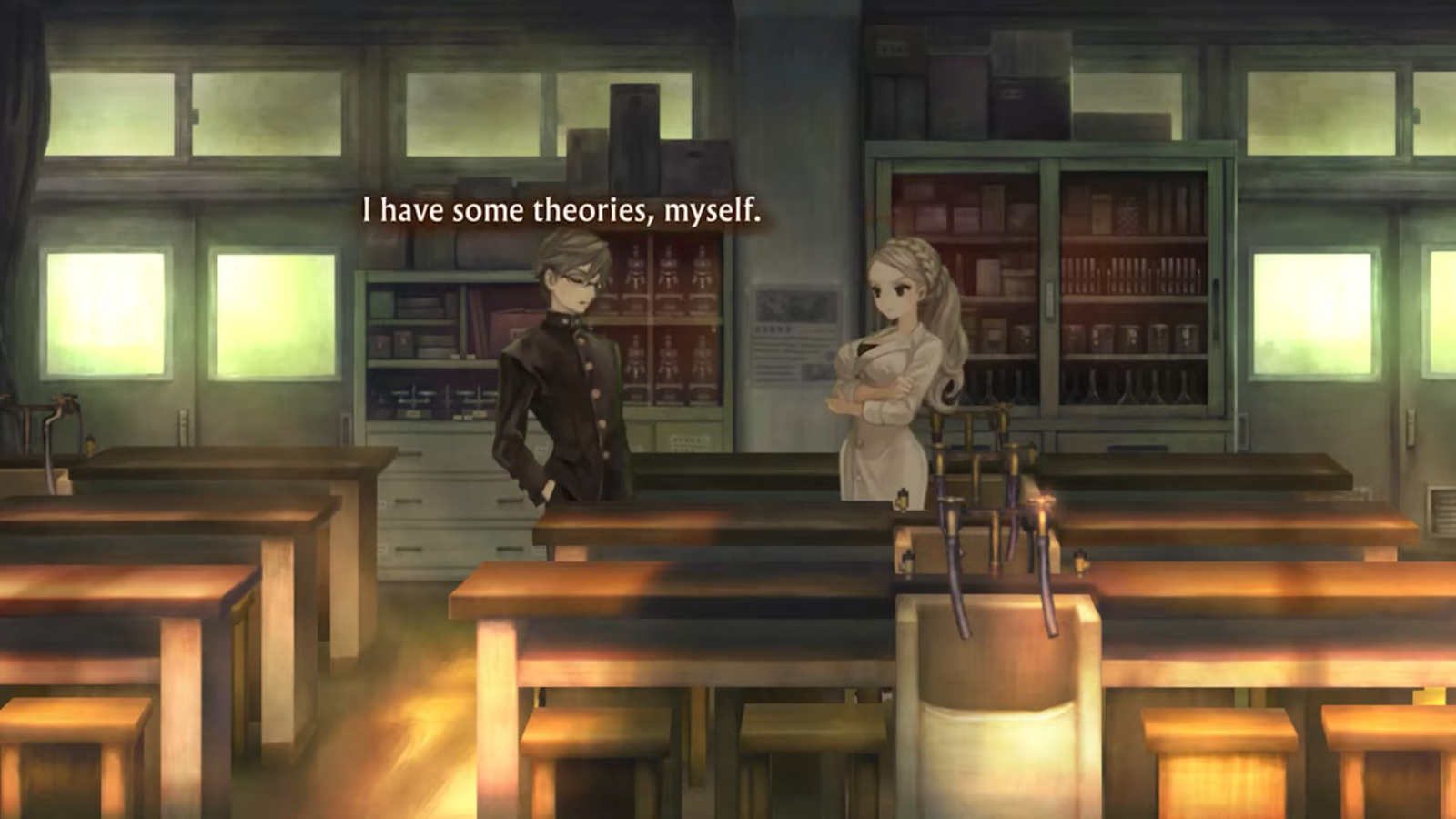
Goutou laments that the gates can only take him to very specific points in time, and nowhere near where he wants to go. Morimura deduces that he’s no history buff, and pries even further, leading to this exchange.
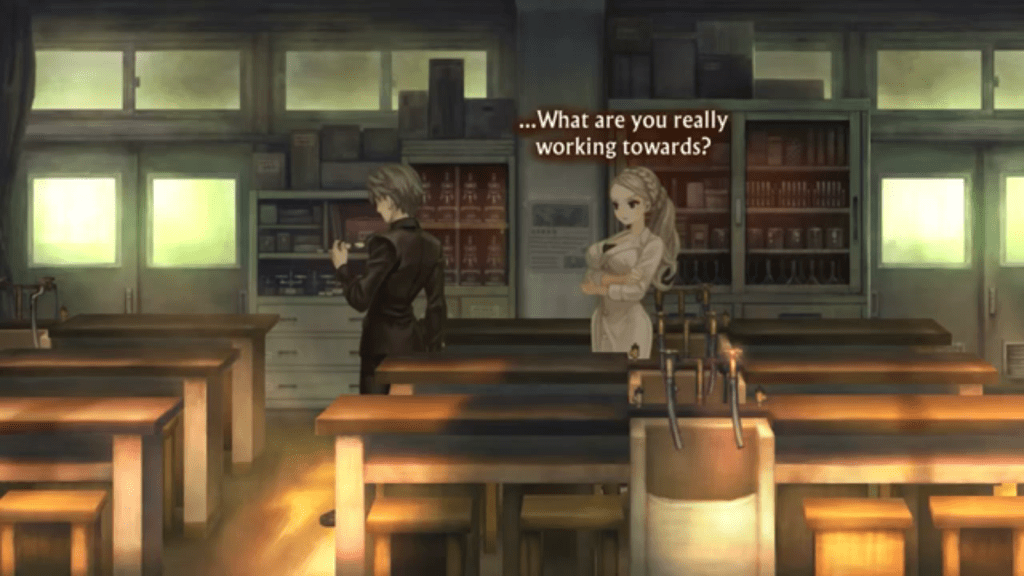
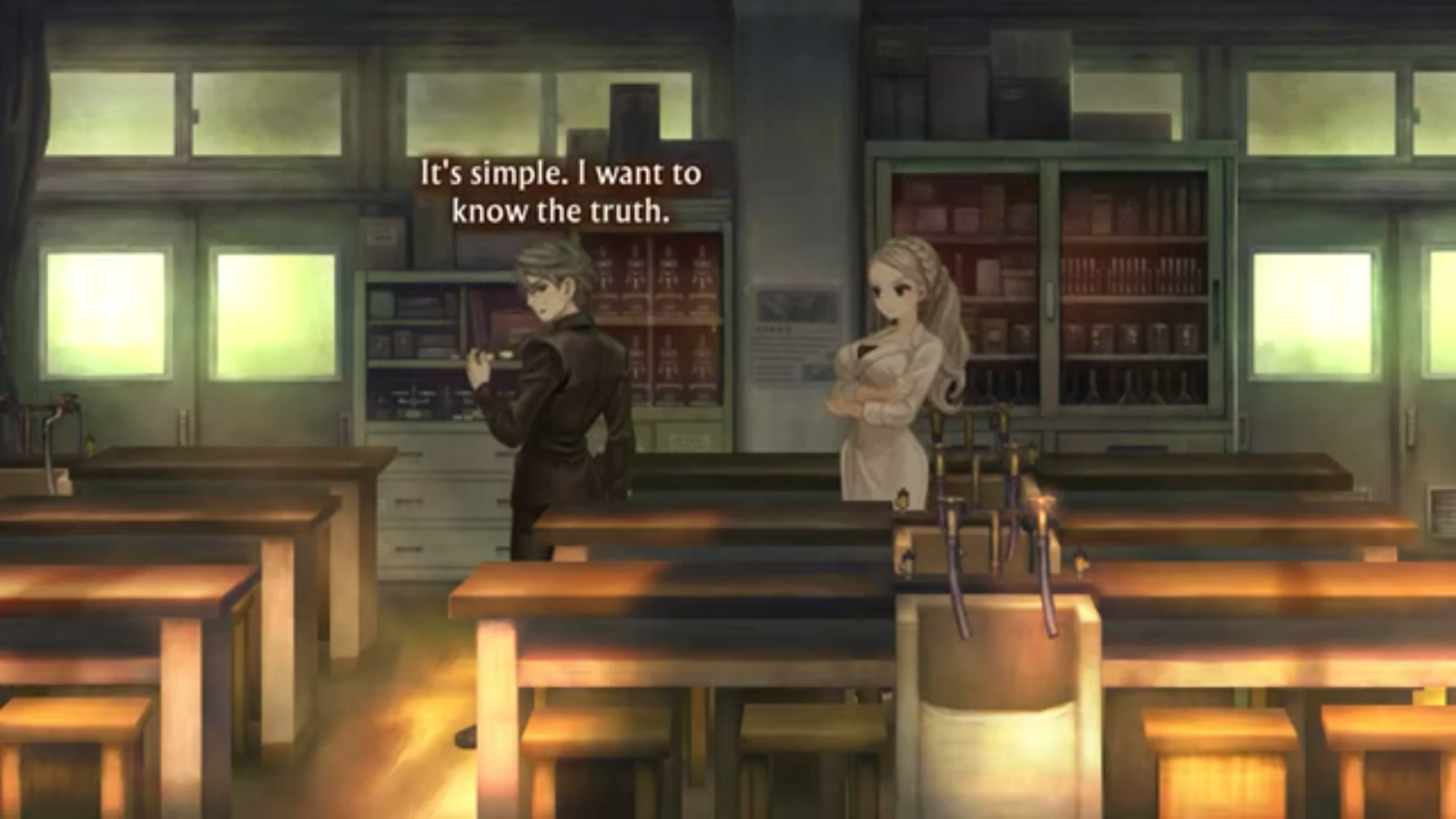
Most of his route revolves around him interrogating Chihiro Morimura (well, the child version of her) and trying to understand her motives. At some point in the story, Morimura (the nurse one) was found dead in an alleyway, and Renya decided to investigate. He discusses this with the child Morimura at a small park, which gives me a very unsettling feeling.


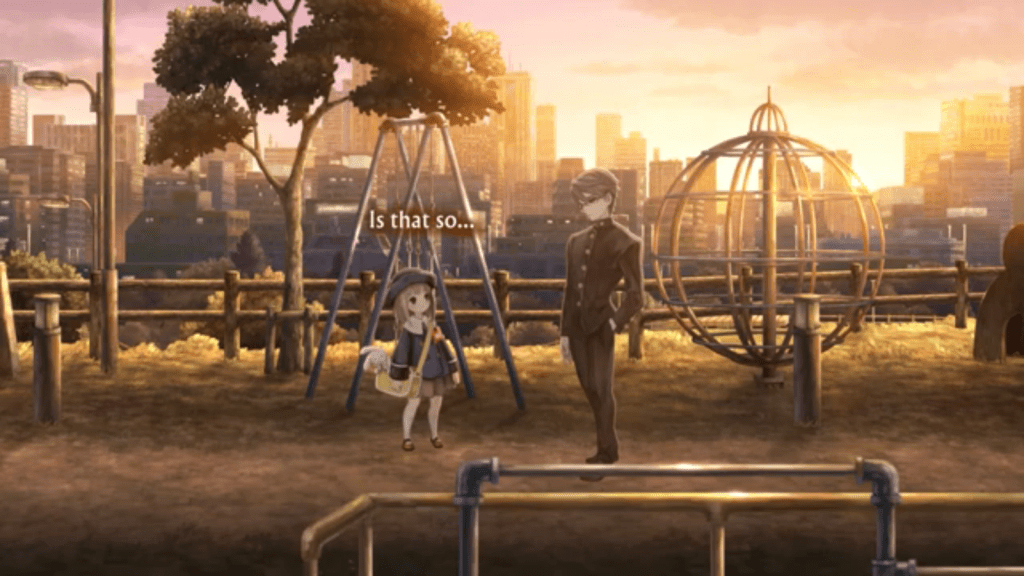
Apparently, in this universe death is something you just brush off as no big deal, a minor inconvenience at worst. Gouto implores further, noting several details of the case that suggest that it wasn’t some average mugger/gangster/***ist that did the buxom blonde in (no bullets in the body, this child Chihiro fleeing the scene, the surveillance drone monitoring nurse Chihiro suspiciously wasn’t tailing her from above) which leads to him hypothesizing that Child Chihiro killed Nurse Chihiro, which opens its own can of worms. Does that count as suicide or murder? I get that one is a clone, but if they’re basically identical does that count as fratricide? Either way Gouto gets what he wants and learns that Child Chihiro had no intention on letting the chosen teenagers live, and was likely going to reset the world all over again. Gouto disagrees and proposes that she let them fight their war. If they fail, well, she was going to reset it anyways.
Goutou’s route as I have reiterated, ties everything together. He’s the lynchpin to the plot and without his deduction, a lot of mysteries would’ve gone unsolved. That being said, even if he was working for the good guys he puts up a front that makes it hard to trust him. So number 12 fits him fine.
Number 11: Juro Kurabe
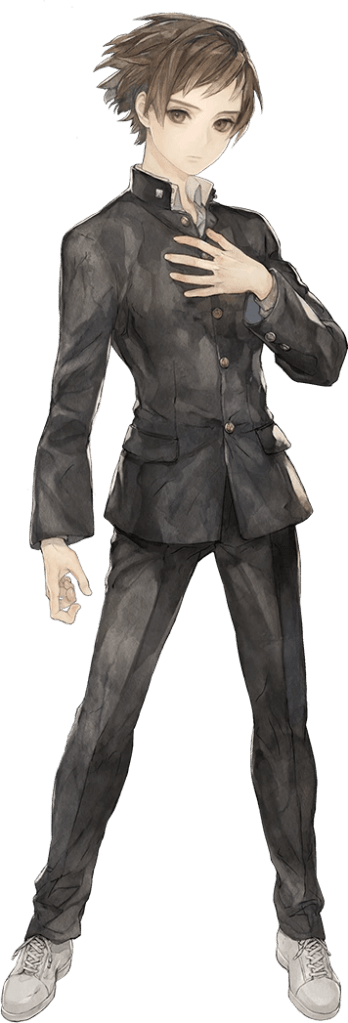
The main lead of this journey, and the first character whose story we unlock. Juro is a teen from 1985 who loves kaiju movies and anything sci fi. However, he is forced into very awkward situations. For one, he houses Megumi Yakushiji due to an arrangement she made with his grandmother, (legally binding too, she even has a rental agreement) and once that’s discovered by Natsuno Minami, she uses that as blackmail to house a teenage soldier from 1940s era Japan as Juro “has a spare room”.
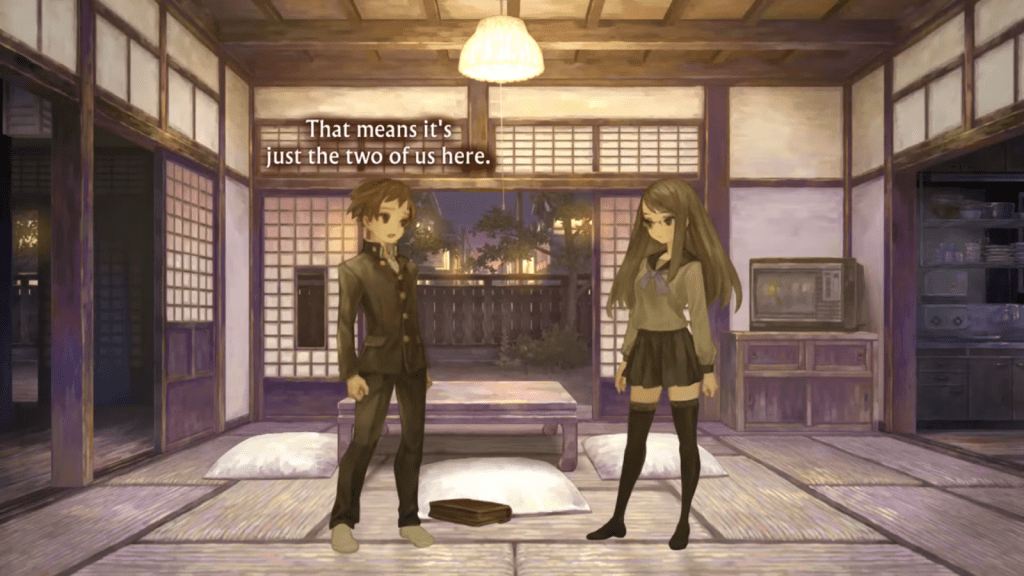
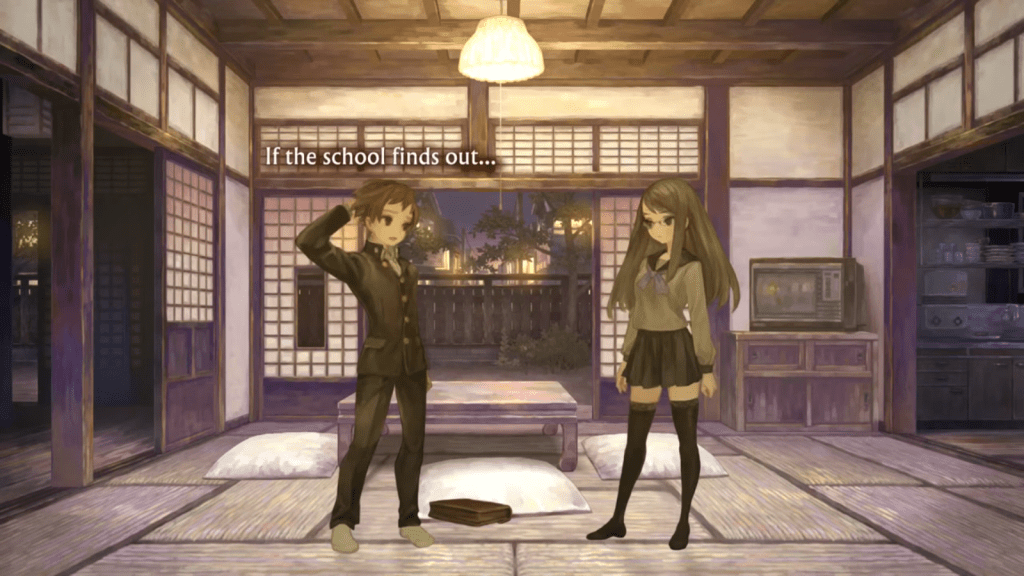
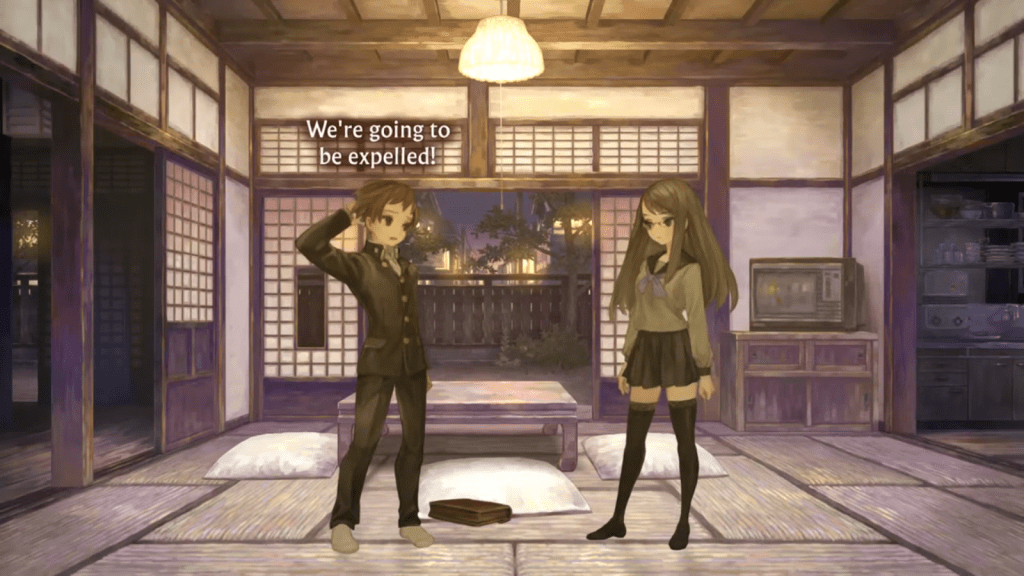
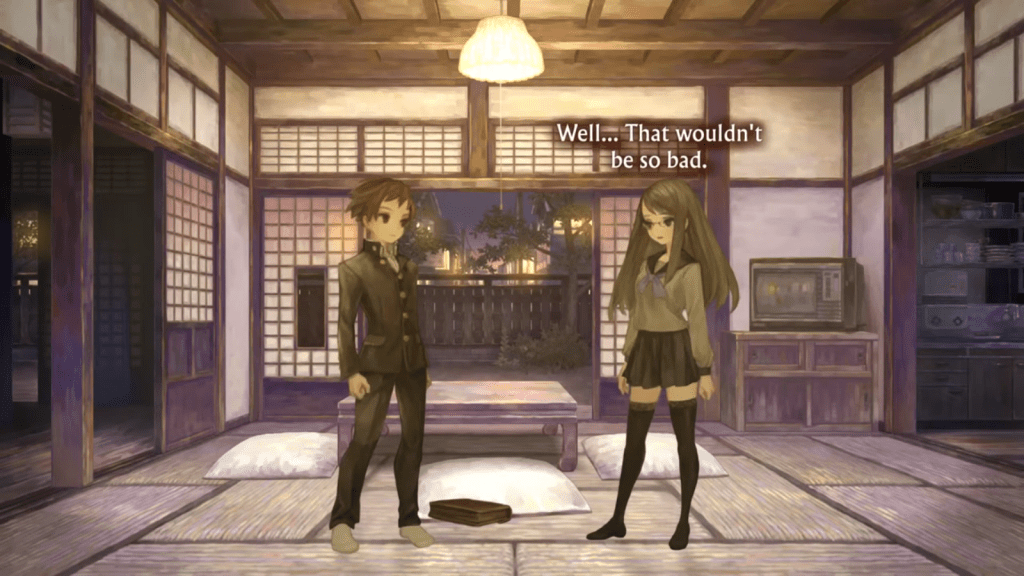
All the while he’s been plagued by strange dreams that seem exasperated by his friend Kyuta Shiba constantly giving him tapes to watch. And like the nerd that he is, he consumes them as I consume dehydrated mango slices (that is, voraciously and whenever I can). And honestly, it makes sense. His will be the story you start with and likely one of the first you fully complete, and due to his unique circumstances, he interacts with nearly every character multiple times. That being said though, the twist in his route is heavily spoiled by other routes (notably Yakushiji’s) and the revelation on who Kyuta Shiba is felt a bit lacking to me.
Near the end of his route I began to feel bad for him. Juro’s roommate, school nurse and even grandmother gaslight him into thinking he’s someone he isn’t, and the only person who tries to convince him otherwise isn’t even a person, and any conversation they have together makes Juro look nuts.
Number 10: Tomi Kisaragi
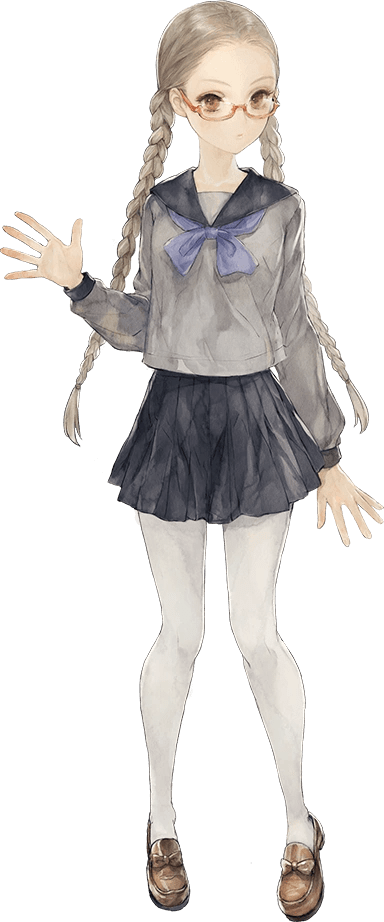
A young girl from the far flung future, she’s given an opportunity by Shikishima (a corporation that produce millitary and domestic devices) to travel to 1985. While there, she laughs at the oddities of the bygone era, the phone booths everywhere, blocky buses and pompadours and leather jackets. That last part though irritates the owner of the pompadour and leather jacket, Nenji Ogata.
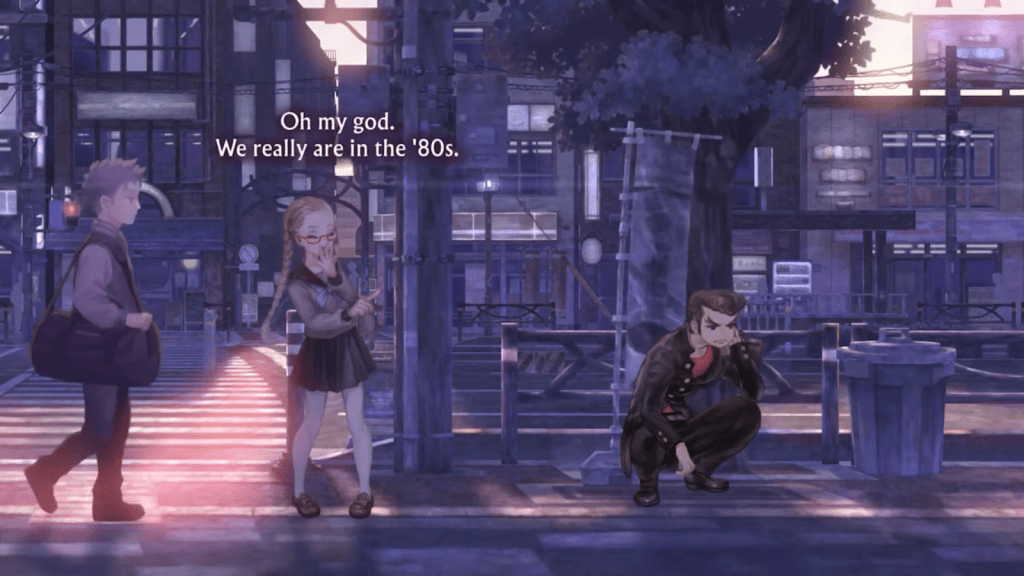
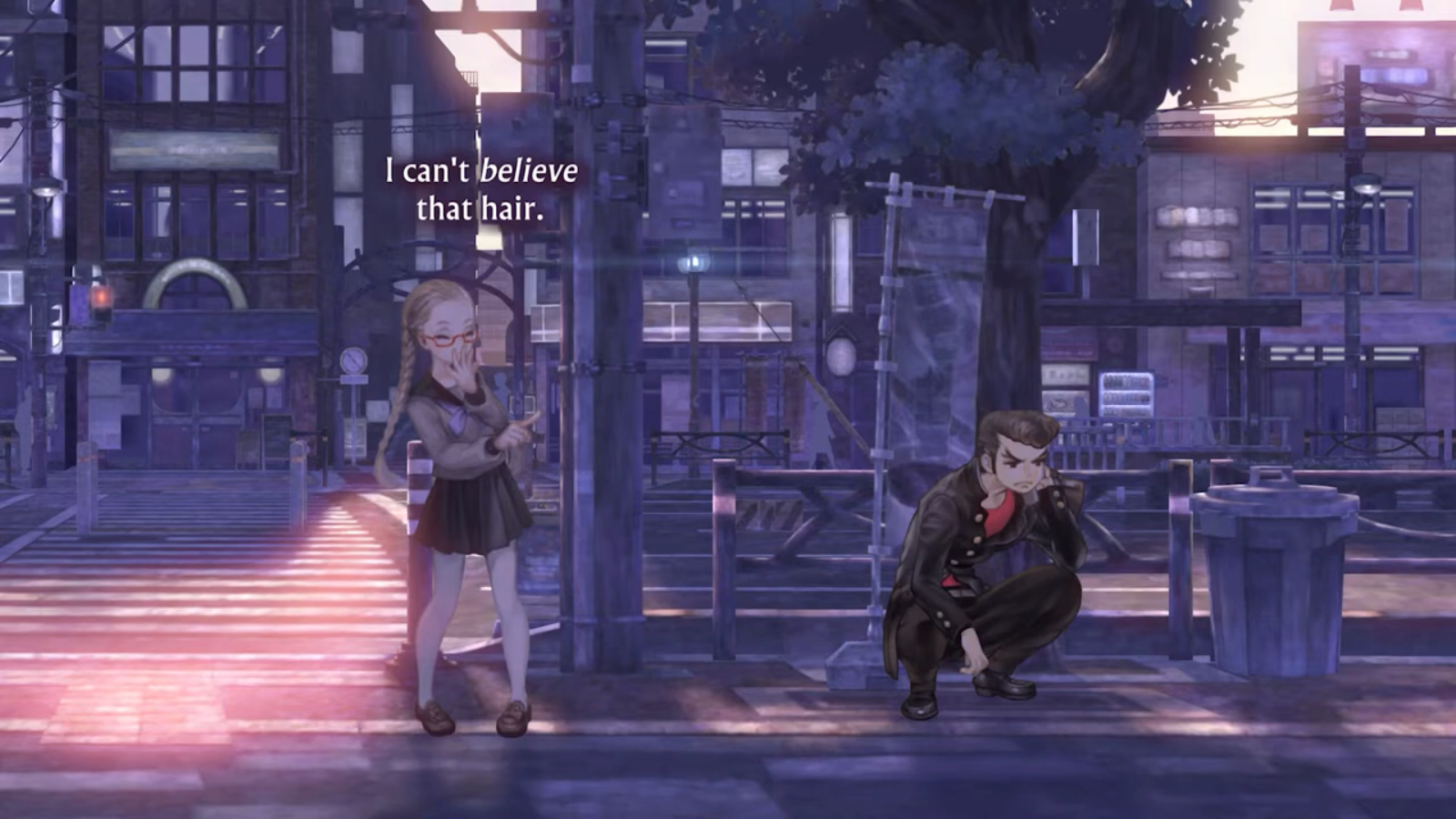
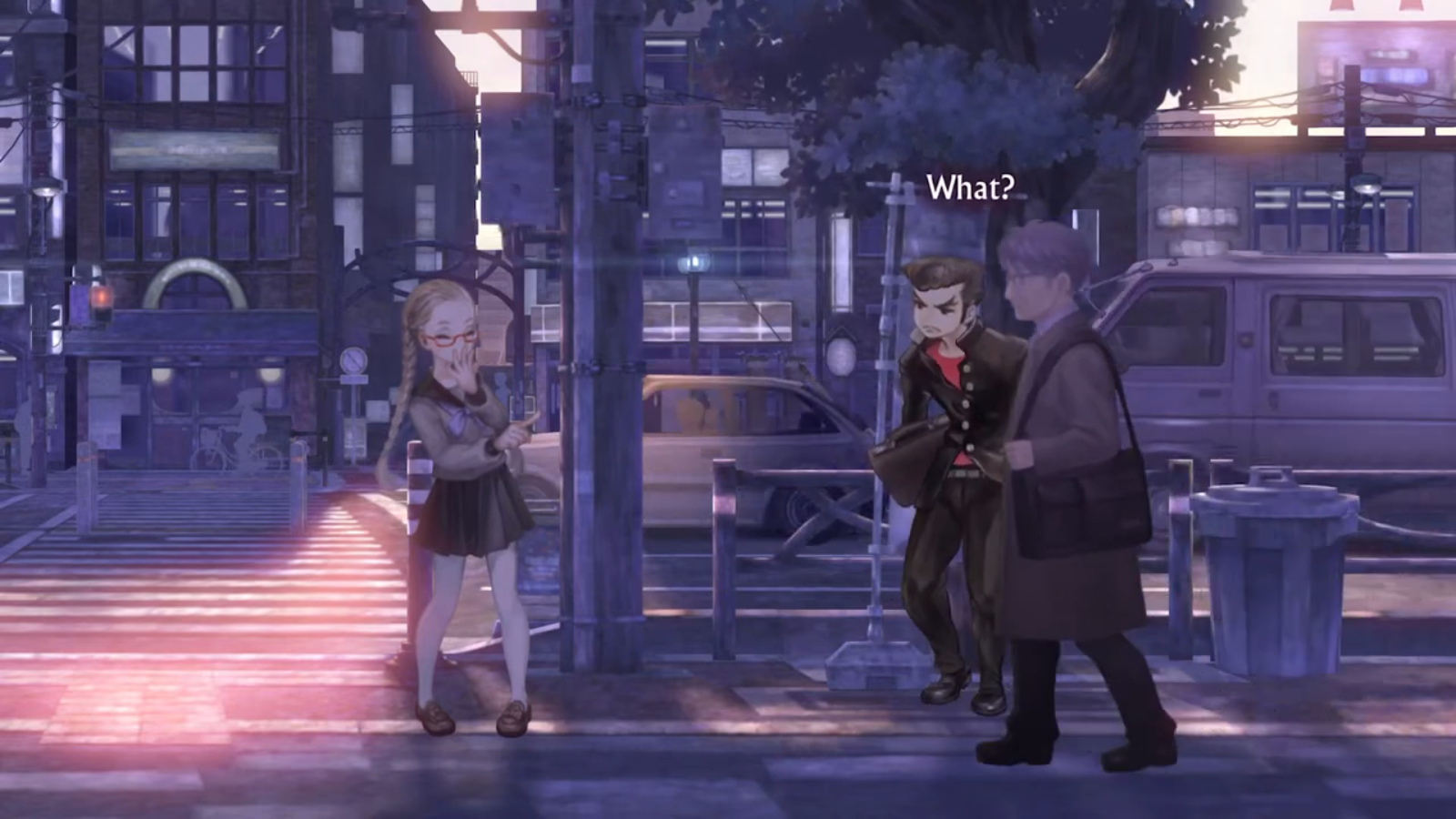
Nenji is understandably not pleased at the girl’s ridiculing of his hairstyle, so Gouto steps in to diffuse the tense situation. Once Ogata leaves, Gouto reprimands Tomi for her recklessness, and reminds her that Shikishima industries is responsible for bringing them there, and that they should respect the environment, not so subtly suggesting that they could send her back if she were to cause problems. Despite that, Tomi goes on to research as much as she can to get leverage on Shikishima, all the while befriending Miwako Sawatari and Iori Fuyusaka and trying to not spoil things from the future (because this is the 1980s, the internet didn’t exist and Miwako doesn’t know what that is). Her story comes to a head during another heated scuffle between her and Ogata, with Miwako trying to act as a peacekeeper when a bright light engulfs them, teleporting them to a ruined city.
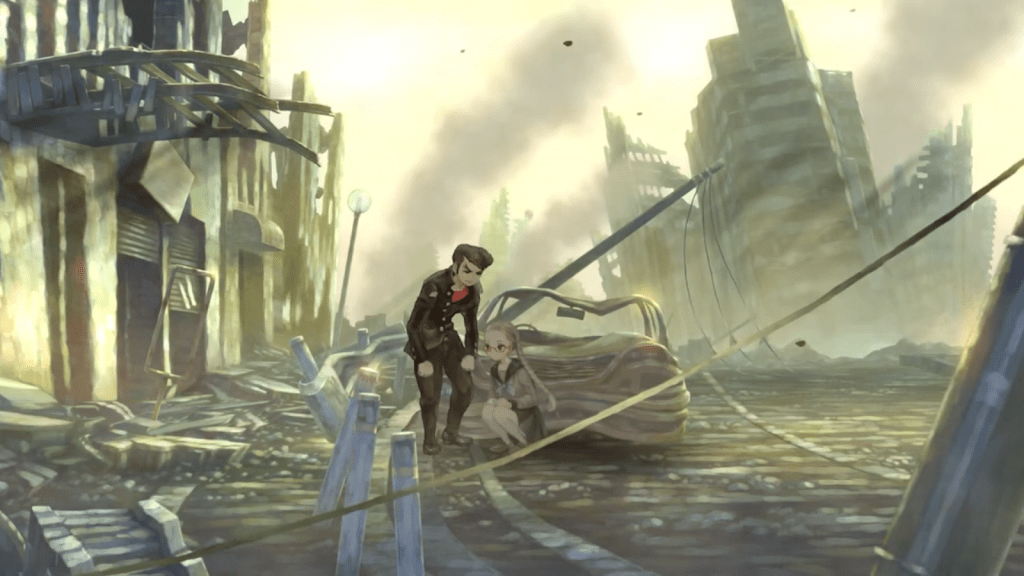
The trio ends up in the shopping district, now devoid of life and covered in ruins. Once Miwako runs off into a building to hide from a massive flying object, Tomi realizes where (or rather, when) they are, the year 2025 and that object was a kaiju. From here, most of the route revolves around the trio trying to survive in the post apocalyptic wasteland that was Japan, finding a unconscious Ryoko Shinonome in a building and Nenji scrounging up supplies from vacant convenience stores. It’s all got the hallmarks of a good survival sandbox game like ARK, but still confined to the 2D story segments. They also stumble upon the remains of kaiju, long deactivated and weathered by the elements. It’s inside one of these mechanical goliaths that they learn that the kaiju were initially cosntructed by Shikishima for use in terraforming planets.
Number 9: Takatoshi Hijiyama
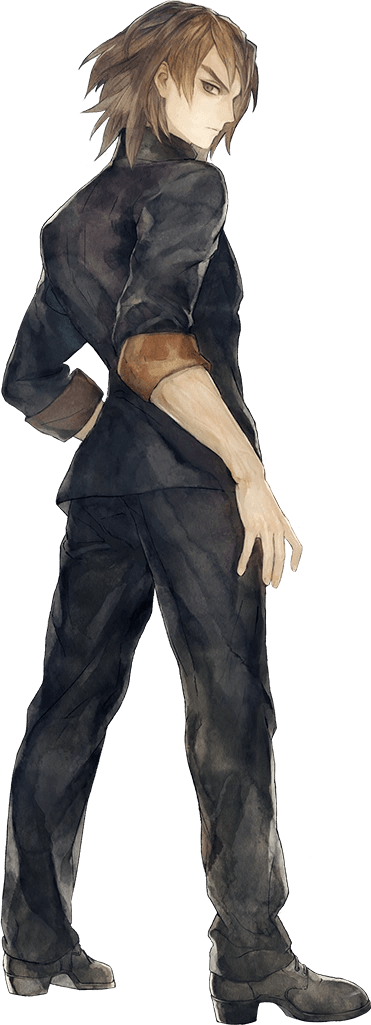
Once a navy soldier from 1940s era Japan, Hijiyama was forced into an unfamiliar era where he knows no one, has no money and is heavily dependent on the one person who put him in this mess to an unhealthy degree. His story begins at the Tokisaka shrine in 1944, where a young girl with long braids enters from stage right, noting the confusion down below and disregards it as unimportant, as all she needs to do is get out and get out quickly. But her departure is hindered by the gate being locked, and Hijiyama arriving in military garb.
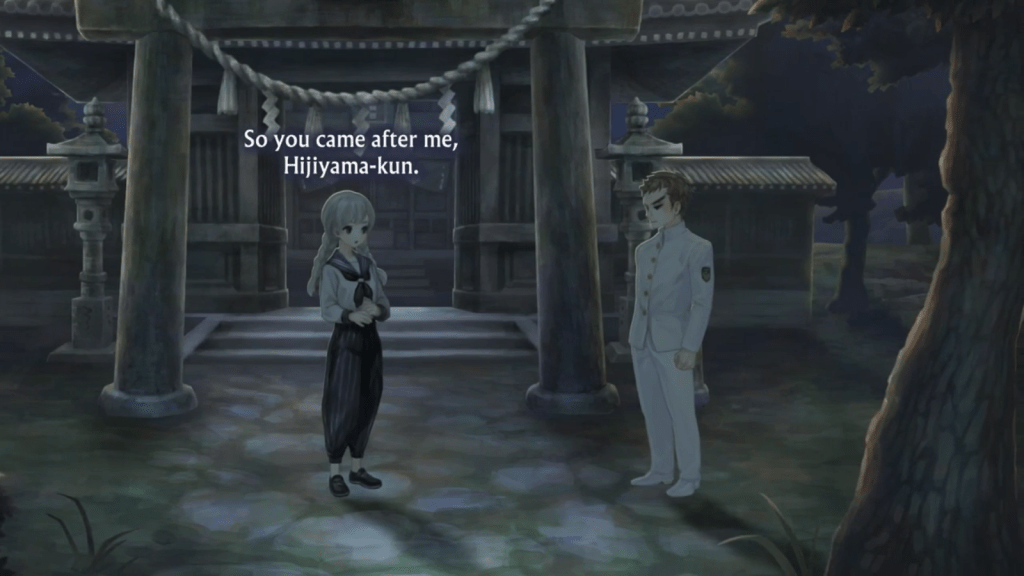
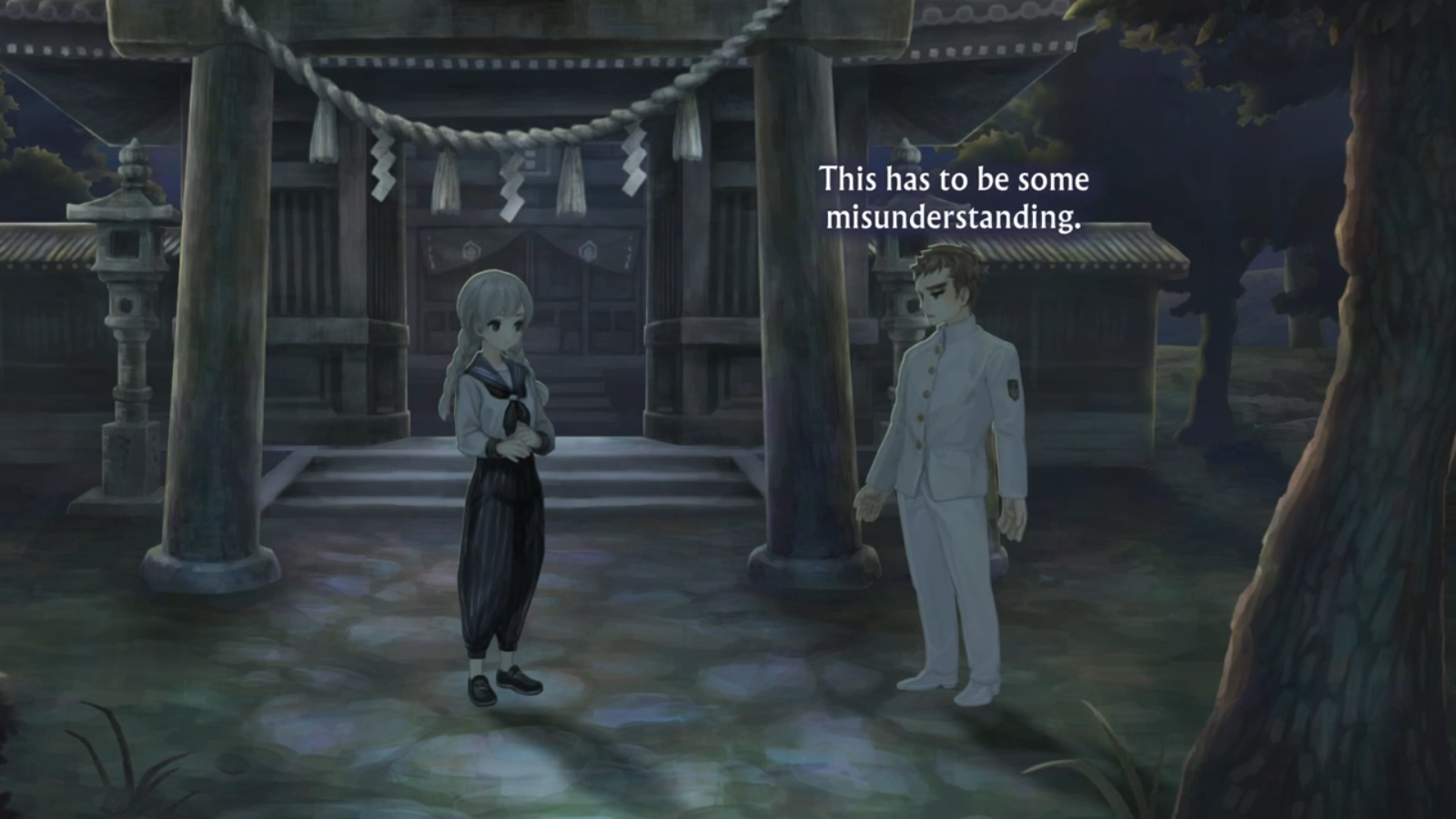

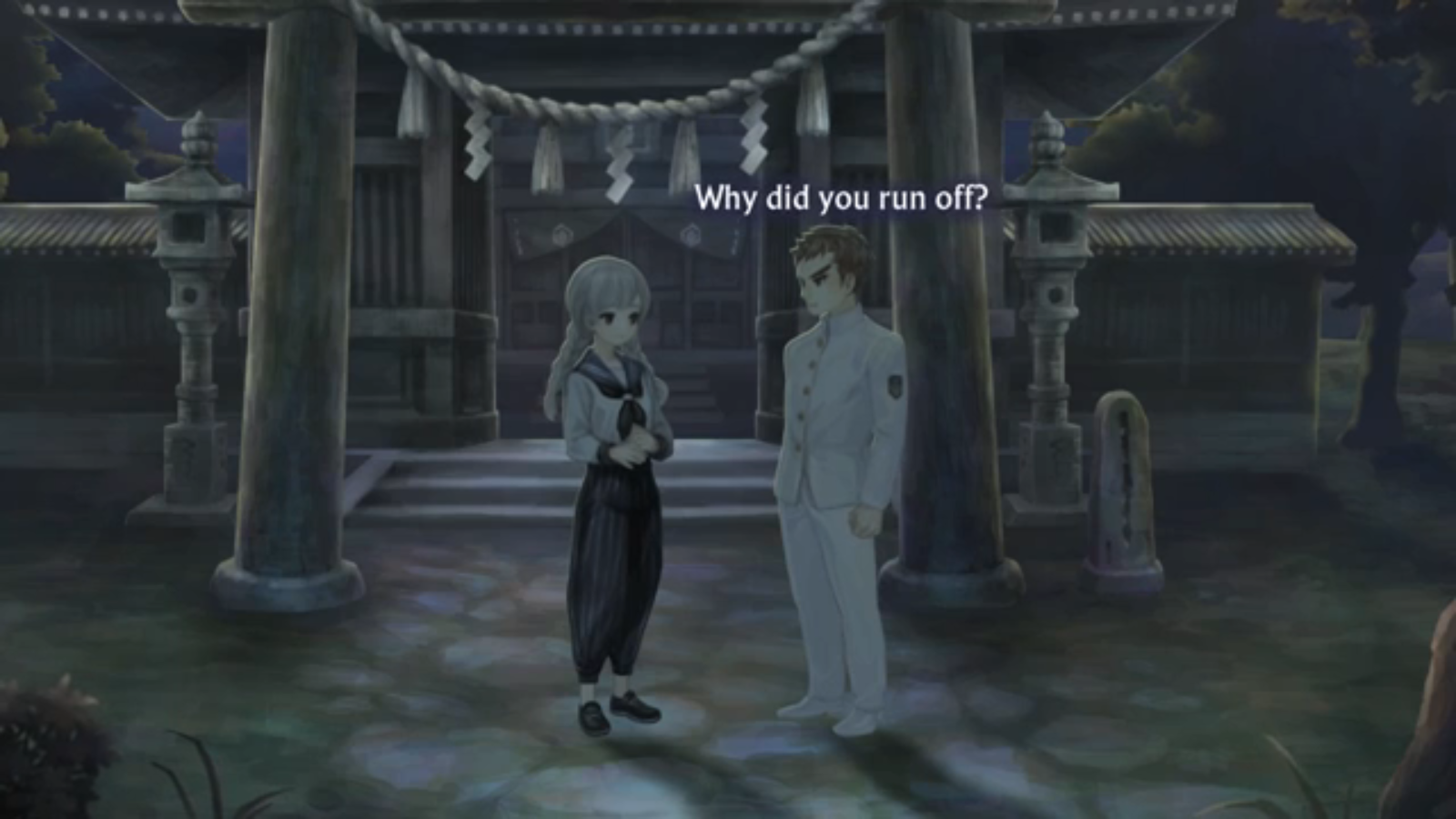
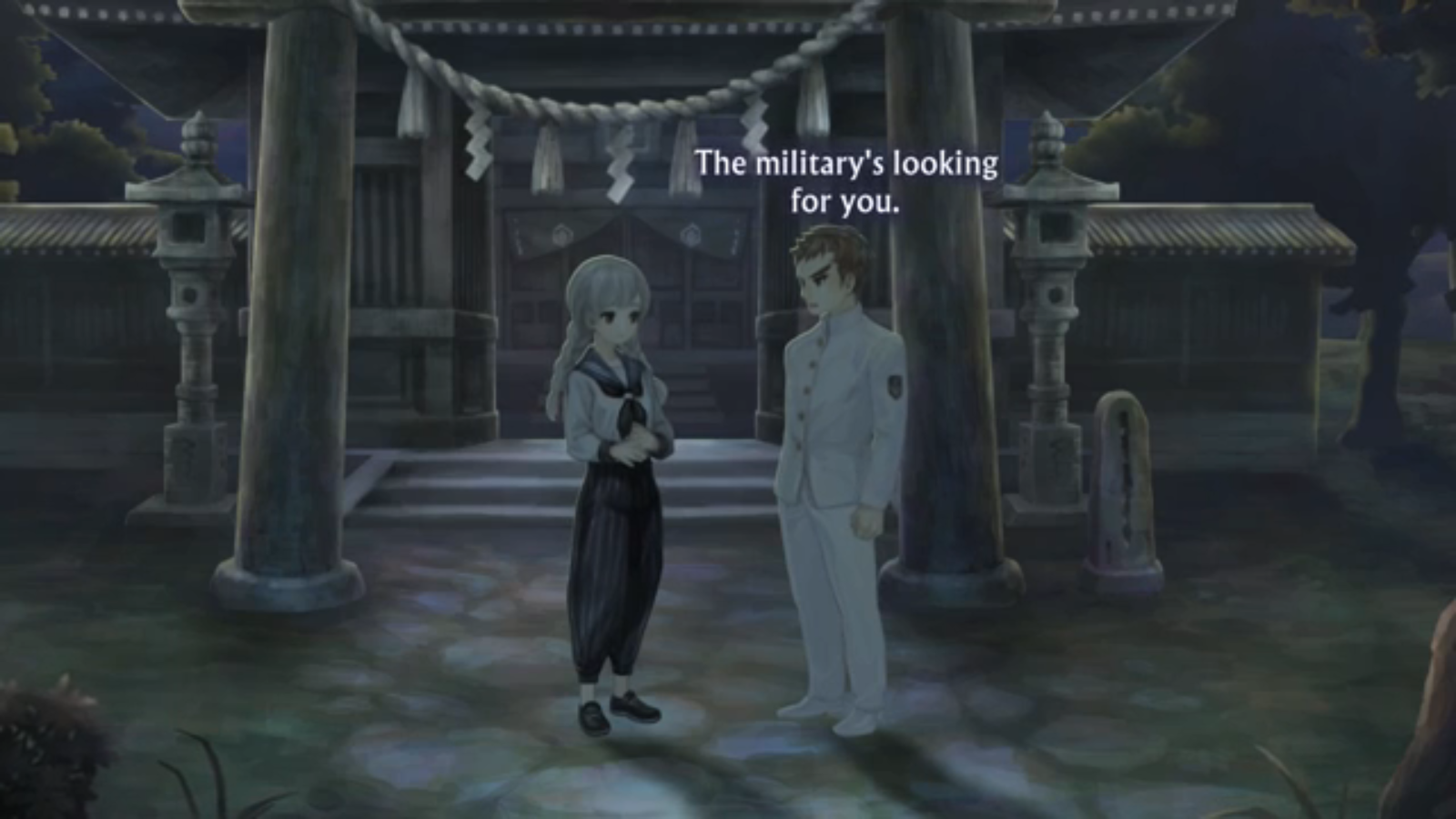
This woman (whose name is Kiriko Doujii) explains that she isn’t even Kiriko Douji, the real one is in Tokyo and that she isn’t a spy, “I don’t need to steal any secrets on the Sentinels, I’m the one who built them after all”. After a brief exchange which leaves Hijiyama confused and alone near the shrine’s gate. But a silver haired man arrives shortly afterwards, and Hijiyama (who was hiding behind a tree) comes out and corners him. The “spy” tells Hijiyama that he came to the shrine for a reason, and when Hijiyama demands to know

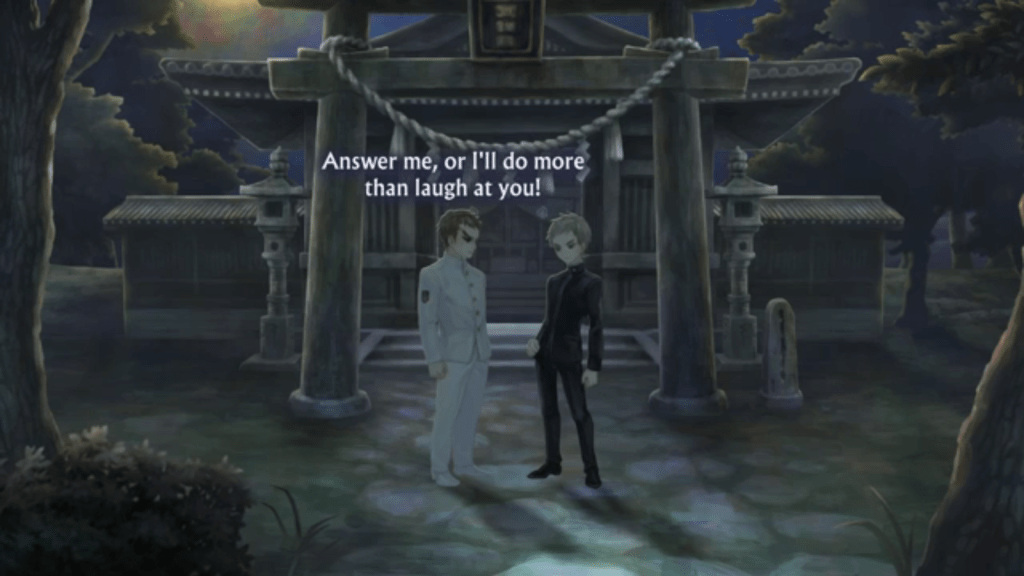
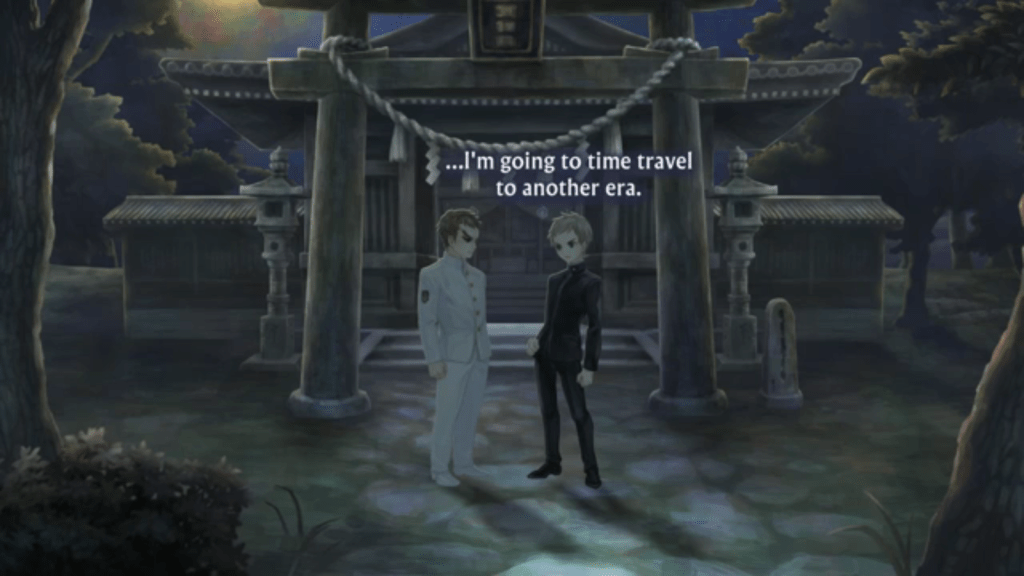
Like any rational human being, Hijiyama doesn’t believe him, but the stranger states that “Kiriko Douji” did just that a while ago, and drops another revelation to Hijiyama: She (Douji) is a man, and his name is Tsukasa Okino. The stranger orders Hijiyama to stand back, but the ornery officer declines and ends up transported to 1985. Which to anyone would naturally be a massive shock, but to a WWII era Japanese citizen, must really upend everything that the person would know. Not only had Japan surrendered (something that both 1940s era characters can’t believe) but the country stepped away from the traditional values that they were used to and entered a more modern approach in both city and suburban life.
Takatoshi’s route focuses on his relationship with Tsukasa Okino, and how it deepens the longer they spend time together. For a lot of people, the idea of their partnership evolving into romantic love is seen as progressive (especially considering Japan’s views on same sex attraction) but for me, it doesn’t seem that healthy of a relationship. Throughout the route Hijiyama is heavily dependent on Okino for cash and the latter abuses that situation to keep him around as an errand boy and muscle for his projects (which, given Okino’s dependency on using his brains, is understandable), and I can’t be the only one who sees it that way. I felt bad during the times where Hijiyama had to scrounge up money from the school yard just to afford a yakisoba pan (something that he will repeatedly state, is one of very few things that he trusts in this era) from the cafeteria. That being said though, there was one interaction near the middle of the route that I genuinely enjoyed, and that was when he reunited with Keitaro Miura.


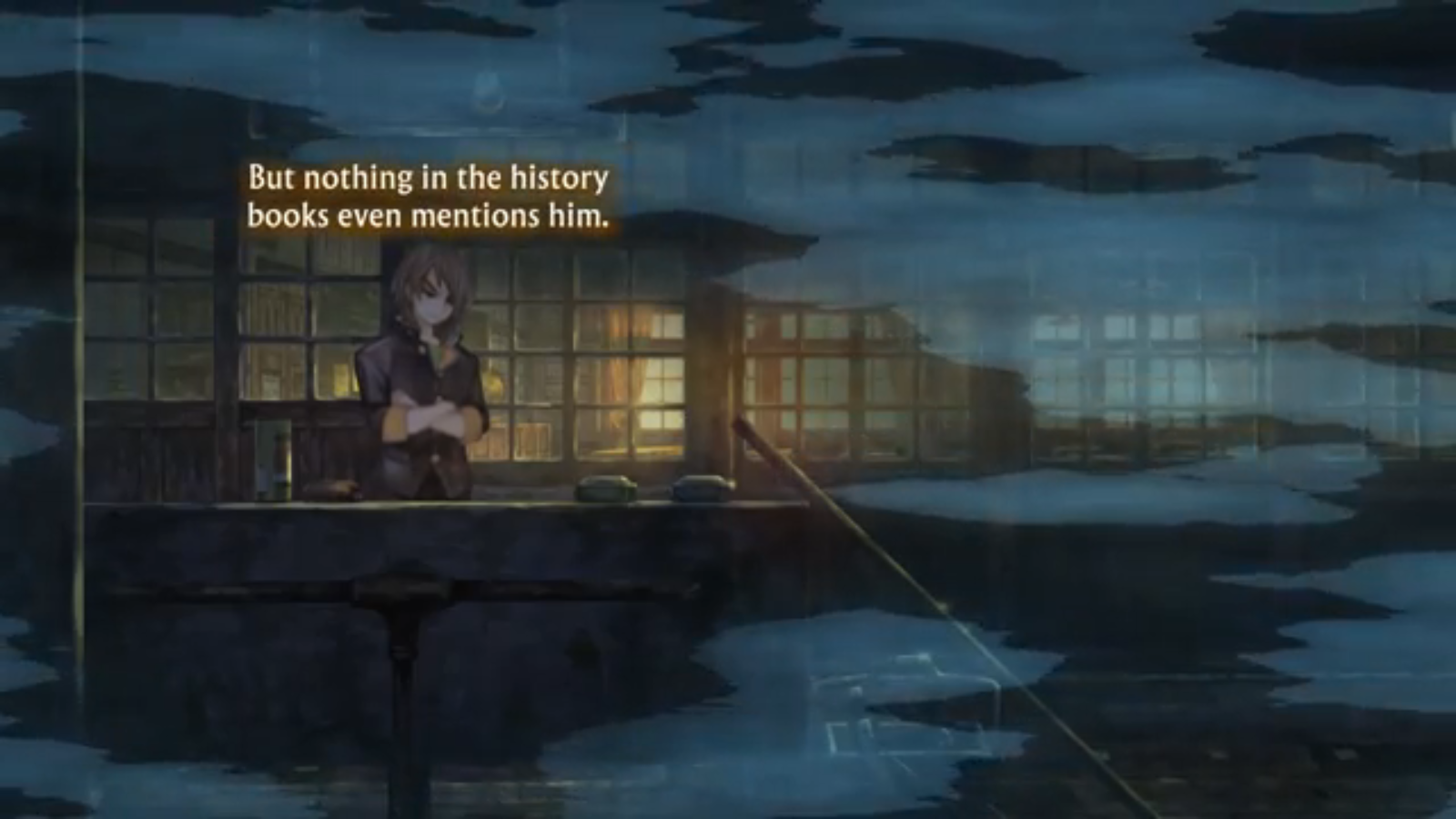
Since he was plucked from his era so abruptly, Takatoshi has no idea what happened to the other people he knew, as last he saw, they were under attack. His fellow soldier Keitaro Miura was likely chosen to be the sentinel pilot, and since 1980s era textbooks don’t mention him, he assumes the worst and that his friend is dead. Wandering the old school building they once entered, he’s shocked to see Miura himself appear behind him.
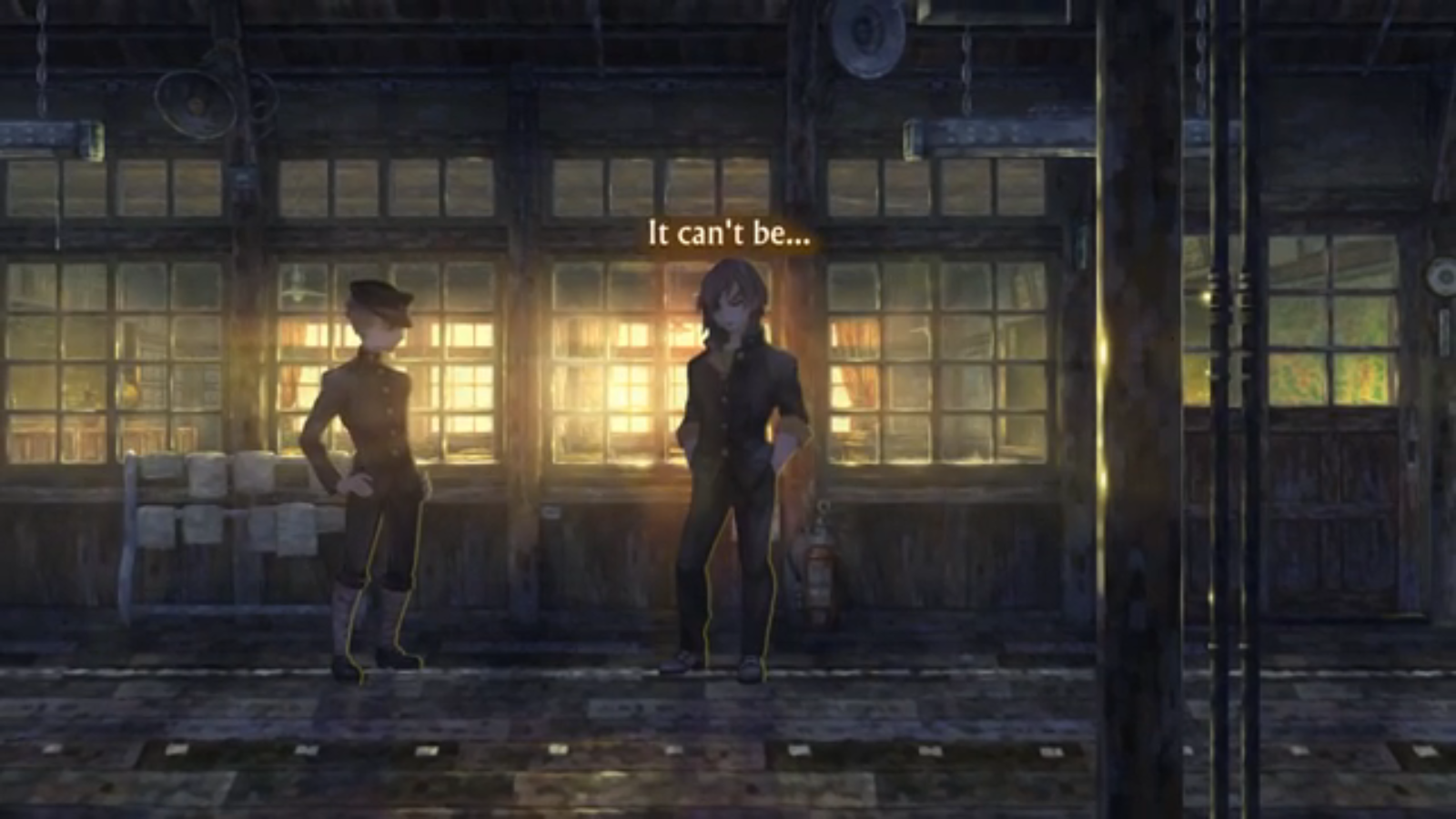


Miura doesn’t recognize Takatoshi initially, but on closer inspection he realizes that it is indeed his old friend. They catch up, debate over which food is better (yakisoba pan or hemborger steak) and are just really happy to see one another. It’s a great scene, truly one of the best the game has to offer and something that genuinely made me smile from my heart (which as Mr. Cosmia can attest, doesn’t happen much these days). There’s truly nothing like a reunion between old acquaintances that lifts both spirits, no matter how long they’ve been apart.
Number 8: Iori Fuyusaka

The closest there is to a female protagonist, and one of the first available stories. She’s a narcoleptic girl who succeeds in some courses, but fails in others. Like Juro she’s also plagued with strange dreams, but she tries her best to live a normal life and enjoy the time she has with her best friends Miwako and Tomi Kisaragi, eating sweets and shopping. And when I say they eat sweets together, I’m not kidding. These ladies eat enough for an entire army if every individual route were one consistent road, I thought to ask Mr. Cosmia where it all goes in the end, but uh, we’ll get to that and my opinion on it.
What was I talking about? oh, right, Fuyusaka. Her story begins with her doing her best white rabbit impression as she runs to school, having slept through her alarm. She darts to the building with toast in her mouth when she collides with a young man with silver hair. (which is some Japanese belief that I don’t understand)
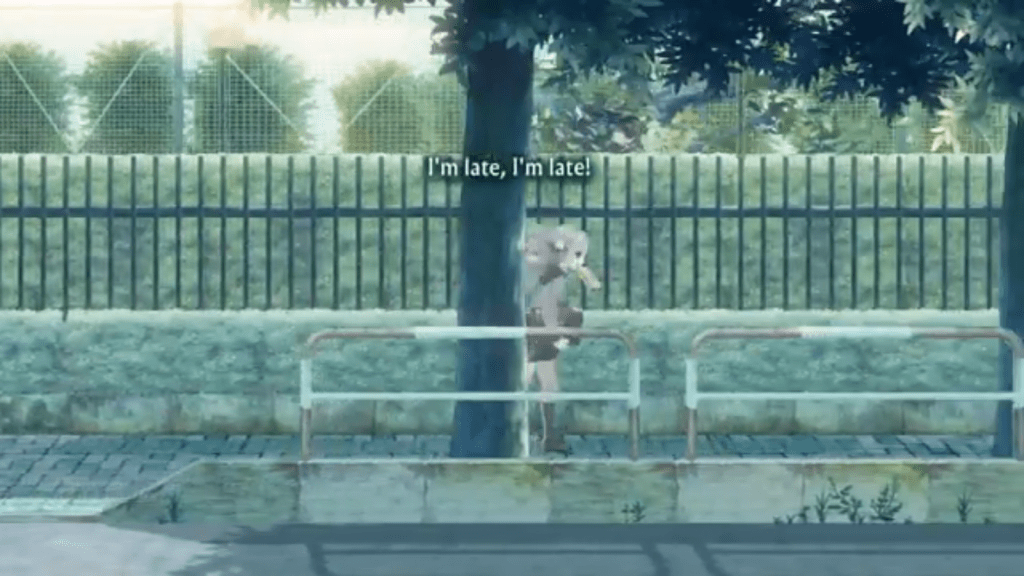

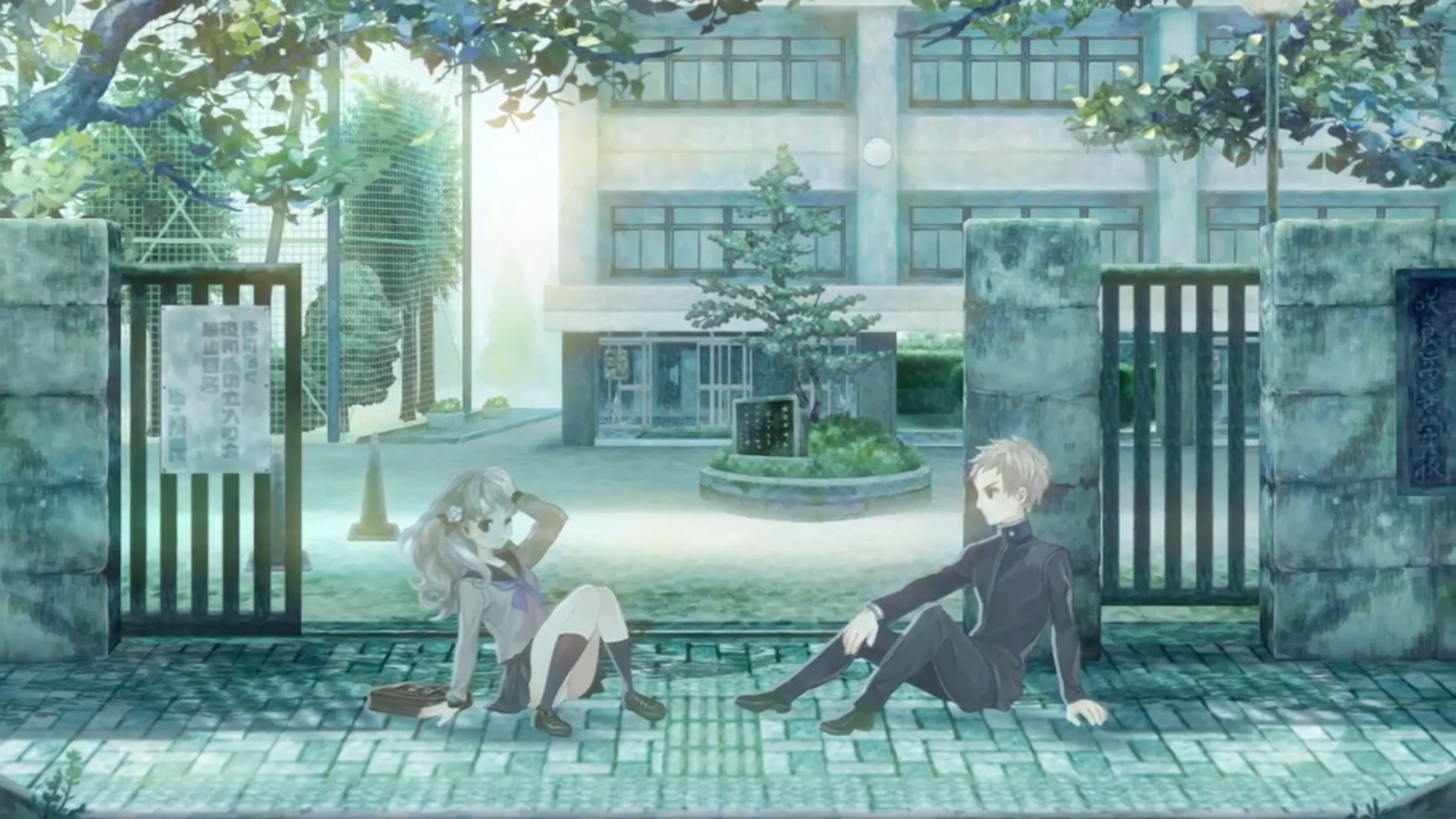
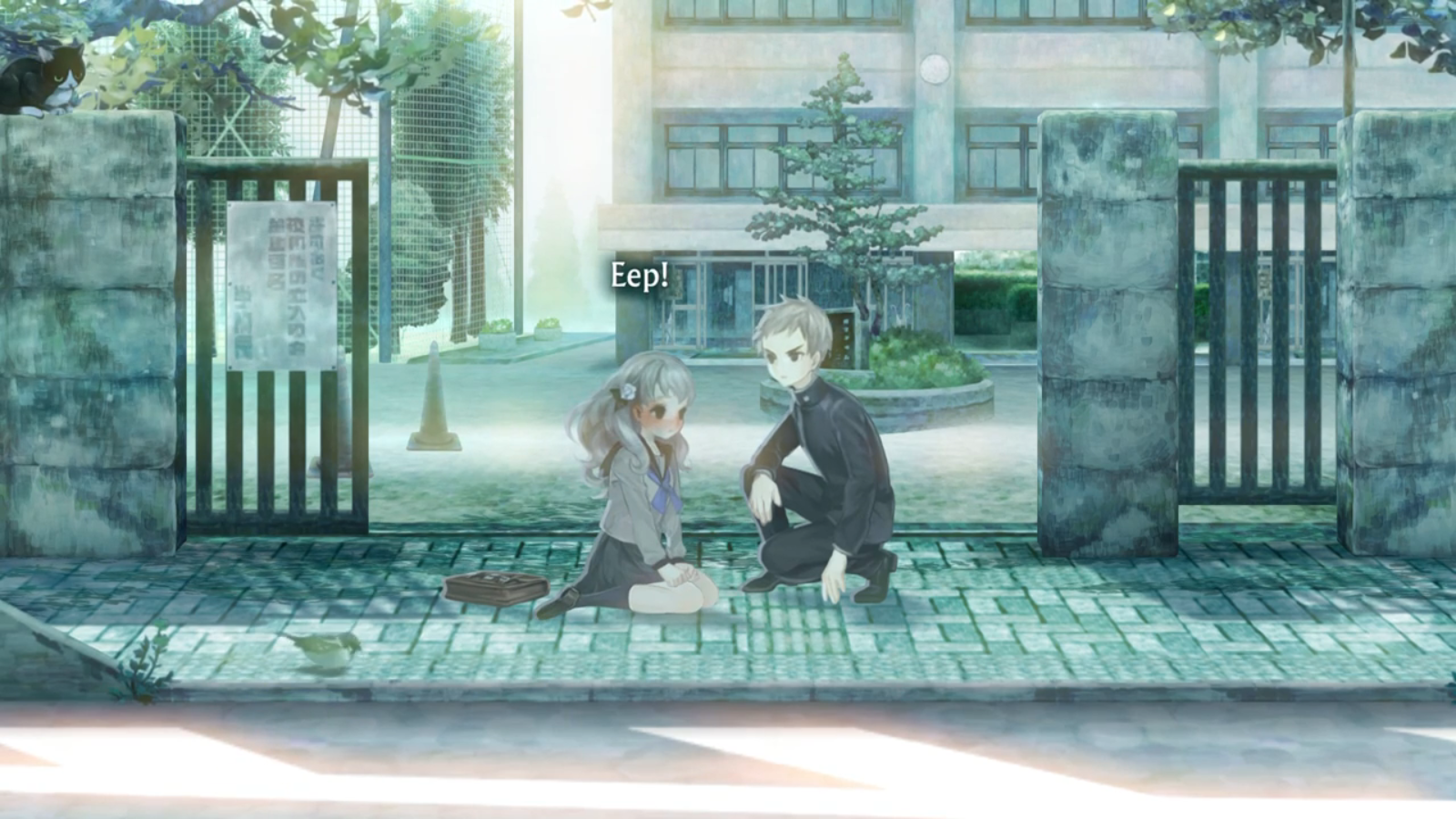
Following this she meets up with her friends, Miwako and Tomi Kisaragi where they discuss the collision. Miwako, being an expert on romance declares that it is fate that they met each other, and that it’s meant to be. The trio get their things and head out for food, the options being crepes, soft serve, nikuman, hot dogs and yakitori. While conversing over the various carryout options, Fuyusaka can’t help but reminisce on various conversations that she’s had with Juro, and that she for some reason can’t stop thinking about him.
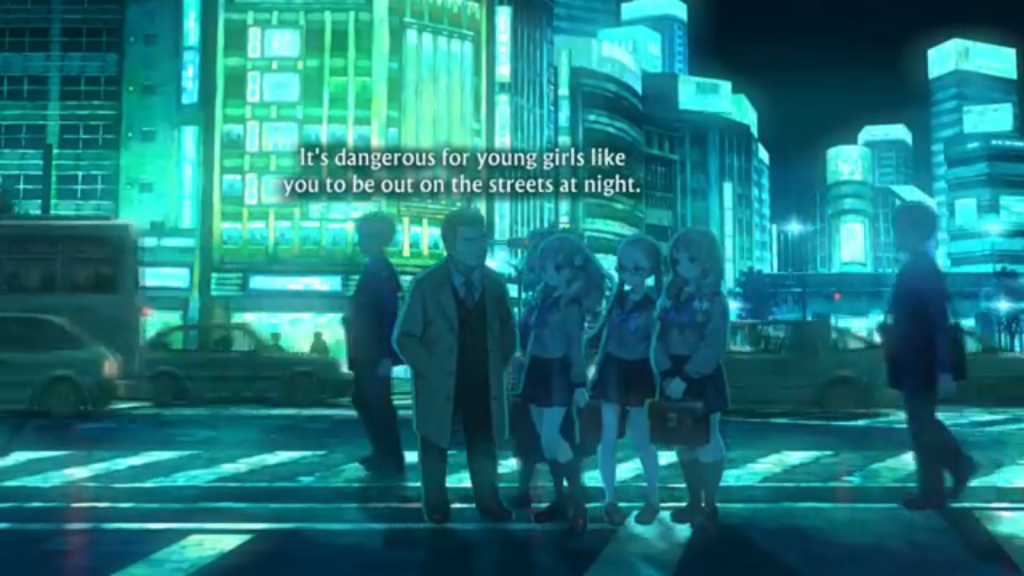
Later down the route, the trio of girls end up at Tsutsuji Station after the sun has gone down, as Miwako was busy trying to get a record, checking three stores in the span of 3 hours only to come up empty. After Iori calls her father, they try to leave stage right but encounter Wajima, who they know will harass them. Not wanting a confrontation, they head left right into the sights of detective Heizo Onishi, who accosts the young ladies for being out so late. He lets them off with a warning this time, but cautions:
With no other choice they are forced to go right and Wajima sees them, initiating them in conversation. They’re saved by Onishi, but not for long as both Miwako and Fuyusaka are in a dingy alleyway cornered by Wajima and his two thugs. Naturally, anyone with eyes can see that this is going to result in a very bad situation, and Wajima makes his intentions VERY clear.

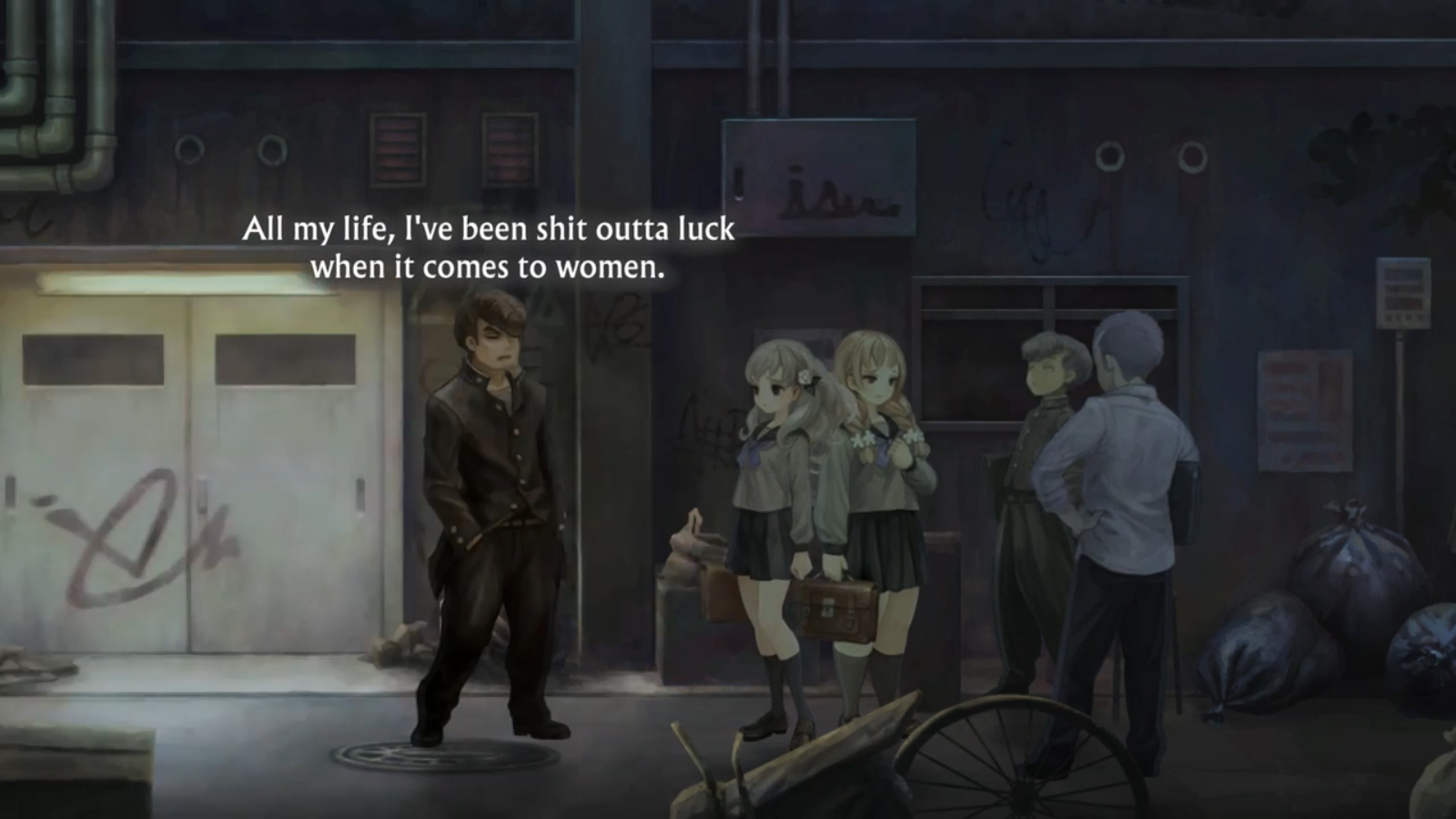
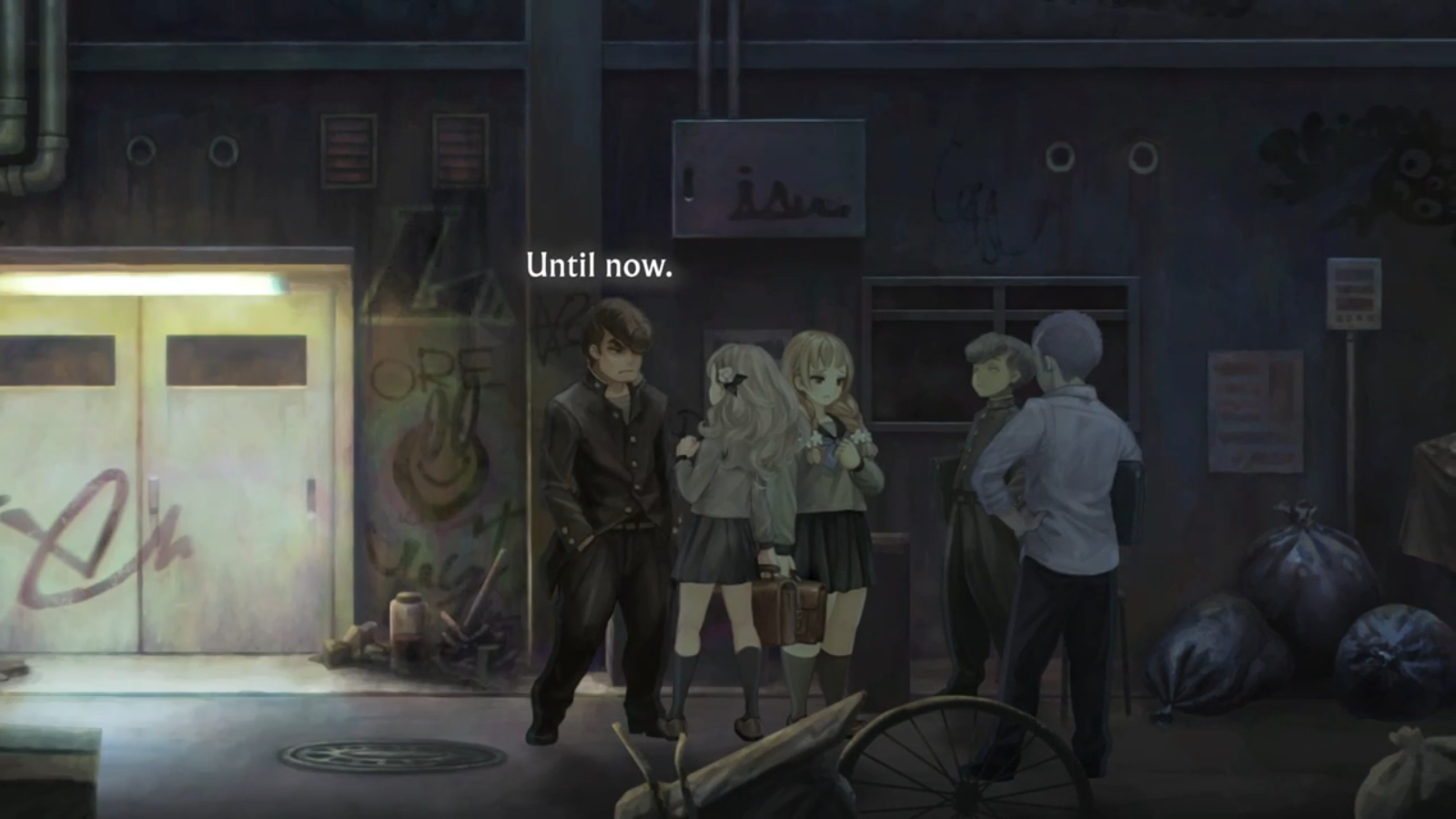

Before this situation makes this game X rated, the ladies are saved by Ei Sekigahara. who handily subdues the would be rapists and then flees the scene, stating that him saving them was “mere coincidence”. Fuyusaka, not wanting to let a good thing get away pursues Sekigahara on the busy city streets. I could go on, but what happens next is a bit too involved, so let’s just say she finds and convinces him to be her boyfriend (if only real life were that simple). Her story ends with Ei gifting Fuyusaka his sentinel, No. 15 so that she can fight, which steels her resolve to fight for those that she holds dear and protect them.
Number 7: Yuki Takamiya

A gruff sukeban (which the internet tells me is a female delinquent) who lets her fists do most of the talking. While she has a rather prickly exterior, she cares deeply for her friends and doesn’t abide by underhanded tactics and preying upon the weak. She’s good friends with Natsuno Minami, and her story actually starts with the two reuniting after not having seen each other as kids.

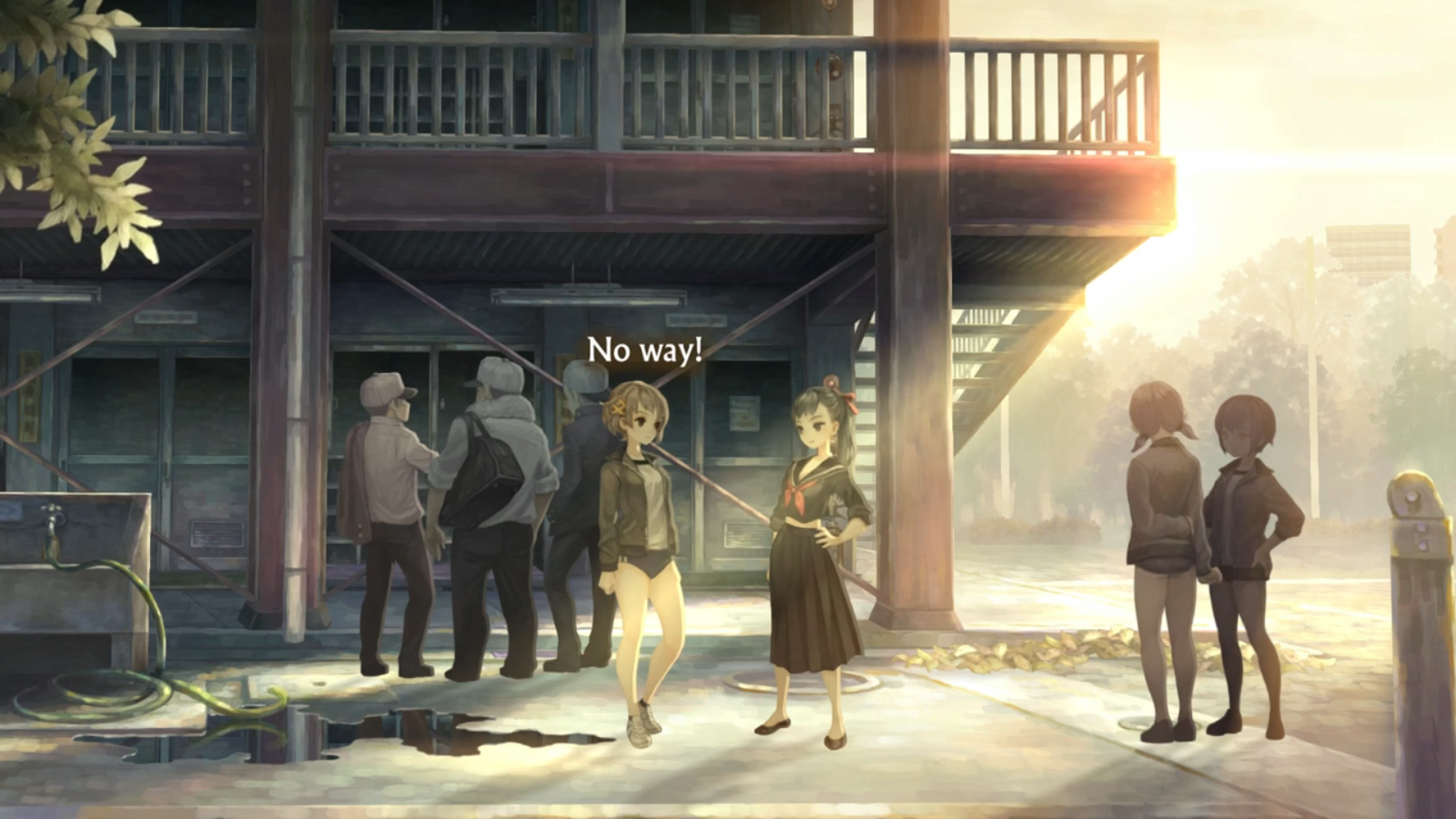
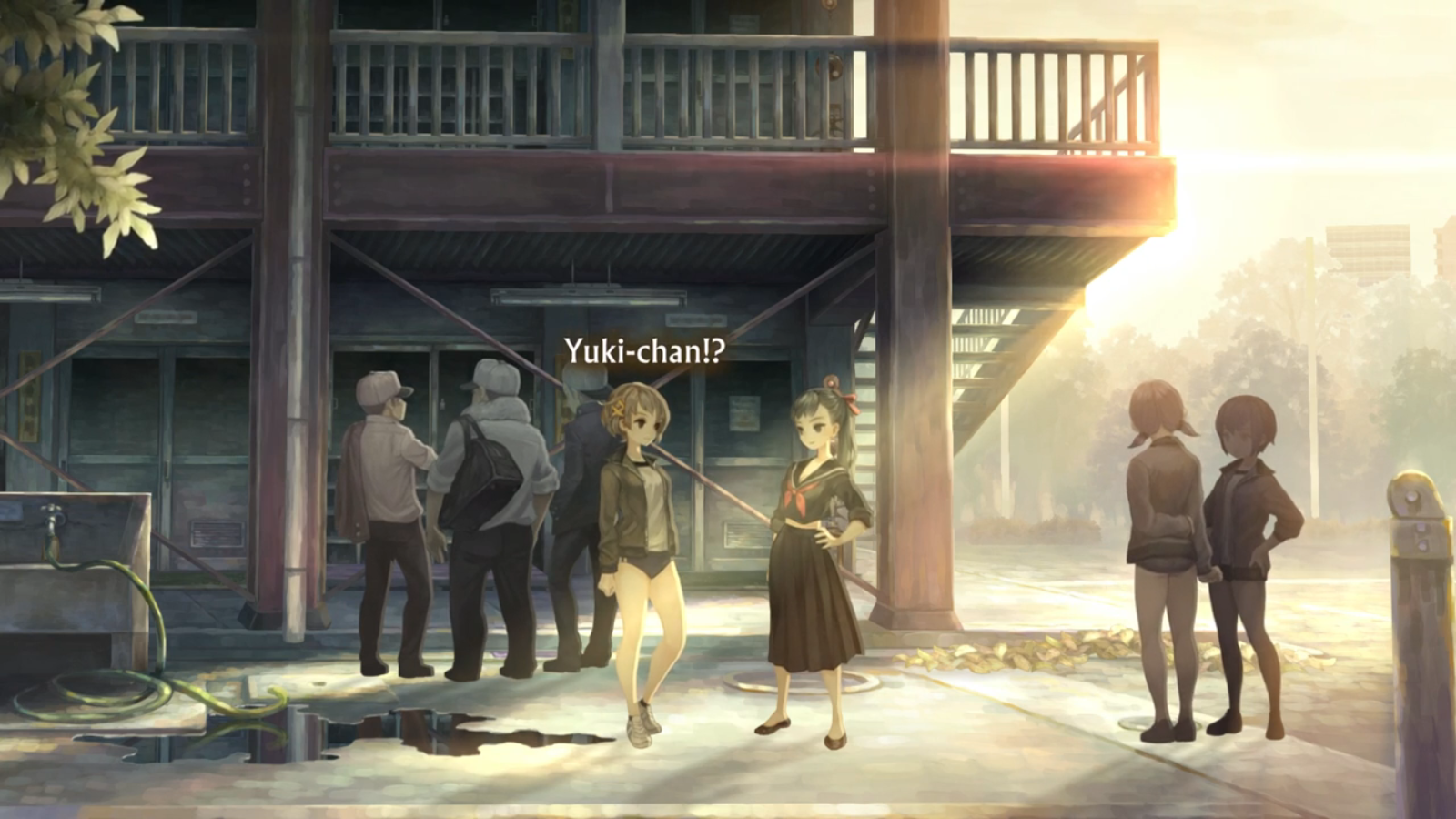
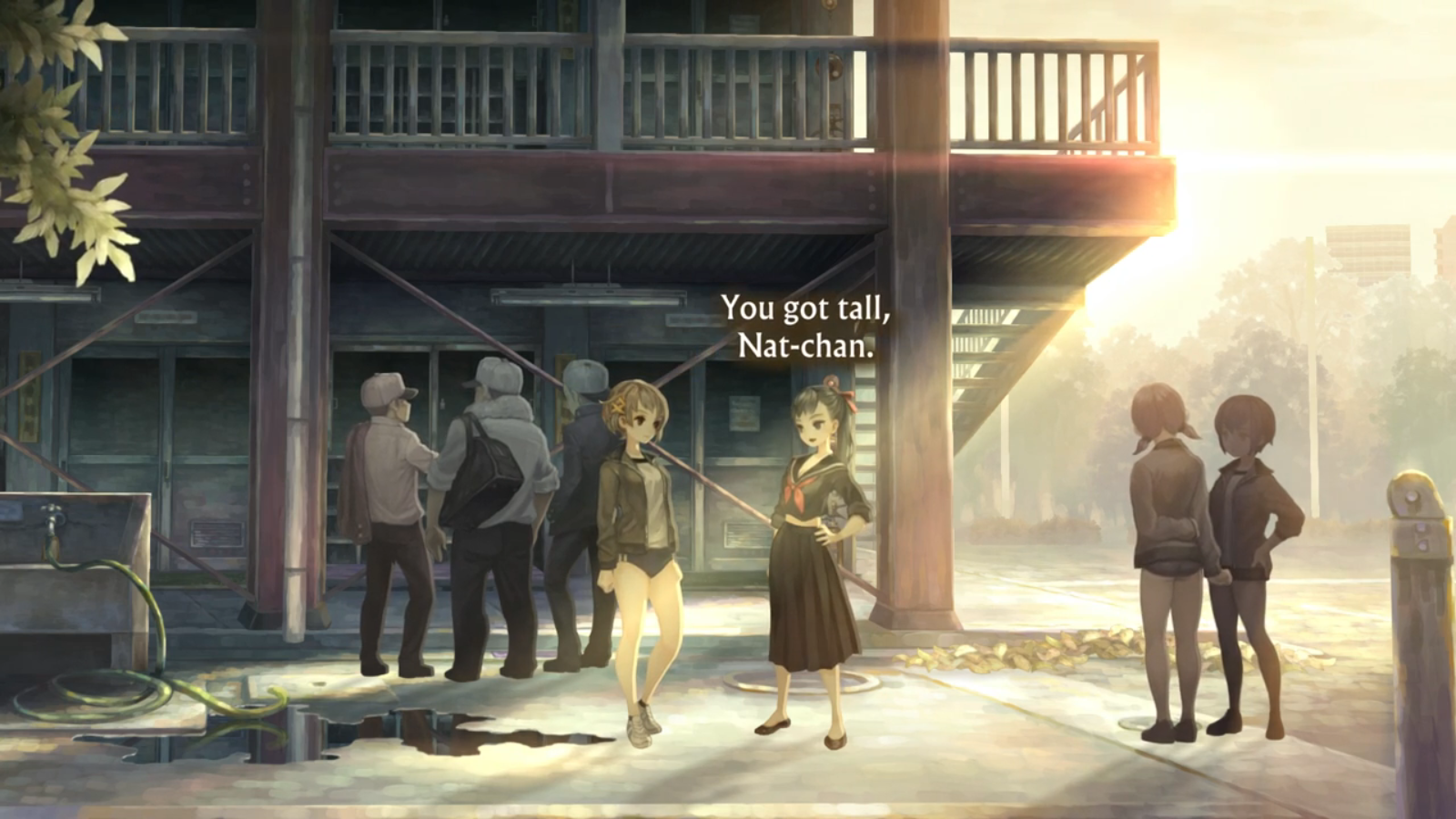
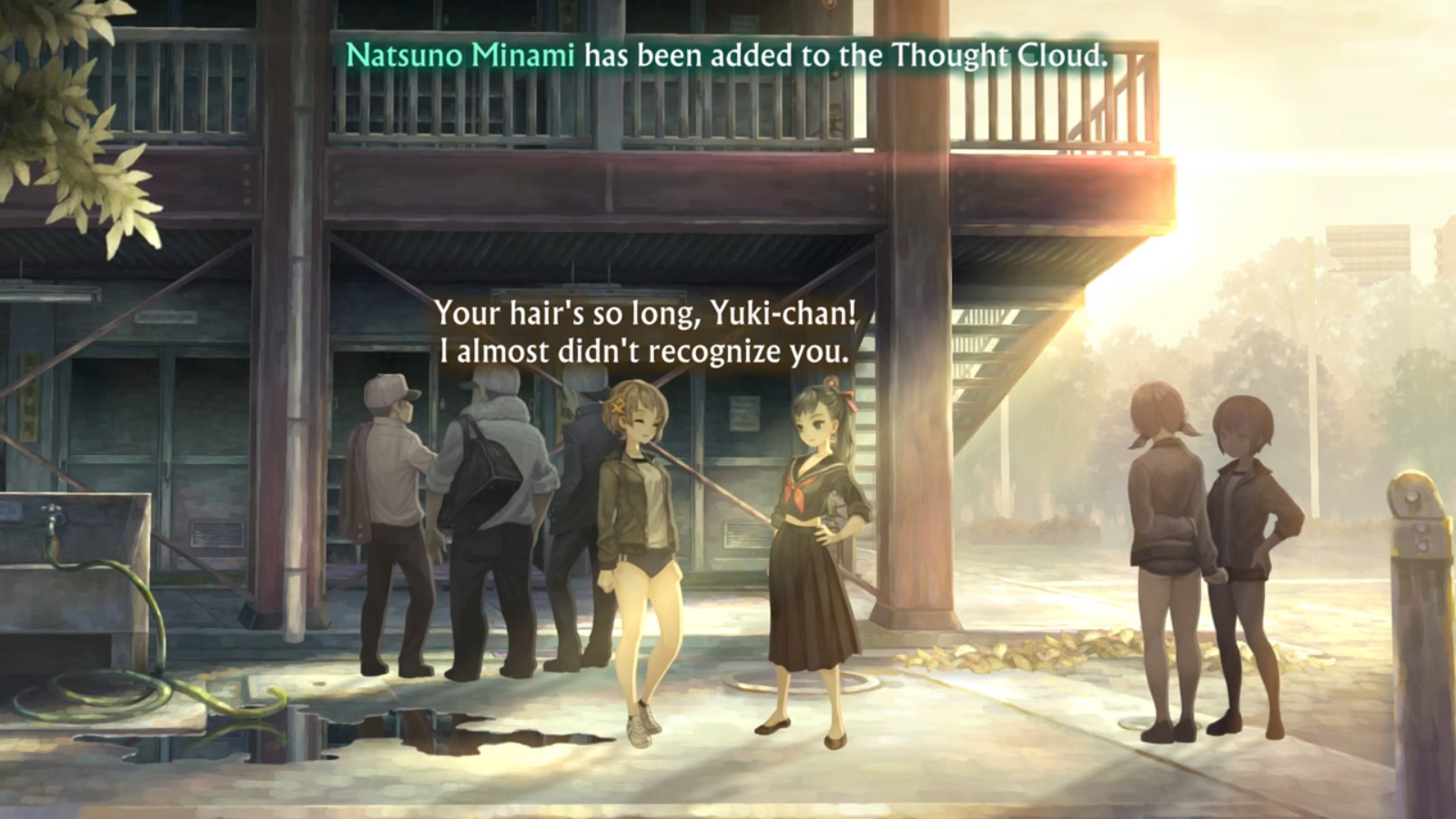
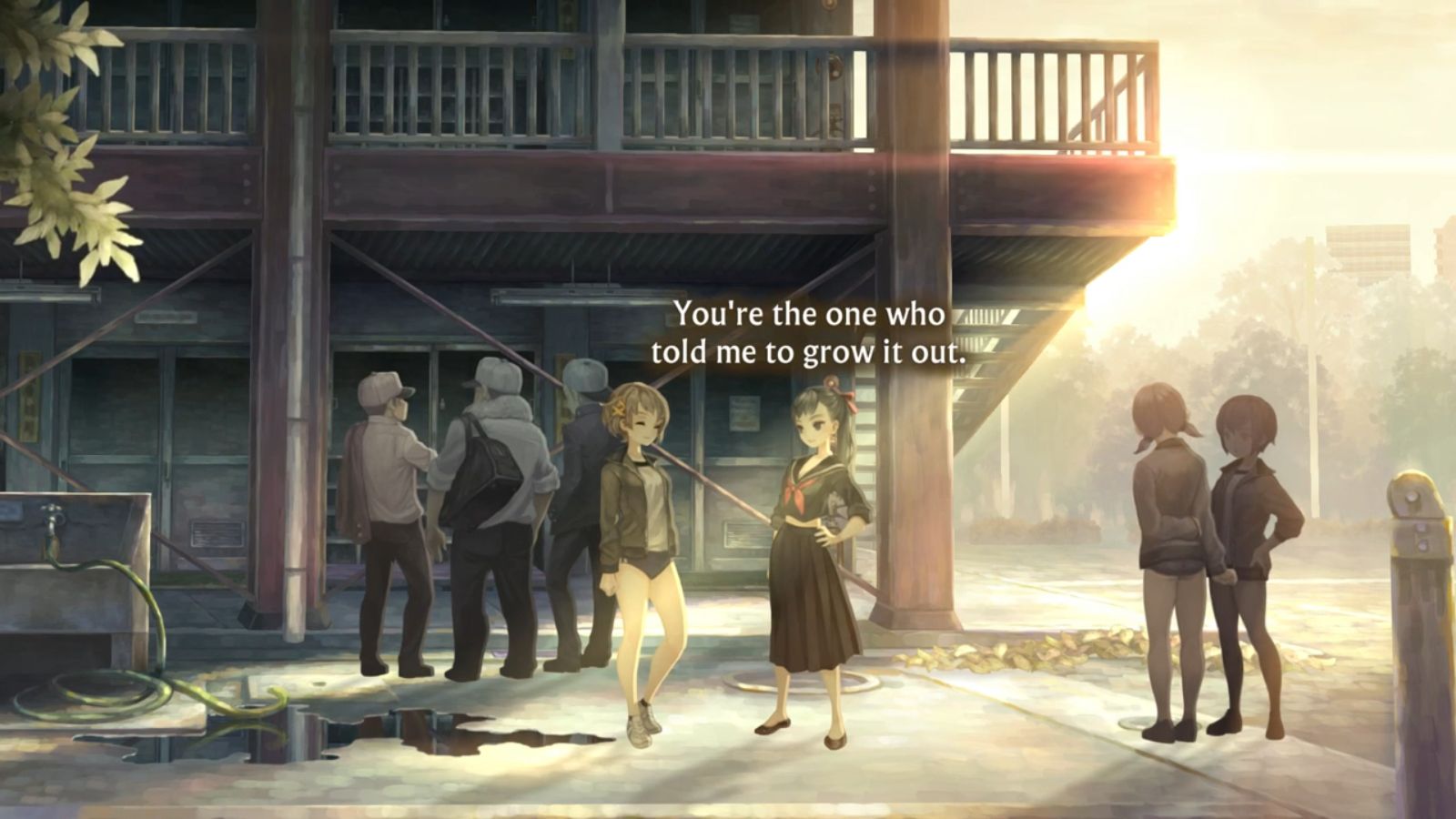
Unfortunately, her pleasant mood is immediately soured by local sex pest Shu Amiguchi, who overhears Natsuno’s nickname for her. After angrily asserting herself, Nenji Ogata comes in and asks why she transferred over to their school this late in the year, and Takamiya reflects on why that happened. A few days before this interaction detective Onishii the ogre brought Takamiya to the SIU office to meet with a mysterious man, after she was caught following an incident regarding her entering a boy’s school and resulting in 12 hospitalizations from fighting there. The man claims her skillset is unique, and would be invaluable to them, extending an offer for her to work with them. Takamiya though, has her own opinion on that statement:
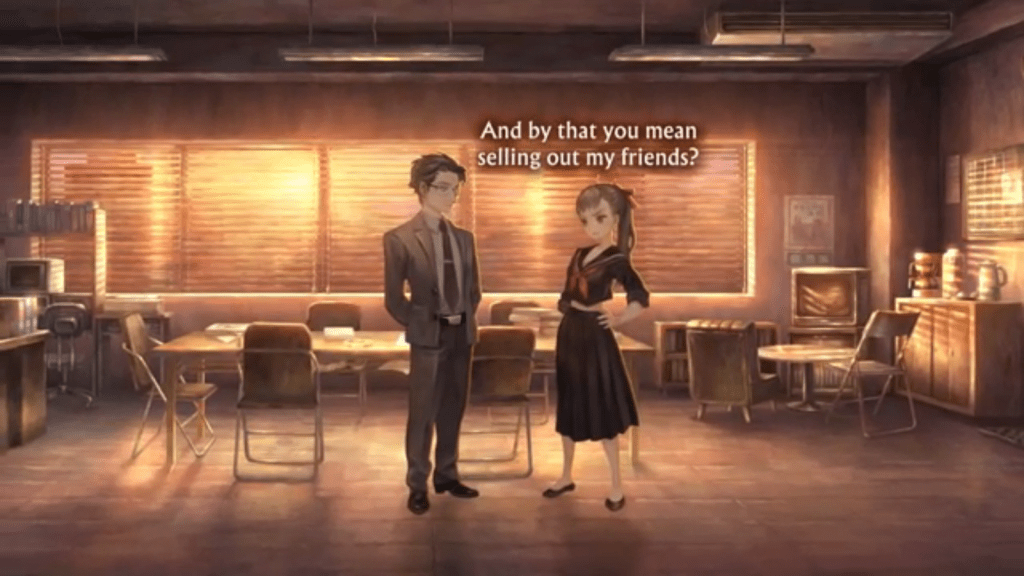
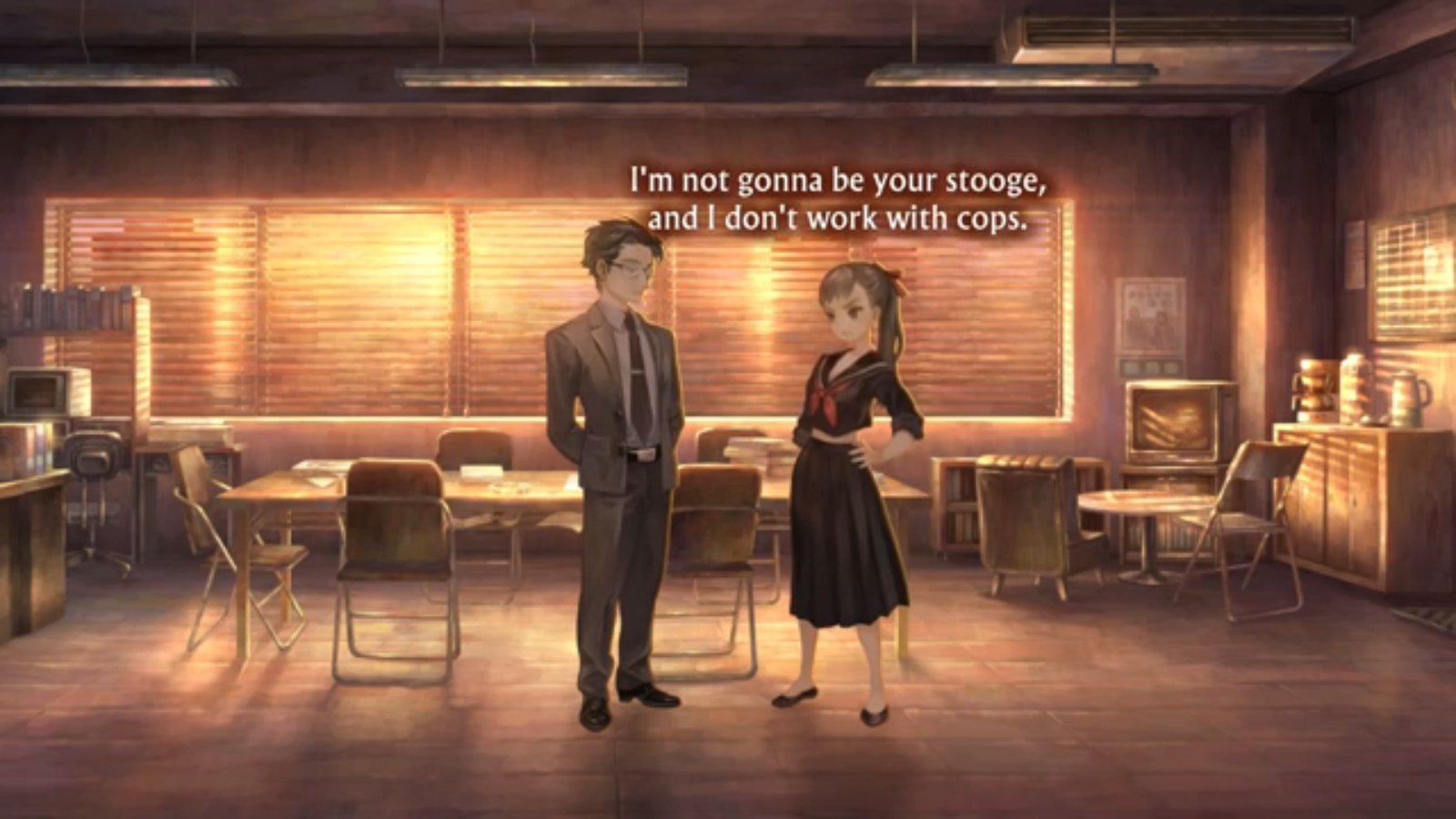
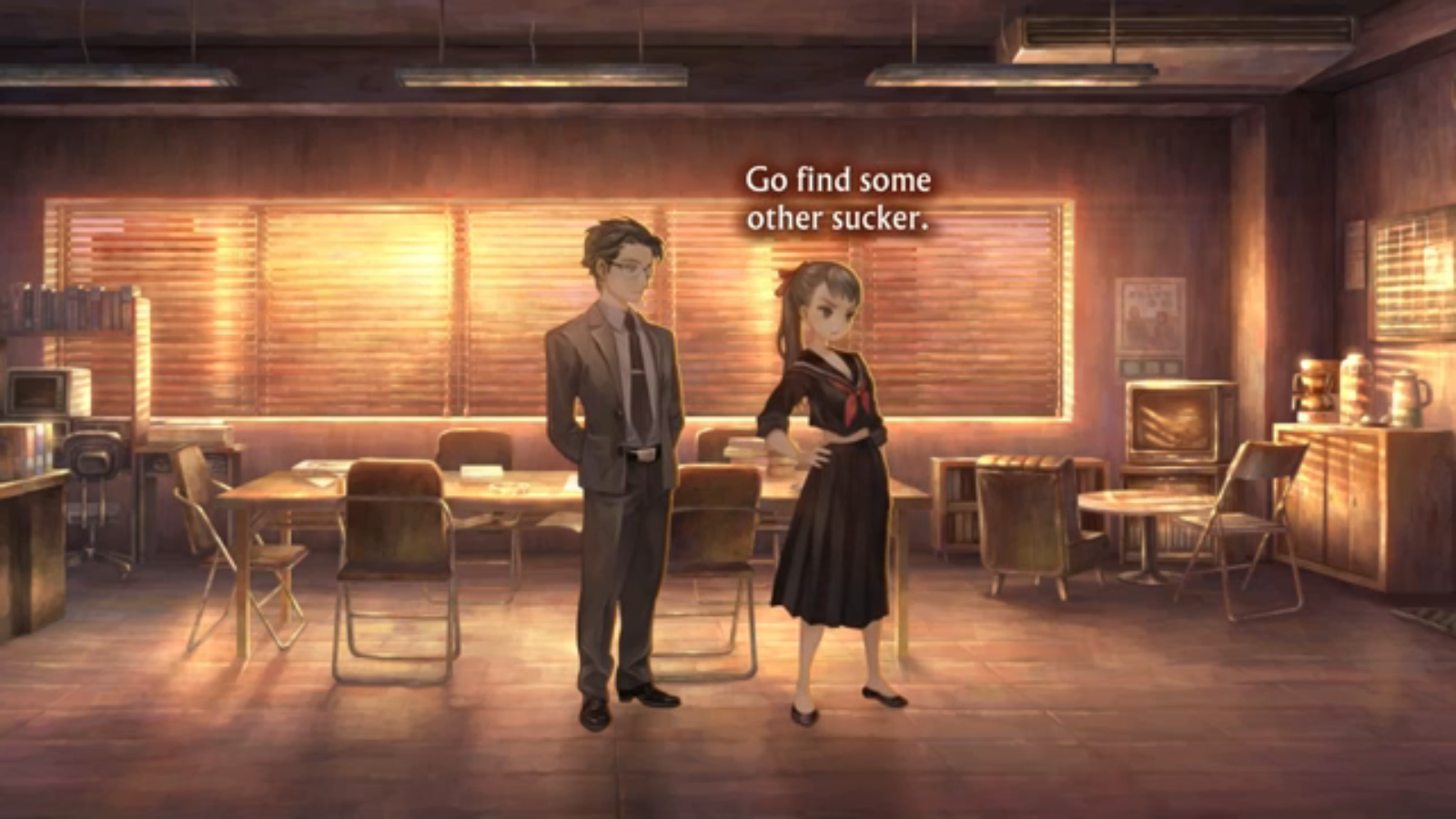
However, the man states that she doesn’t really have much of a choice, as her father, Heita Takamiya is in prison, recieving beatings and assaults left and right for murking a yakuza boss. He explains the deal in simple terms
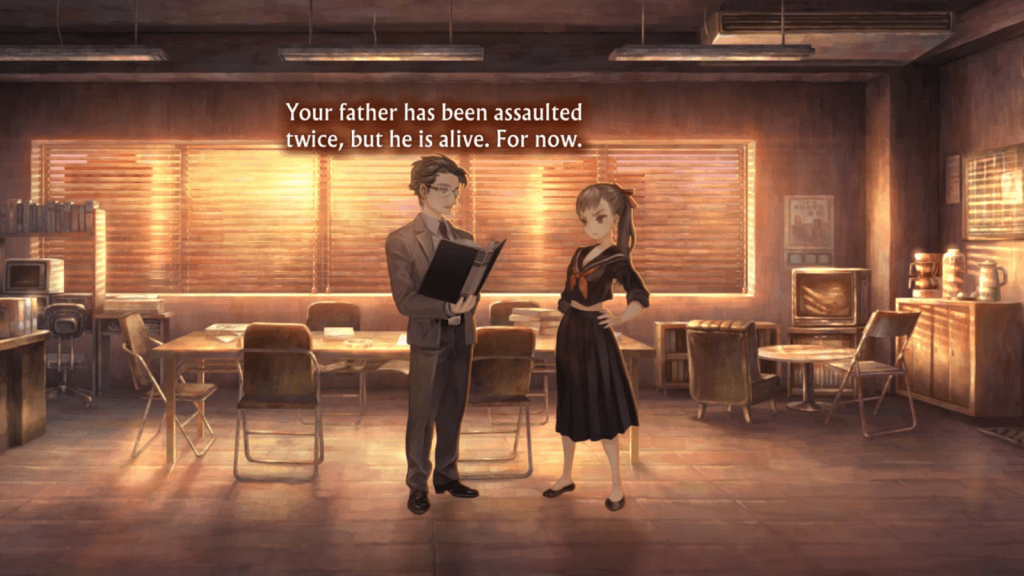
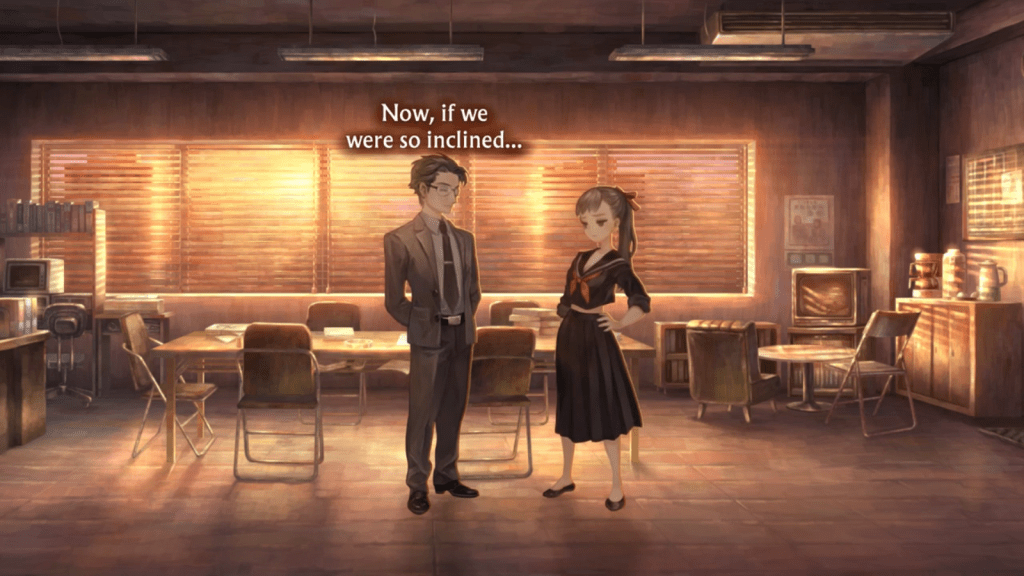

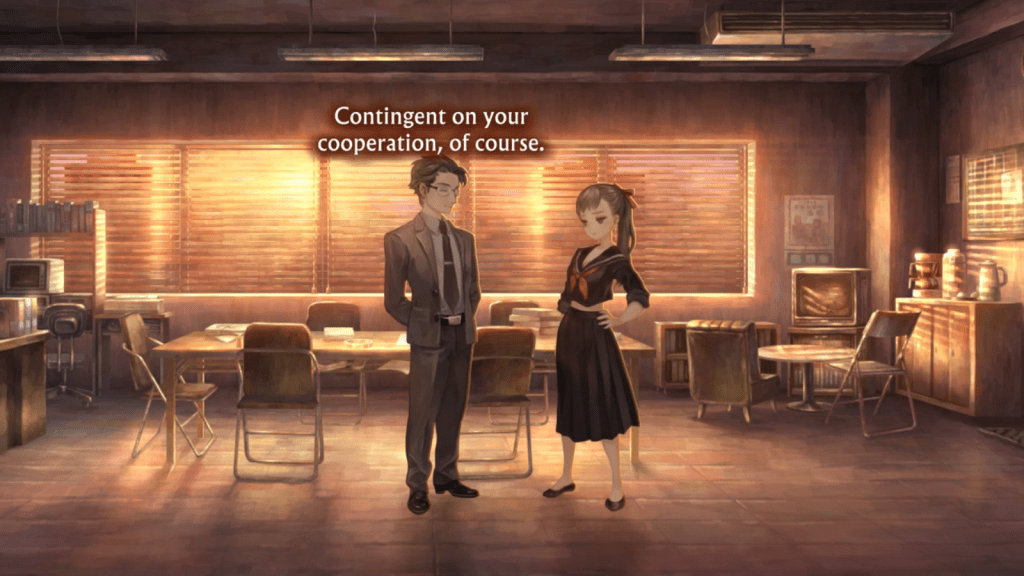
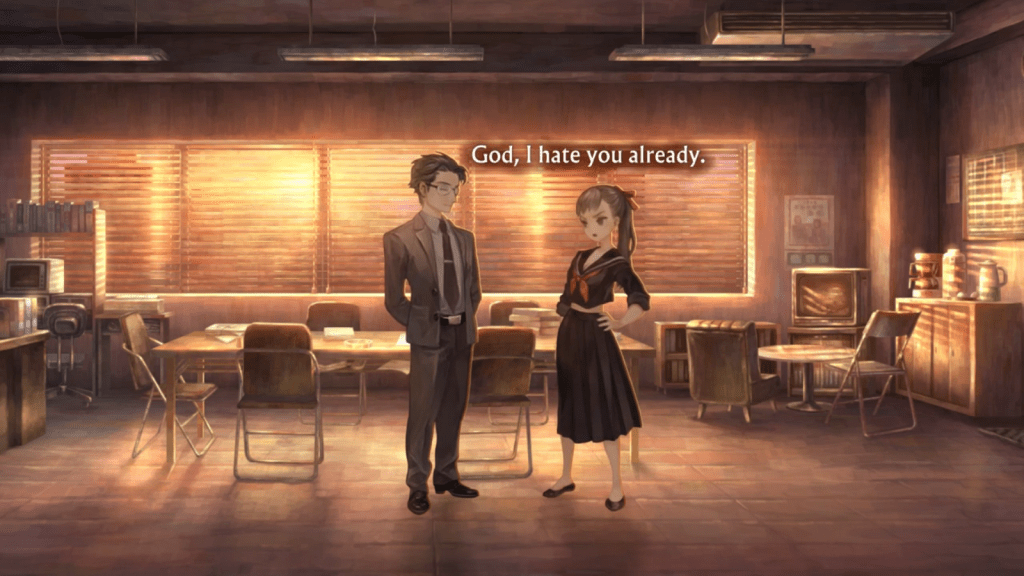
Her route involves keeping an eye on the chosen teenagers (one of which being Natsuno Minami, much to Yuki’s confusion and worry) and dealing with her “assistant” Erika Aiba who insists on joining her for her mission, much to Yuki’s chagrin. It’s kind of fun having to play a double agent in this game, as Takamiya often does things against the orders of the higher ups to ensure the safety of others, like when she knocks out one of the agents for harassing Fuyusaka.
Number 6: Ei Sekigahara
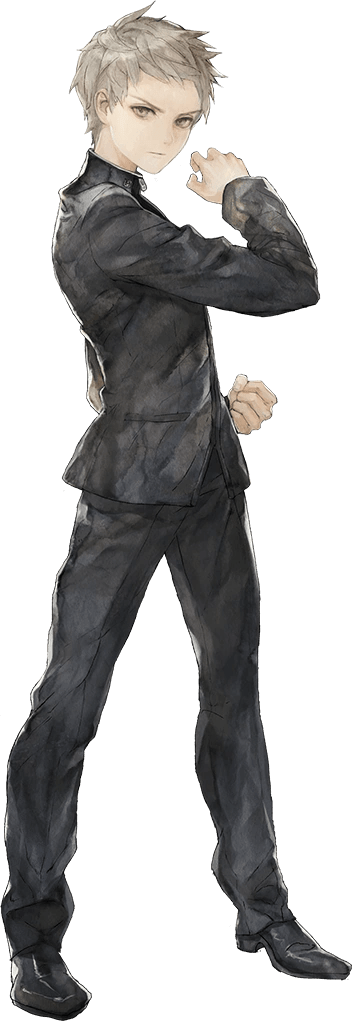
He’s a silver haired man from 2064 with a unfeeling stoicism towards life, who is forced to be on the run when travelling back to 1985. One day he woke up in an alley with no memories, and tries piecing together what happened. He has a sibling like relationship with Ryoko Shinonome and forms a romantic connection with Iori Fuyusaka that I touched upon earlier.
Sekigahara’s prologue begins in 1985, where he’s on the run from men in black suits, who corner him atop a building. Lucky for Ei though, he gets the jump on them by hiding behind the entrance and pulling out a gun.
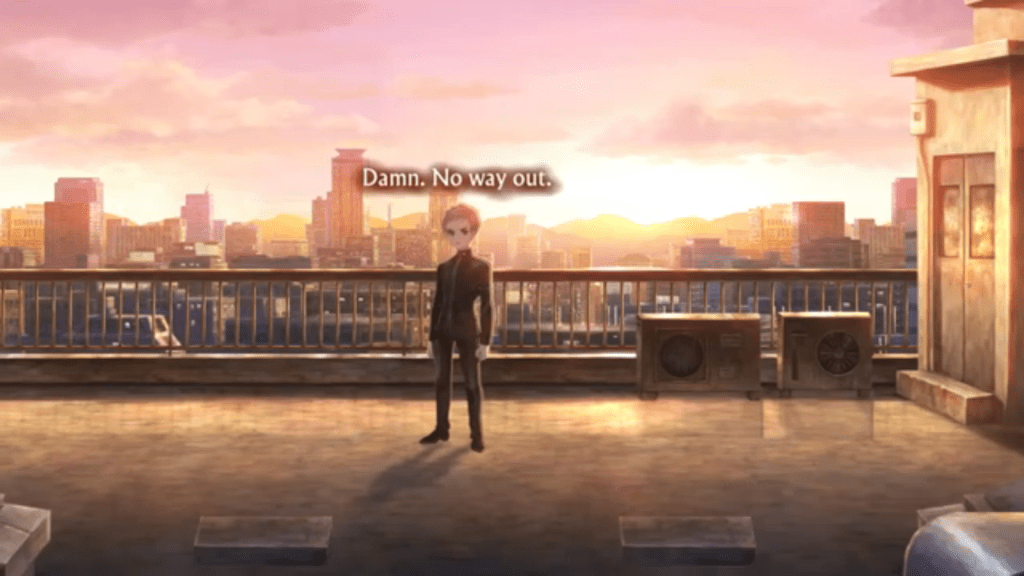
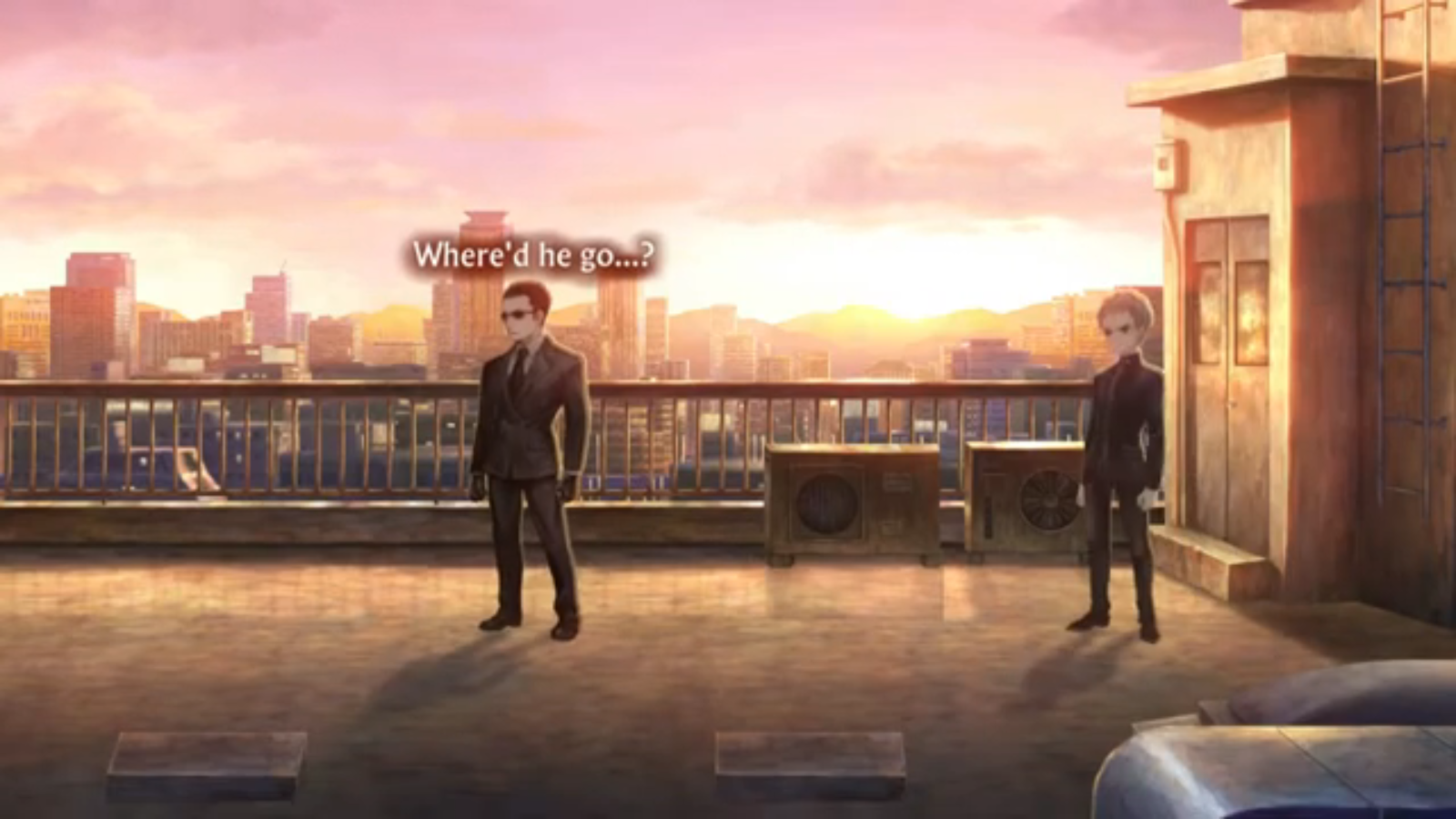
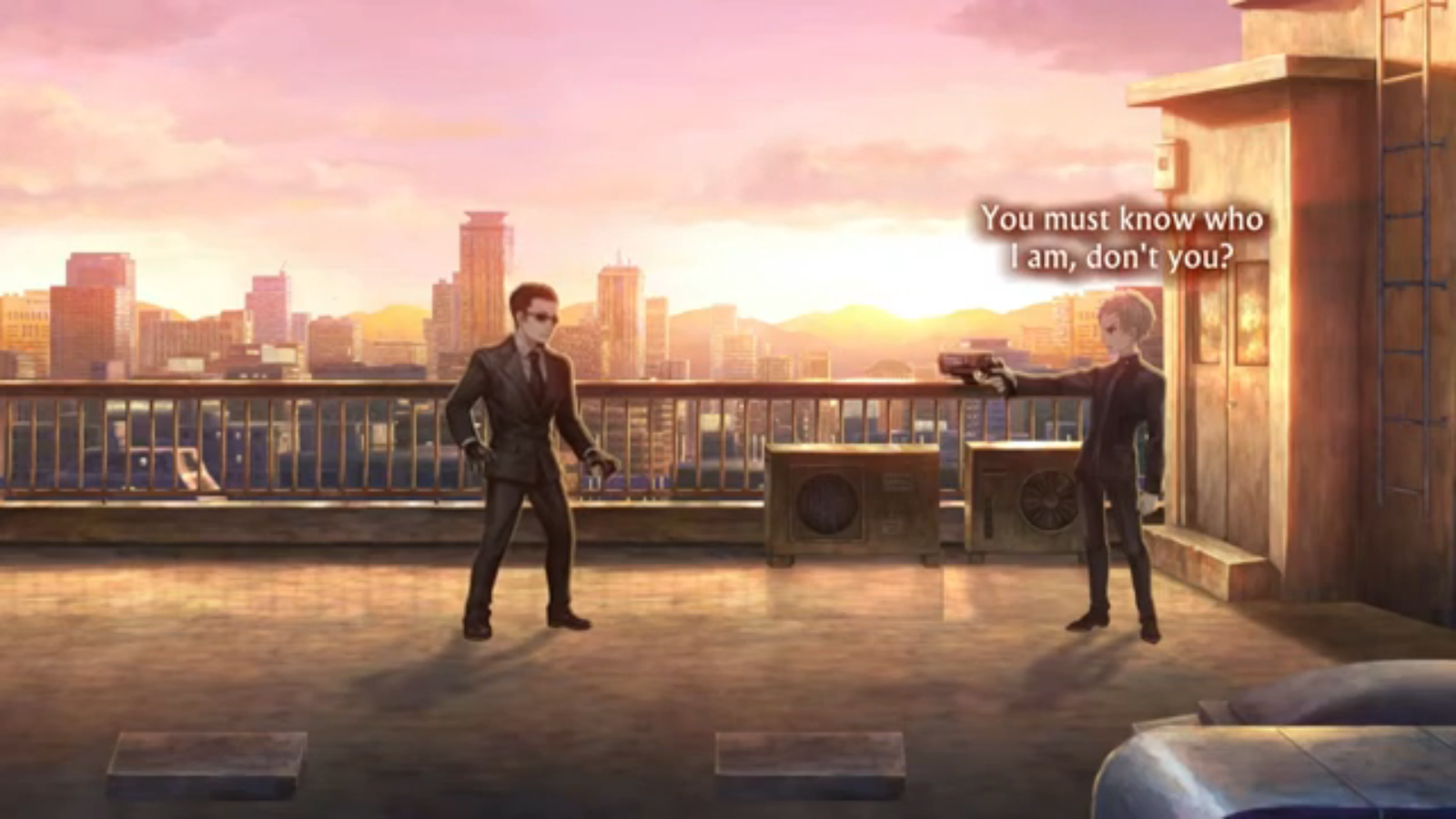
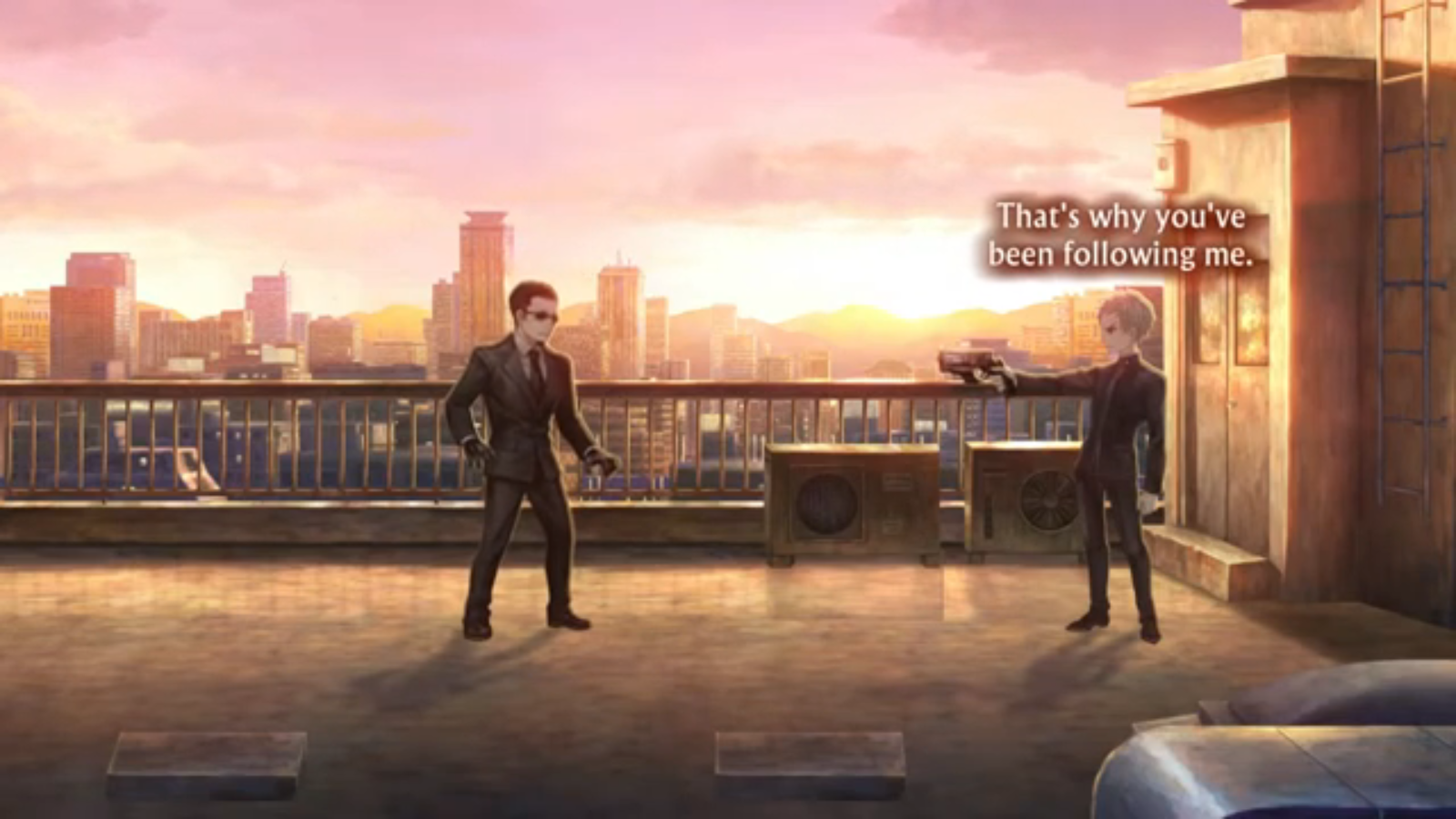

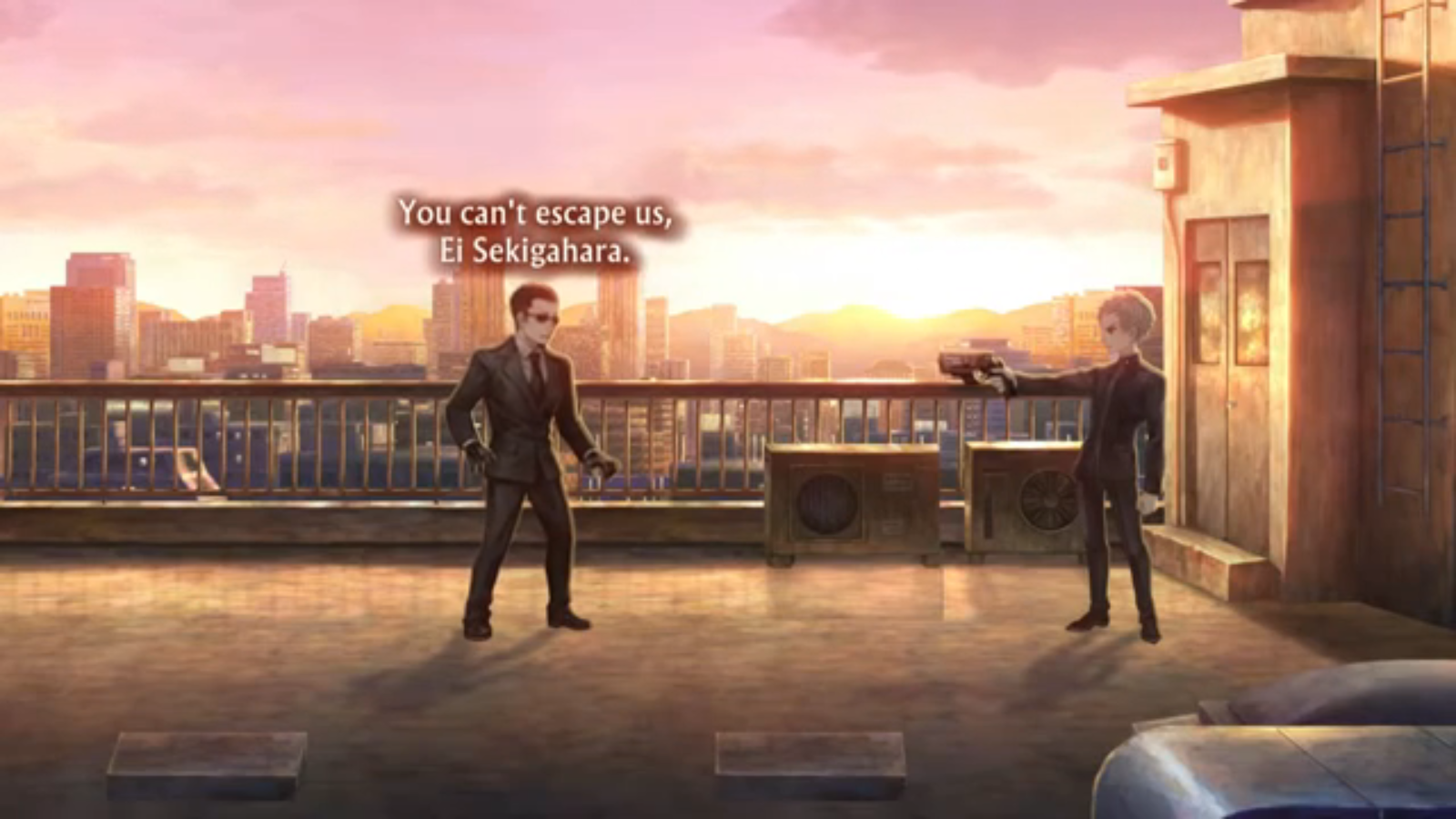
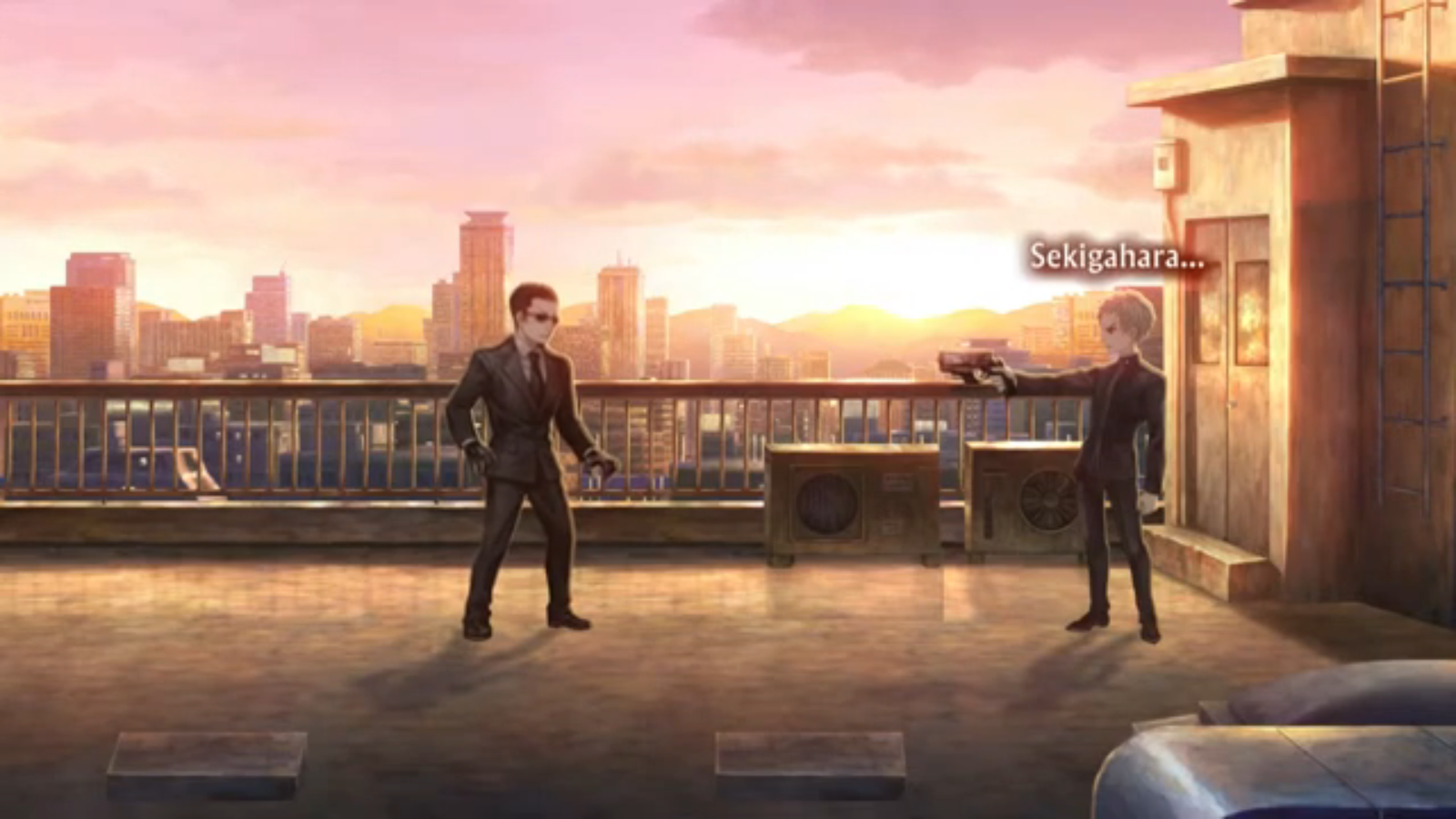
He ends up shooting this man with his gun by the way, but almost as though this were a 4Kids dubbed anime, the gun merely shoots out a laser that stuns him and doesn’t kill him, because even though he’s on the run, Sekigahara won’t kill people, he’s above those actions. He is however, not above looting the bodies of unconscious people, which he promptly does, taking the following items:
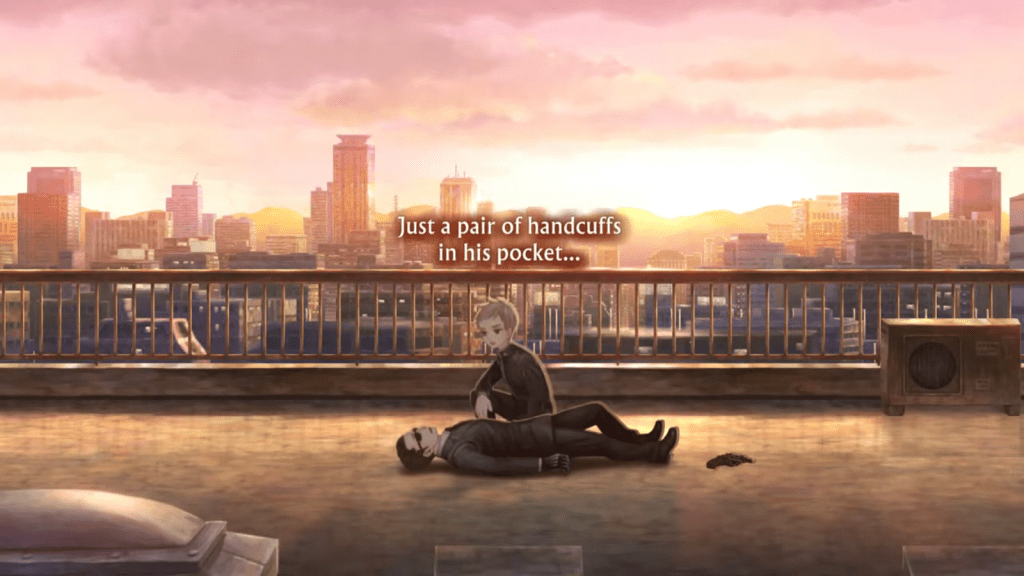

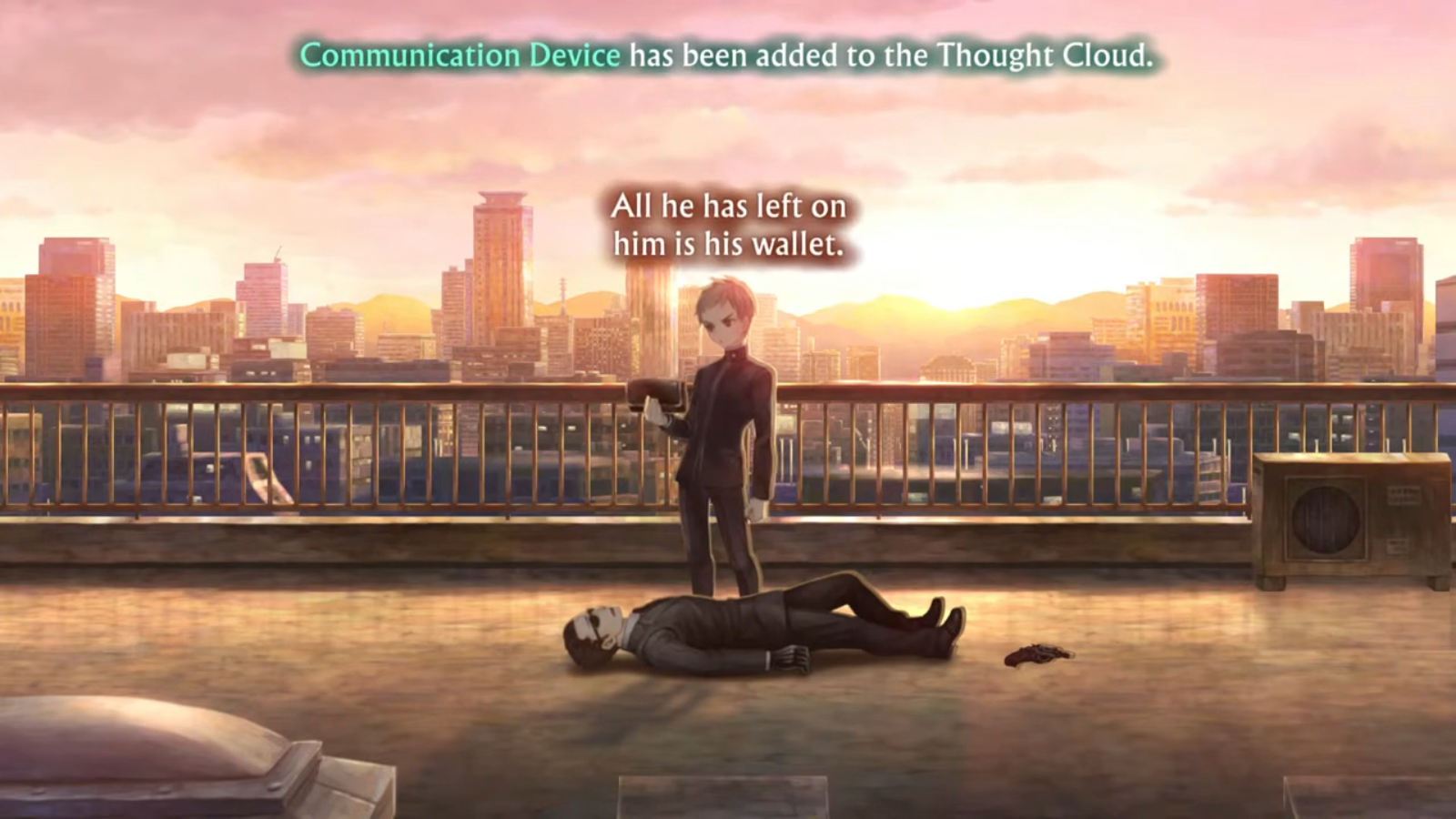
I had heard stories that Japan’s workaholic culture progressed to the point that men can literally pass out on the ground in a subway station and no one will bother them, but I guess that’s not true if Sekigahara’s able to do that in 1985 (in this game at least). While Sekigahara plans out his way to avoid his pursuers by avoiding public transportation and going on foot, he muses on how he got in this situation, flashing back to two days ago.

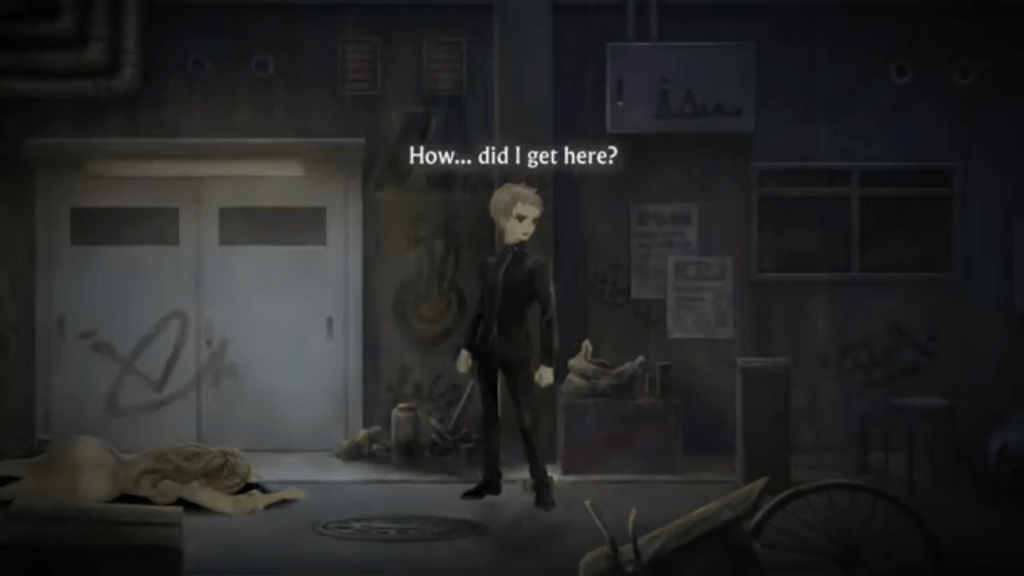
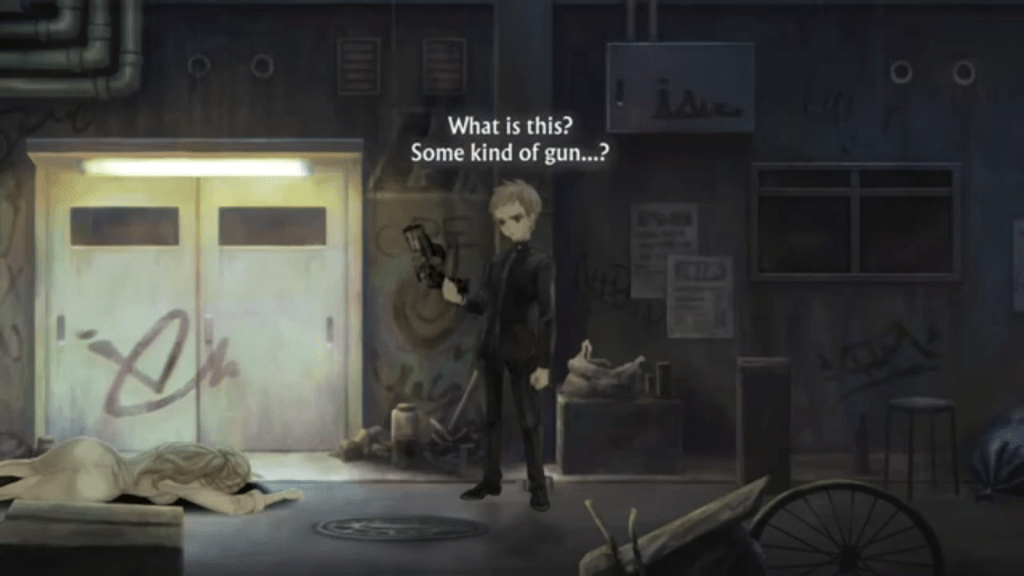
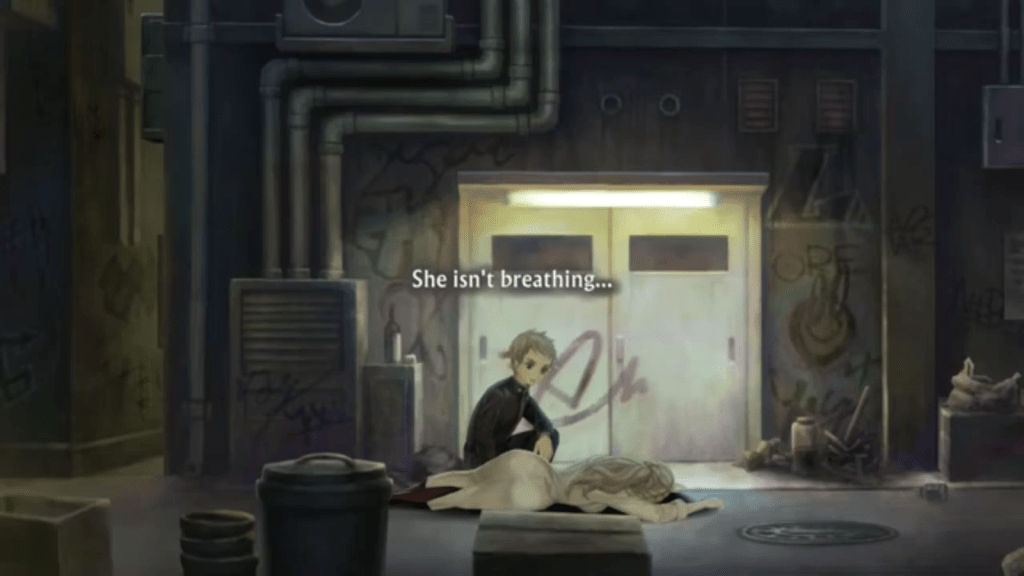
Ei wakes up in a dirty alleyway not knowing where he is, who he is, and more importantly (because time travel is involved) when he is. All he has in his vicinity is a gun in his hands and the dead body of Chihiro Morimura in front of him, which I’m 90% sure the boys of Sakura high school would be ecstatic to see (well, the necrophiles anyways). After rummaging through his pockets and her pockets, Ei gets what he needs and gets the hell out of dodge as the men in black approach the alleyway he’s hiding in.
From there his story would intersect with Takamiya and Fuyusakas, and it’s impressive seeing how he’s able to act with a level head given his circumstances.
Number 5: Natsuno Minami

A peppy young lady who’s quick on her feet and a loyal friend to those who know her. She’s a major sci-fi buff, taking the alias Dr. Space as a kid when she and Takamiya were little girls. She gets her wish to experience a science fiction story herself when a mysterious robot arrives in her life and it’s up to her to help it recover its memories. Her route is very close to being a parody of ET that it isn’t even funny with how blatant it is, there’s even an in-universe parody called E.X.T that she even references. Guess they couldn’t bother trying to get the license for the real deal with all the money they rake in and had to come up with a cheap substitute. But enough about that, here’s her story:
Natsuno’s route begins in the evening at the high school in 1985. As she wanders the halls, she encounters Juro and Iori having a pleasant conversation about their dreams.
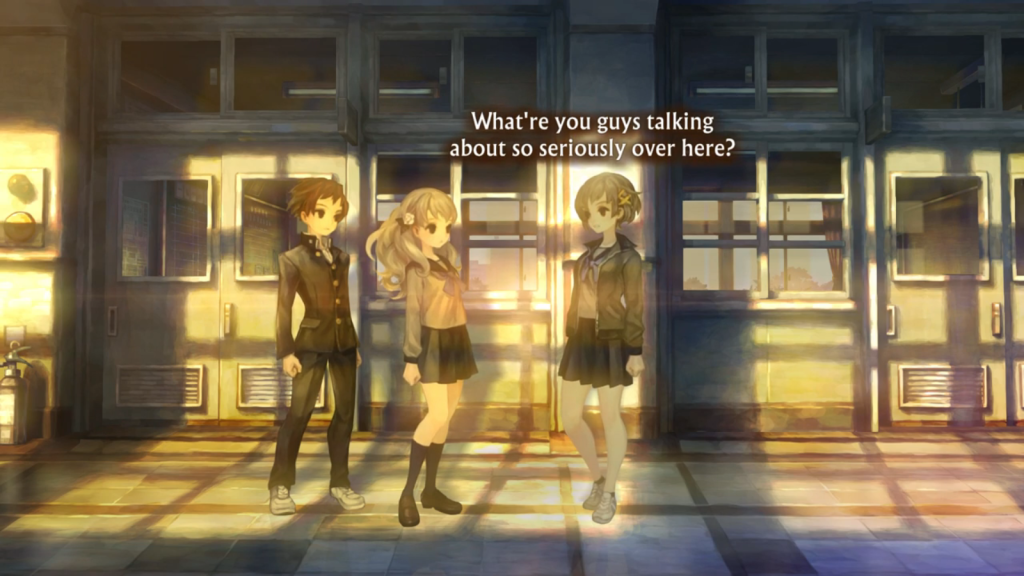


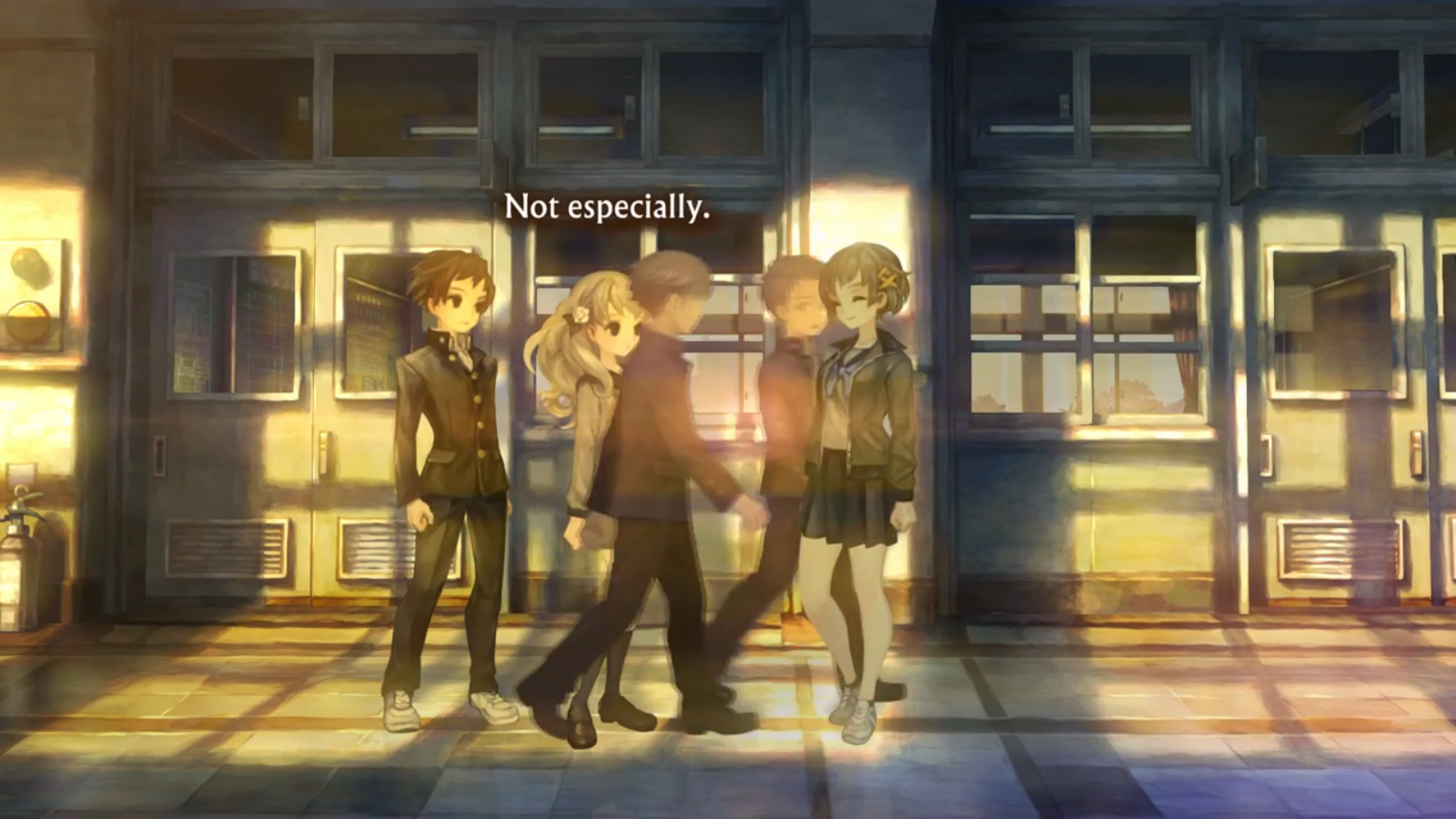
Juro also produces a gift for Natsuno, a VHS of UFO Mysteries that she missed as a baseball game went into overtime, a statement that is depressingly more common each and every year for me. Juro then states that he didn’t watch the movie she lent him, to which she calls him out for being a fake enthusiast.

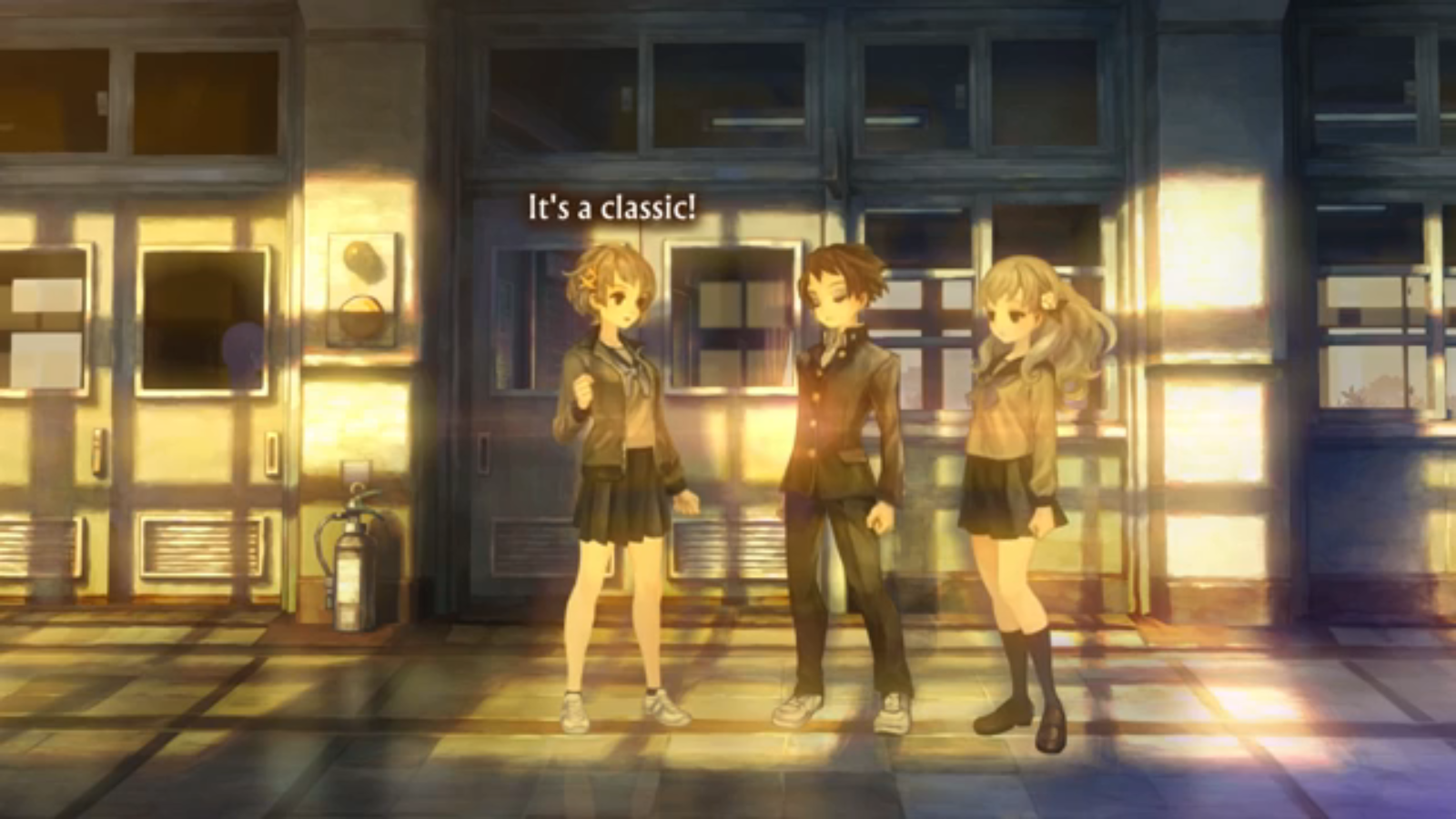

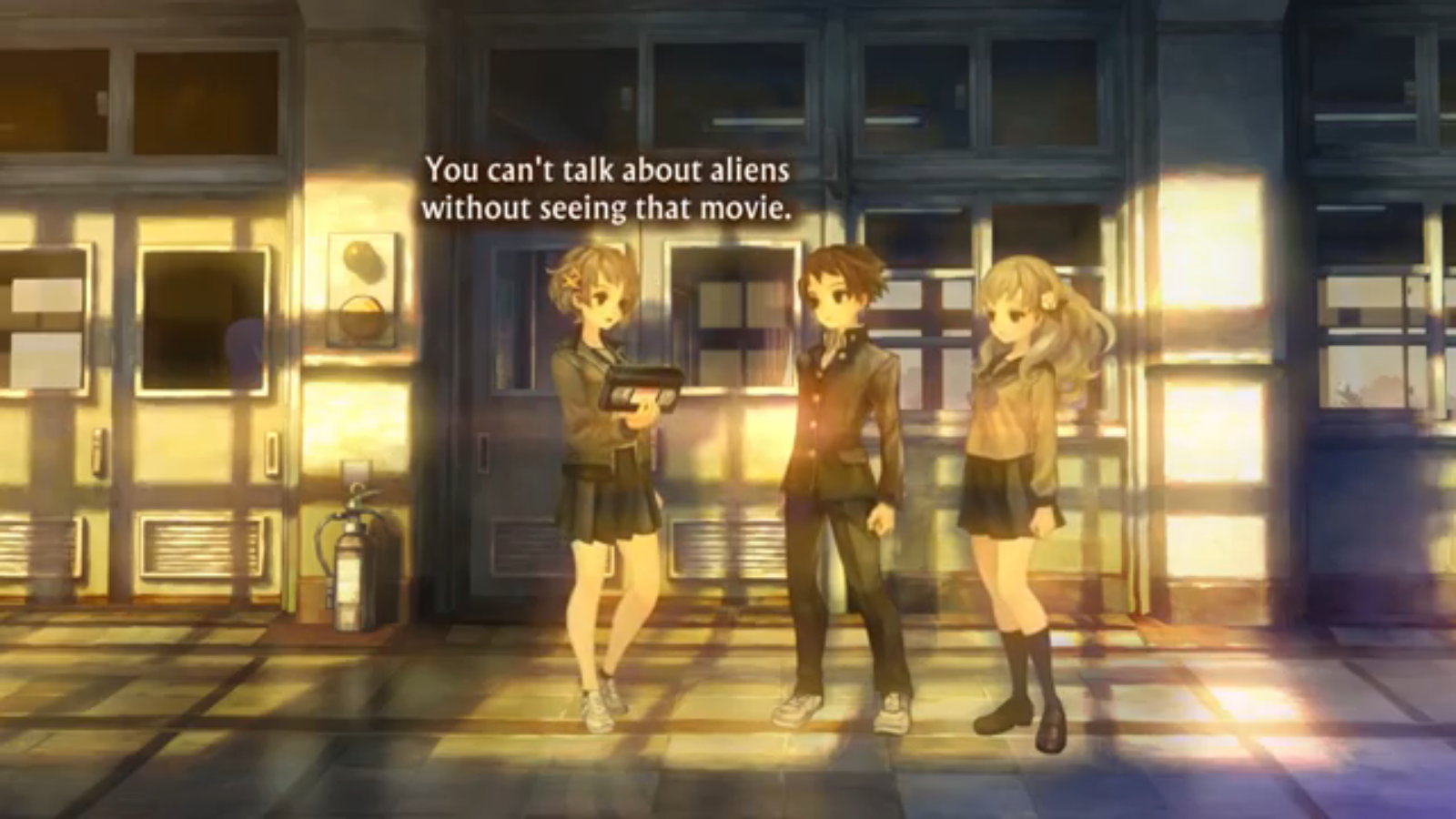
What does the X in “E.X.T” stand for anyways? Xenophobic? Anyways, Natsuno fangirls over the idea of extraterrestrial life to them, which tires out the narcoleptic Iori. Adamant that they’re out there, Natsuno vows that one day she’ll work for NASA, which even without going into spoilers, is simply not going to happen especially in their time period. One of the basic requirements to work there is a U.S citizenship, and I doubt they’re going to hand out jobs to just any space nut out there. After practice and encountering a man in a black suit with shades, she cleans up outside the track area and heads into the ladies room, where despite her exhaustion and reluctance, she elects to change. But the game devs likely realized that they’d land in hot water for adding an undressing scene as she’s quickly interrupted by a shaking laundry basket. But thankfully, it’s not a pervert lying in the hamper, but a robot named BJ
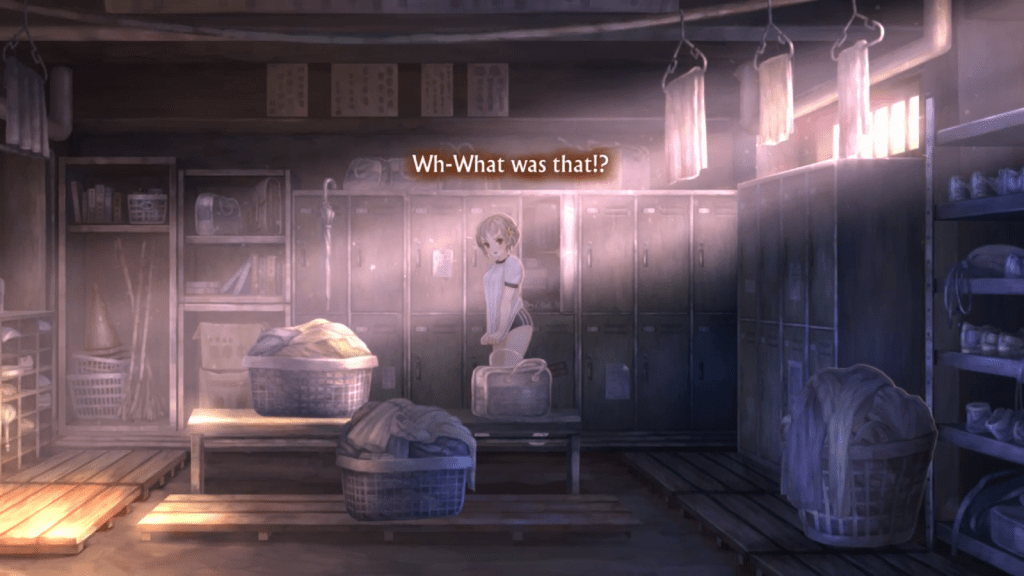
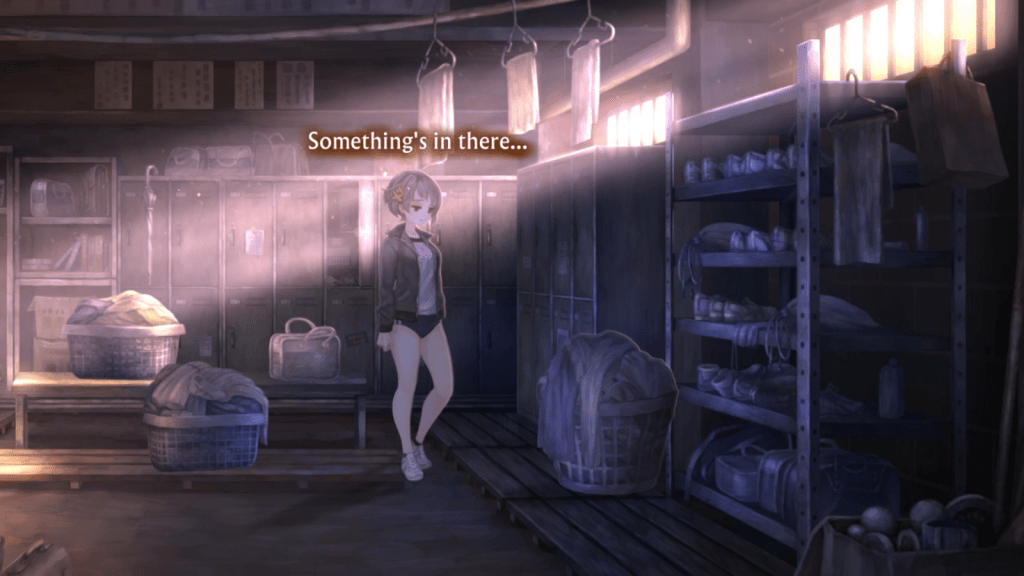
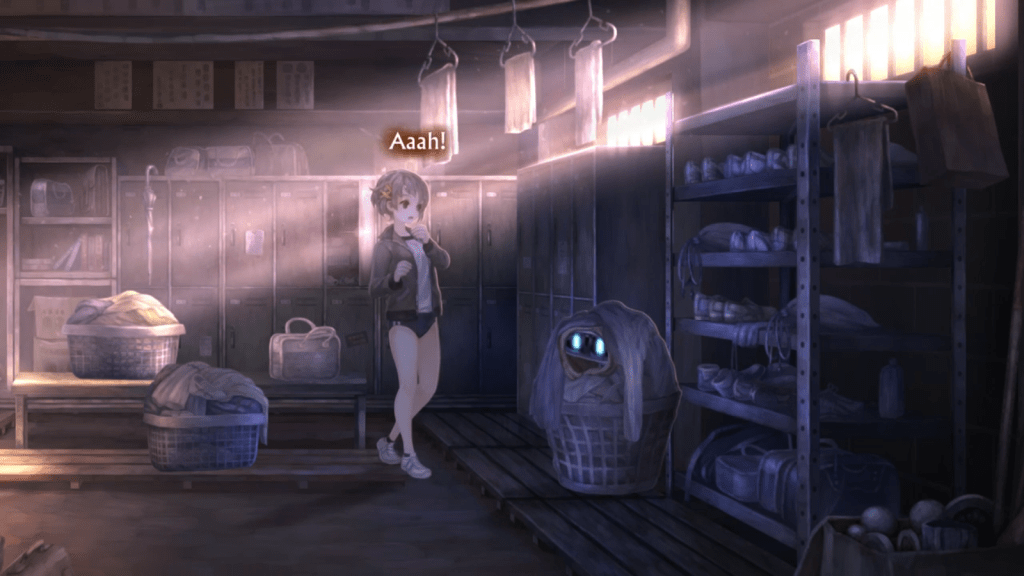
From there her route follows a very ET inspired story, coming very close to ripping of Steven Spielberg’s beloved classic in some instances. However, most of the route consists of her going back to the track and field changing rooms in search of BJ, which writing that down sounds like a euphemism of sorts. I could make a joke about that, but I think that’s beneath me.
Number 4: Nenji Ogata
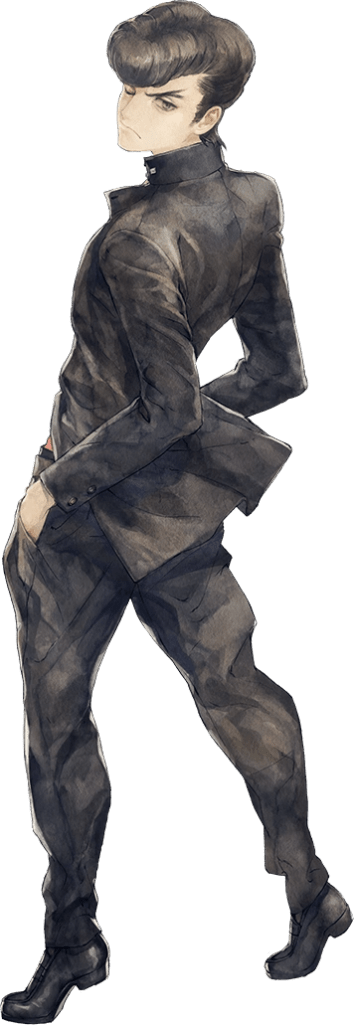
A Japanese thug who resolves to solve problems with physical combat rather than words, but has a caring side to him deep down. He’s also voiced by the late Billy Kametz, who I’m only mentioning here because it is a legitimate shame that he died young and in the prime of his VA career, but i digress. Nenji’s route can be best summed up in a five words: Groundhog day but with robots. I’m not kidding, that’s basically his whole route, he goes through the same events over and over until he manages to do something different with the girl that he loves.
Nenji’s route begins at Kamazumi train station, line no. 5, and he’s talking with Tomi Kisaragi. While she mulls over what he said to her and decides to slow down a bit, Ogata’s mind is elsewhere.


Nenji is confused, wondering how they got back on the platform if they were just on a train. Tomi then tells him what he didn’t want to hear, that she’s about to get on the train. From here a few things happen in sequence, which to save time will be in a bulleted list.
- Nenji walks to the right and finds Wajima. They exchange a few words before Tomi enters the scene. She tries to break up the fight, but Wajima’s words enrage Ogata and he beats him and his gang up.
- Kisaragi’s train comes, and she gets on it, with Nenji trying to convince her that’s a bad idea. She gets on anyways and he reluctantly gets on.
- Nenji once again tries to convince Kisaragi that this has happened before, but just as things are starting to click the Kaiju attack and (presumably) kill everyone in the train.
- Rinse and repeat ad infinitum if you desire
It’s only after a few go throughs that you develop the thoughts necessary to progress through to different parts of the route, affecting the outcome in such a way that both Nenji and Kisaragi survive. It’s also revealed that of all the 13 pilots, Nenji was the first to be injected with the nanomachines as a young child by adult Morimura, in a scene that screams stranger danger.
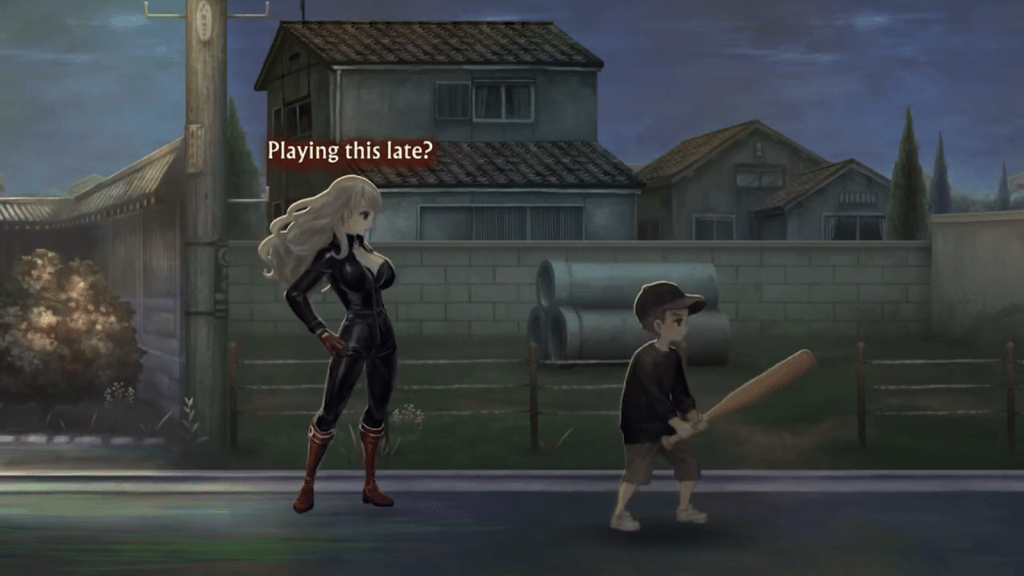
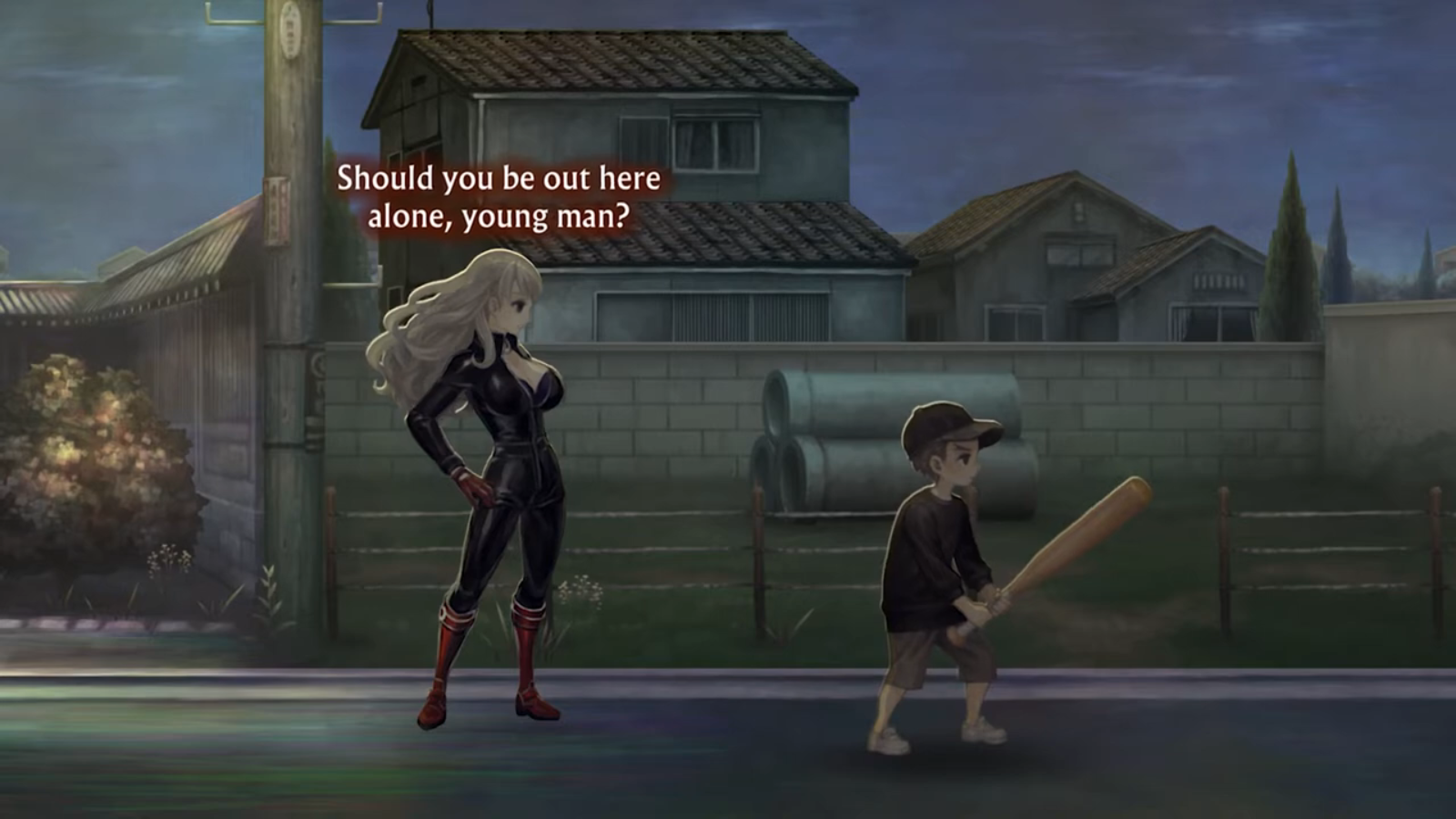
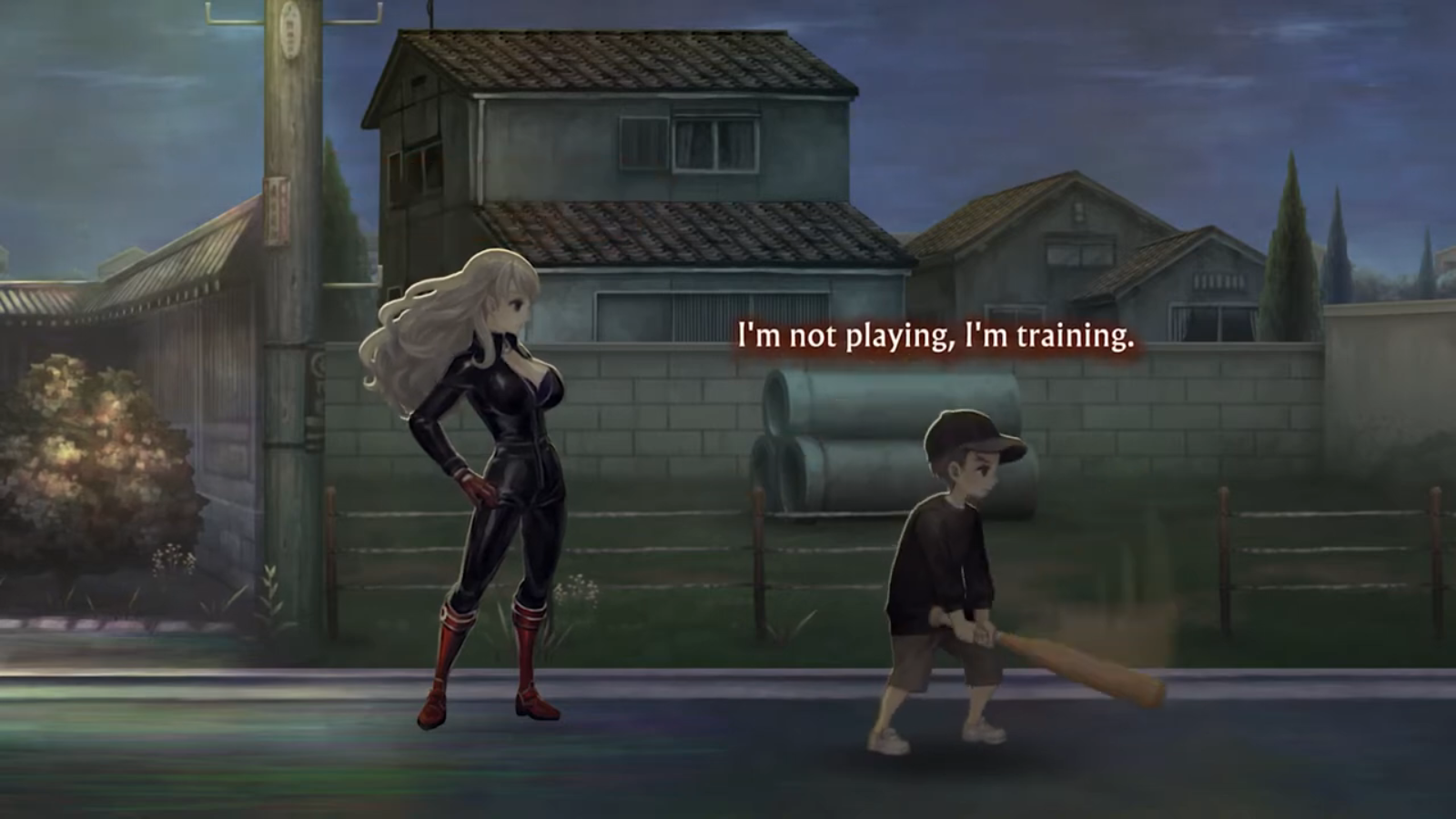
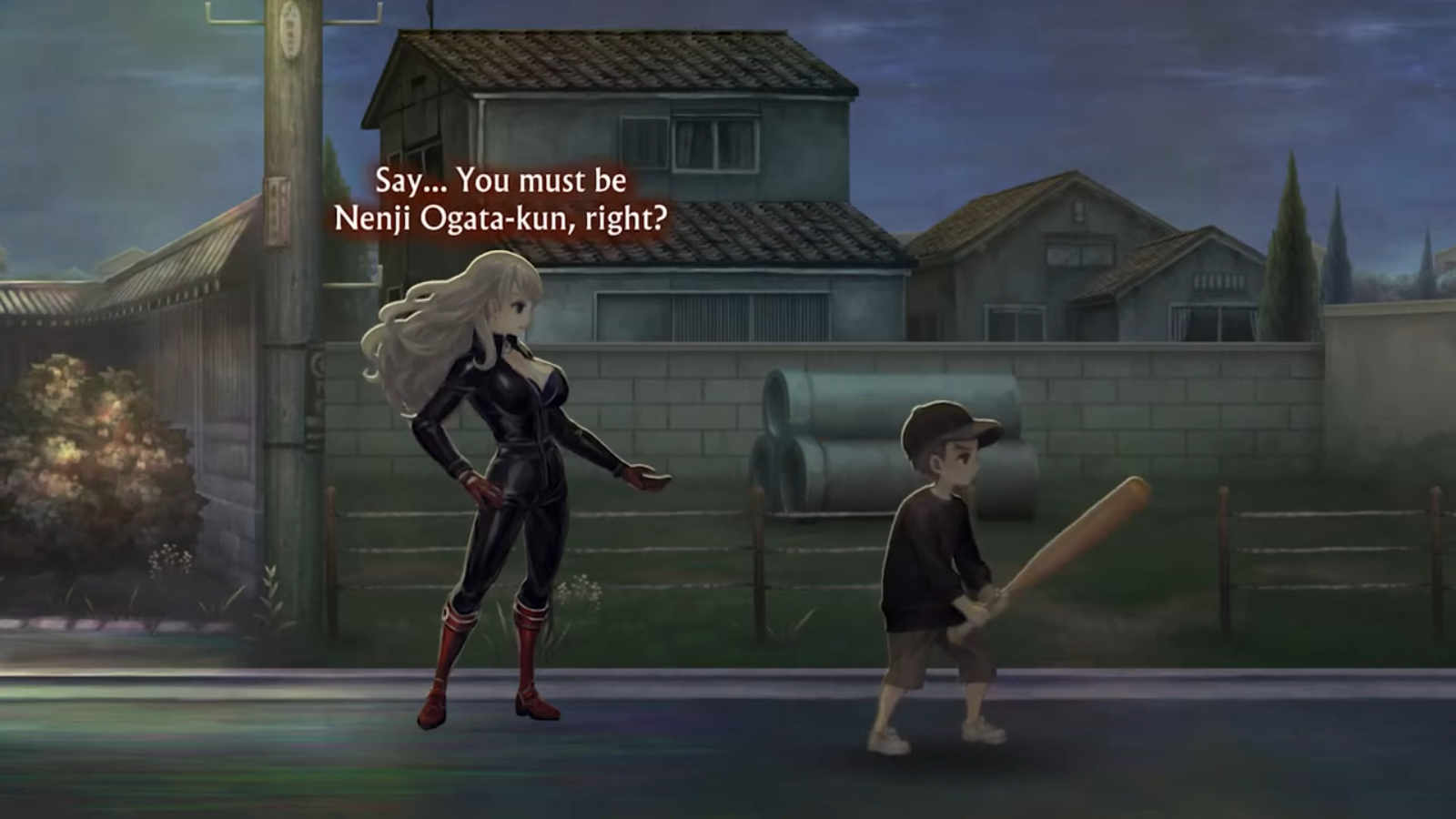
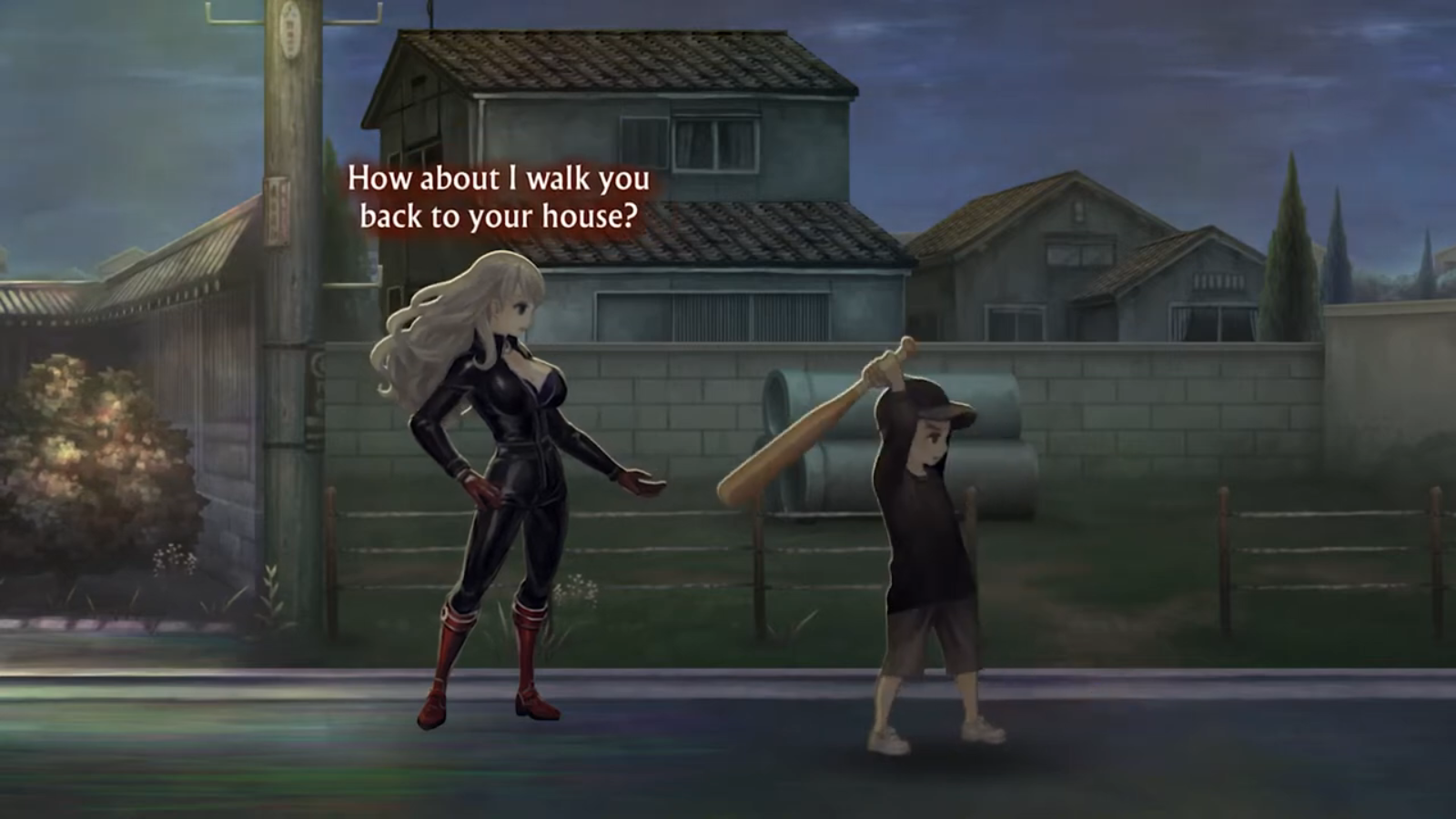
Young Nenji doesn’t fall for it and tries to run, but she eventually sneaks up behind him and shoots him with the nanomachine gun point blank in the chest, then muses on how the sentinels will be necessary to fight back against the kaiju. It’s messed up that Morimura would do this, but given the other conniving things that she’s done in pursuit of her goals, I’m not surprised enlisting a literal child into a war bigger than him is one of her crimes.
Number 3: Keitaro Miura
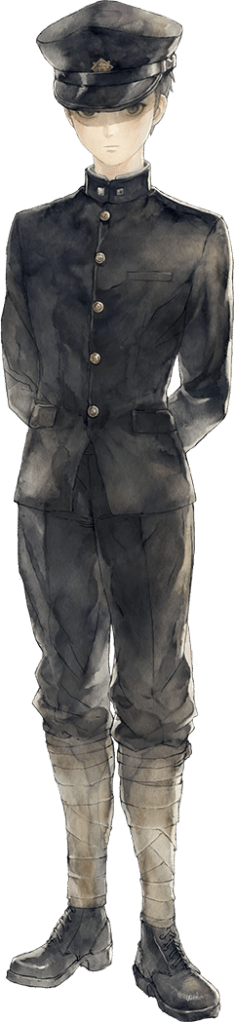
A young man from 1944, he joins the Japanese millitary to help protect his country from the allies in World War II, but ends up being flung forty years in the future due to timey wimey shenanigans and is forced to adapt quickly to a drastically different country than what he knew. Like his brother in arms Takatoshi Hijiyama, he’s reluctant to openly trust anything from his new surroundings, but lucked out on living arrangements as he gets to stay with Juro and Megumi thanks to Natsuno’s handiwork. Speaking of, he also develops feelings for her, which if we’re going by his chronological age (he’s 16 when he leaves 1944 for 1985, which would make him 56) would make the situation kind of creepy if it happened naturally. But again, I’m getting sidetracked, how does his route start?
Miura’s route initially starts with the future adult Miura conversing with adult Natsuno, musing about conflicts of extraterrestrial wars and living during the pacific war. His route really begins when he arrives at the Sakura National School Wooden Building (the same one that is still present in 1985, actually) when it was brand new, where he meets with Takatoshi, who laments the state of the building.
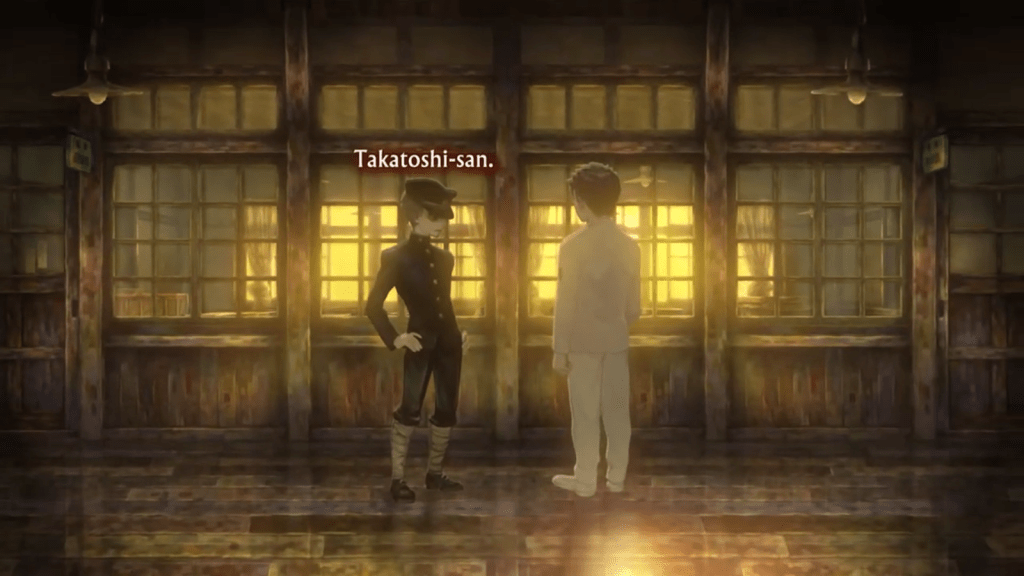
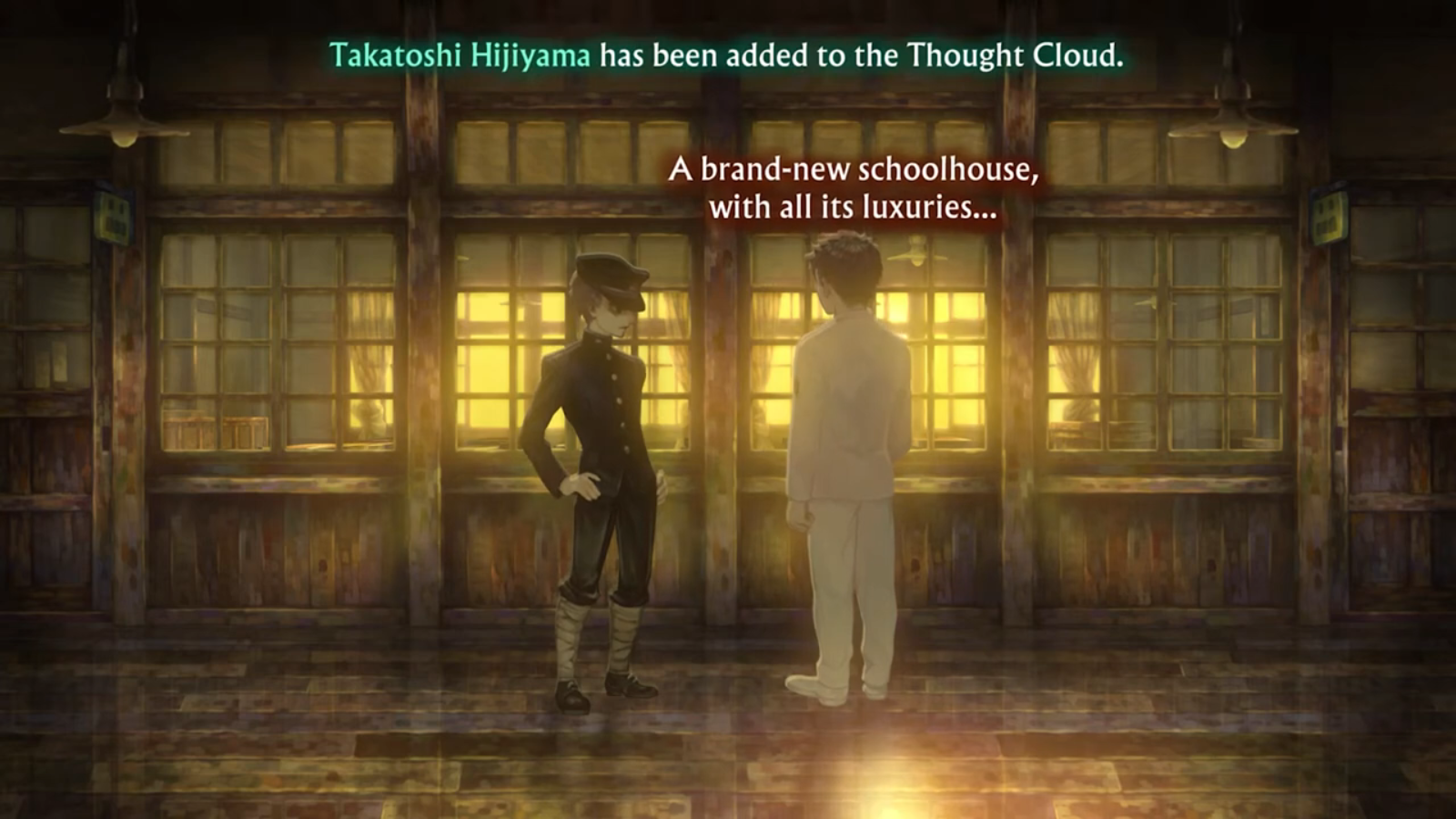
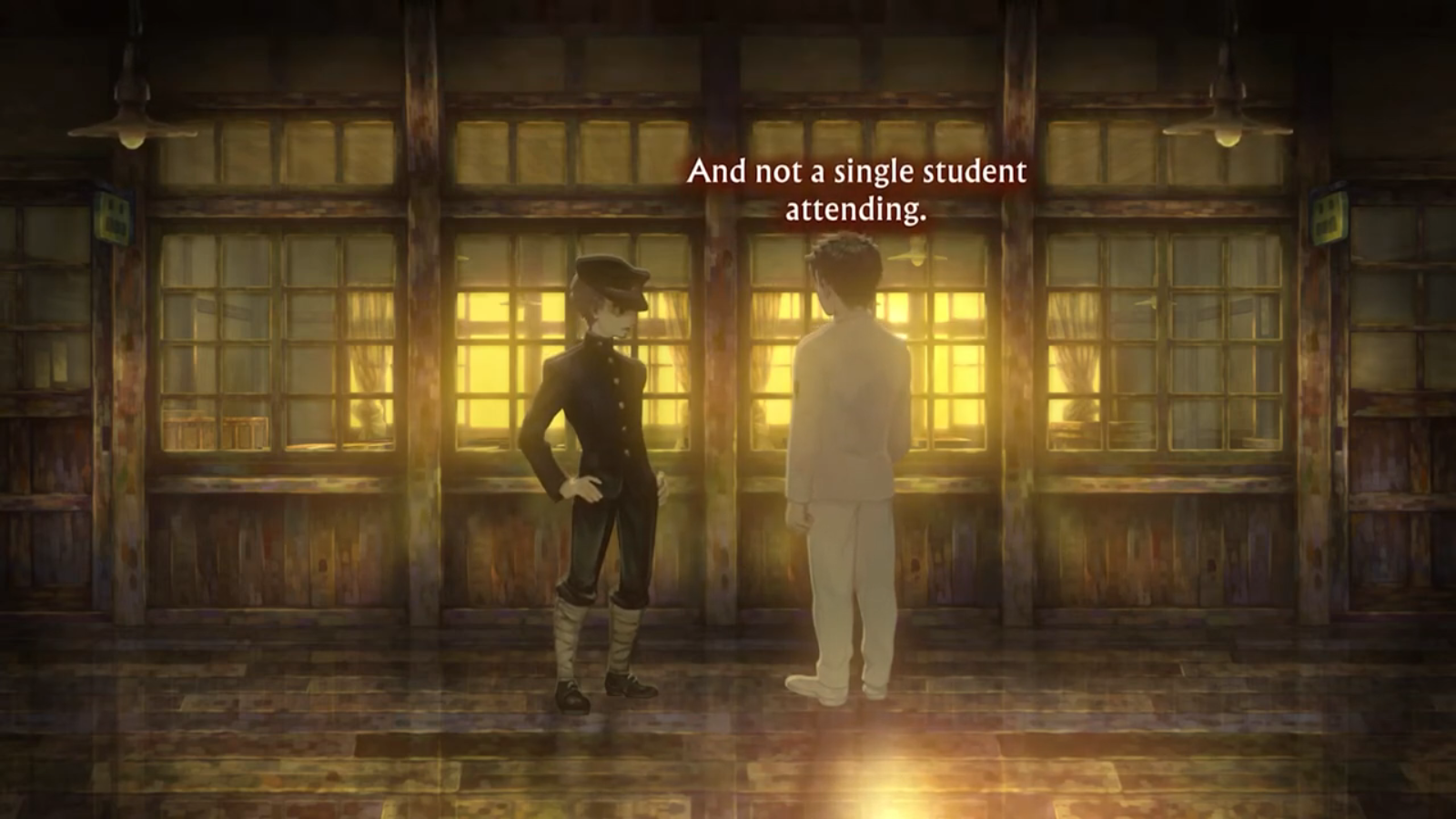
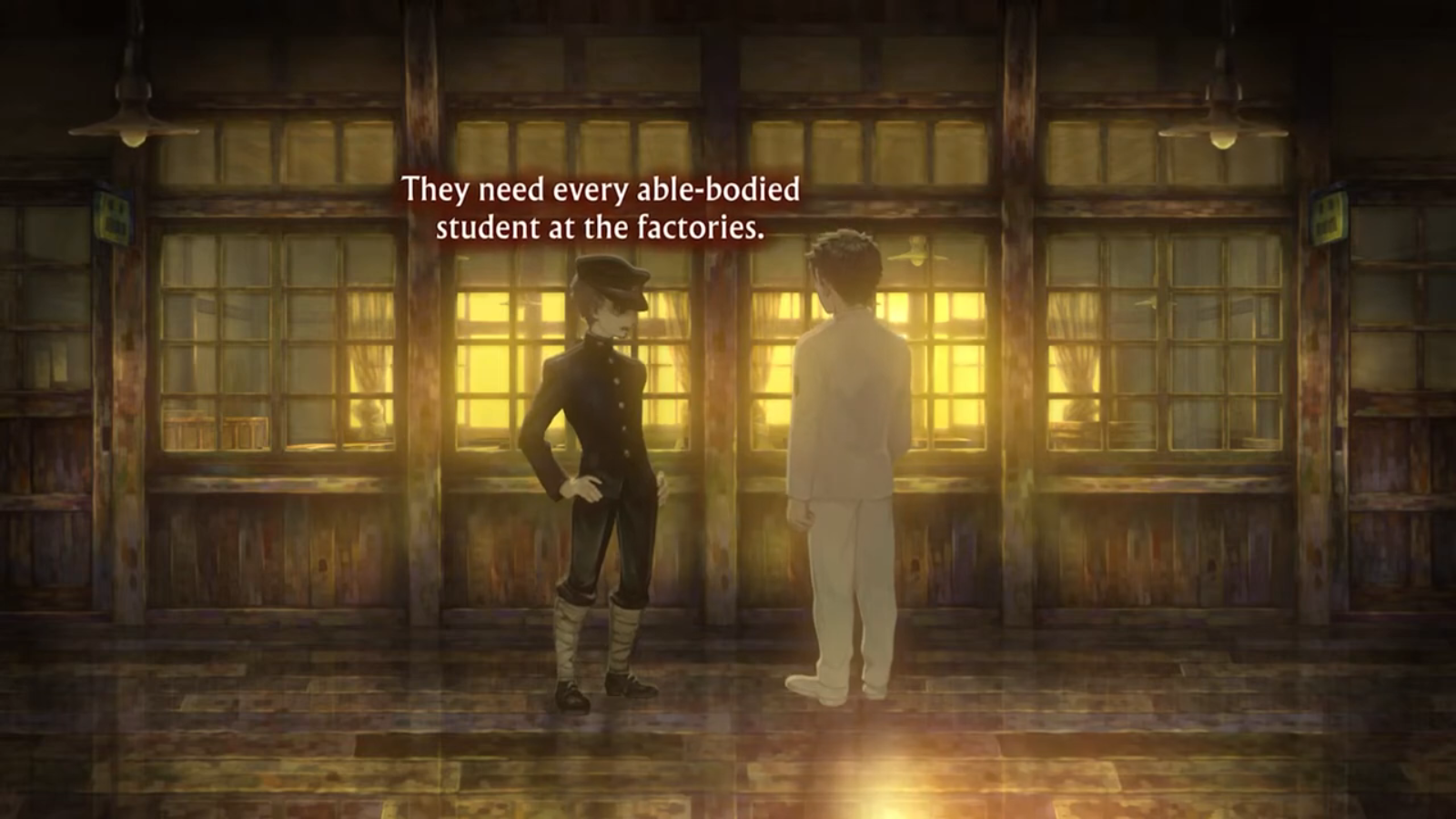
And that triggers an internal dialogue within Miura, who reveals that Japan is losing the battle against the U.S, and there aren’t any warships left (implying that this takes place around October 1944, when the battle of Leyte Gulf happened and the imperial Japanese Navy lost most of their fleet and control of the southeastern Pacific Ocean, severely hampering their control over strategic points). The two continue to converse, with Keitaro wondering why out of all people why he was chosen, to which Takatoshi replies that he was chosen instead of his peers for the honor and privilege of defending Japan instead of being sent to a factory. Takatoshi then reassures Miura with one chilling line:
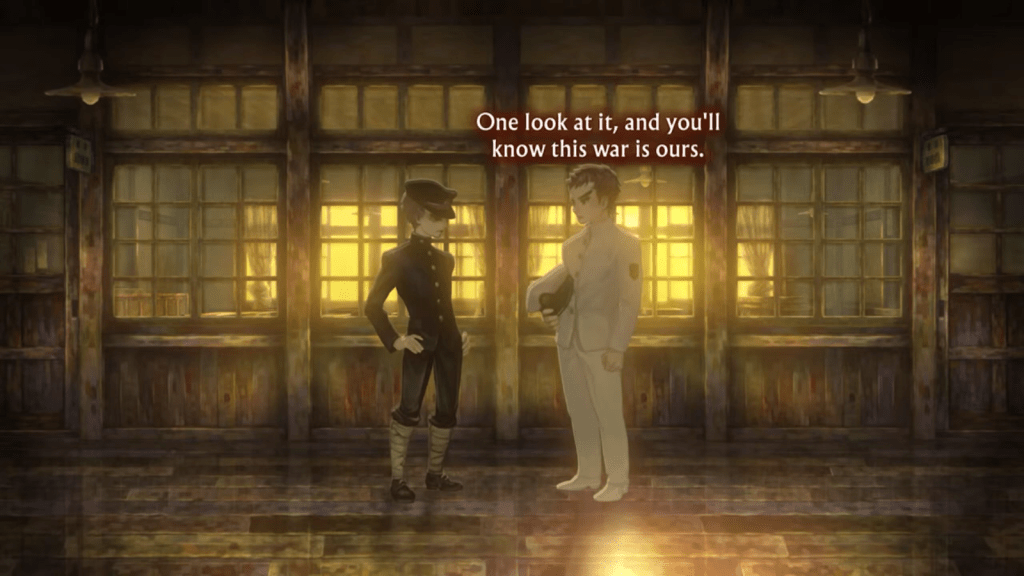
He’s obviously referring to a weapon but I think it’s funnier to imagine the “it” in question is some blackmail on Franklin D. Roosevelt that they’d send to the White House, demanding to stop helping the allies. Miura wants to know more, but Takatoshi states that it’s top secret, but does let him in on what it’s called: A Sentinel. The idea is to position them along the beaches of Japan and use it’s advanced weaponry to gun down anything that comes close to their shores, be it a warship or enemy soldier. It’s made clear to Keitaro that they’re losing, which Takatoshi confirms with the reveal that they’re losing territory in the pacific, but the Sentinel contains enough power to rival an entire army. Takatoshi ends the conversation with one final remark, showing his confidence in the plan’s success.
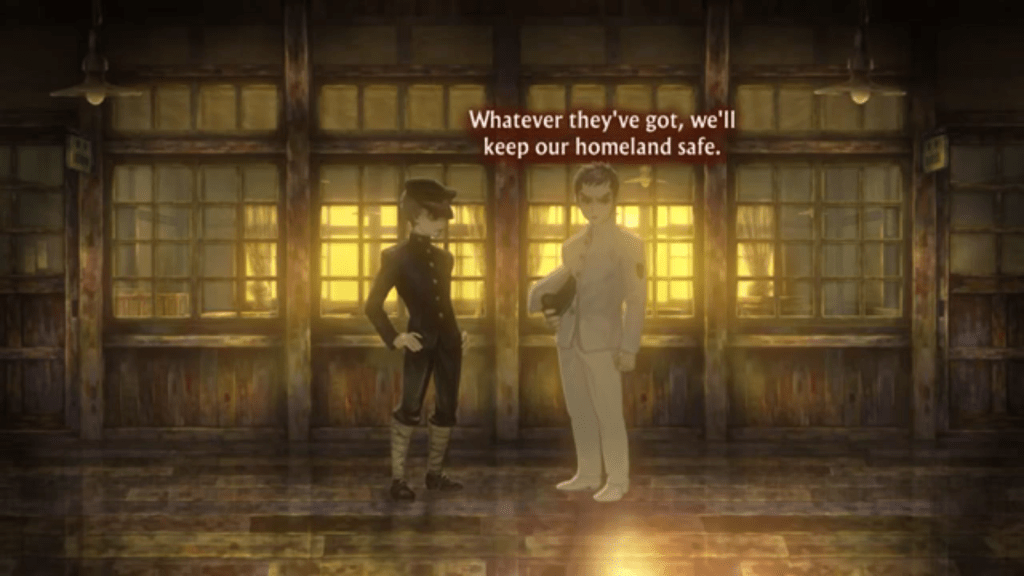

Perhaps it’s because of my nationality, but hearing that unnerves me. While I’ll openly admit that I know very little about WWII (thanks public school education, the revolutionary war was much more relevant to my understanding) even I’m aware that Japan was clearly on the wrong side of history in siding with the axis powers for the sake of expansionist goals. The Japan of this game implies that they would willingly use what is effectively a walking armory on U.S soil and slaughter innocent civilians for the sake of victory, even though that’d paint their nation as no better than literal Nazis. And I won’t lie, this chapter made me seriously think that I was going to have to use a sentinel against American troops, but thankfully that isn’t what happened. Someone enters the building, and the conversation abruptly ends, with Keitaro checking it out. Thankfully, it’s just Tamao Kurabe and a young woman with platinum blonde hair, who introduces herself as Kiriko Douji.
Tamao Kurabe and her family had been looking after Keitaro and his little sister Chihiro, and the former is indebted to them for that. Keitaro asks Tamao to look after her, to which she readily agrees. Flash forward a few scenes, Natsuno appears at Tokisaka Shrine, which leads to a very awkward situation for both parties involved.
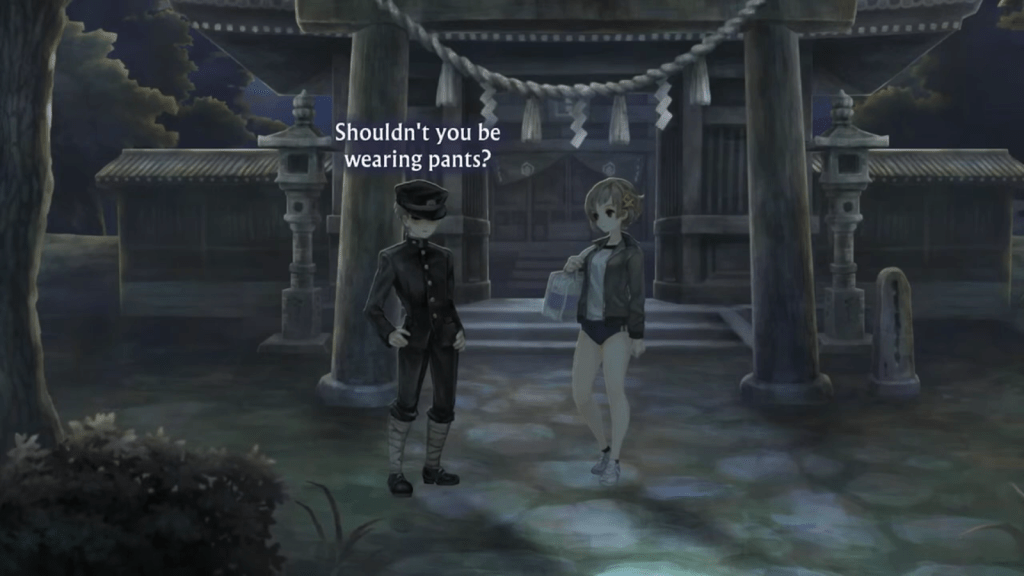
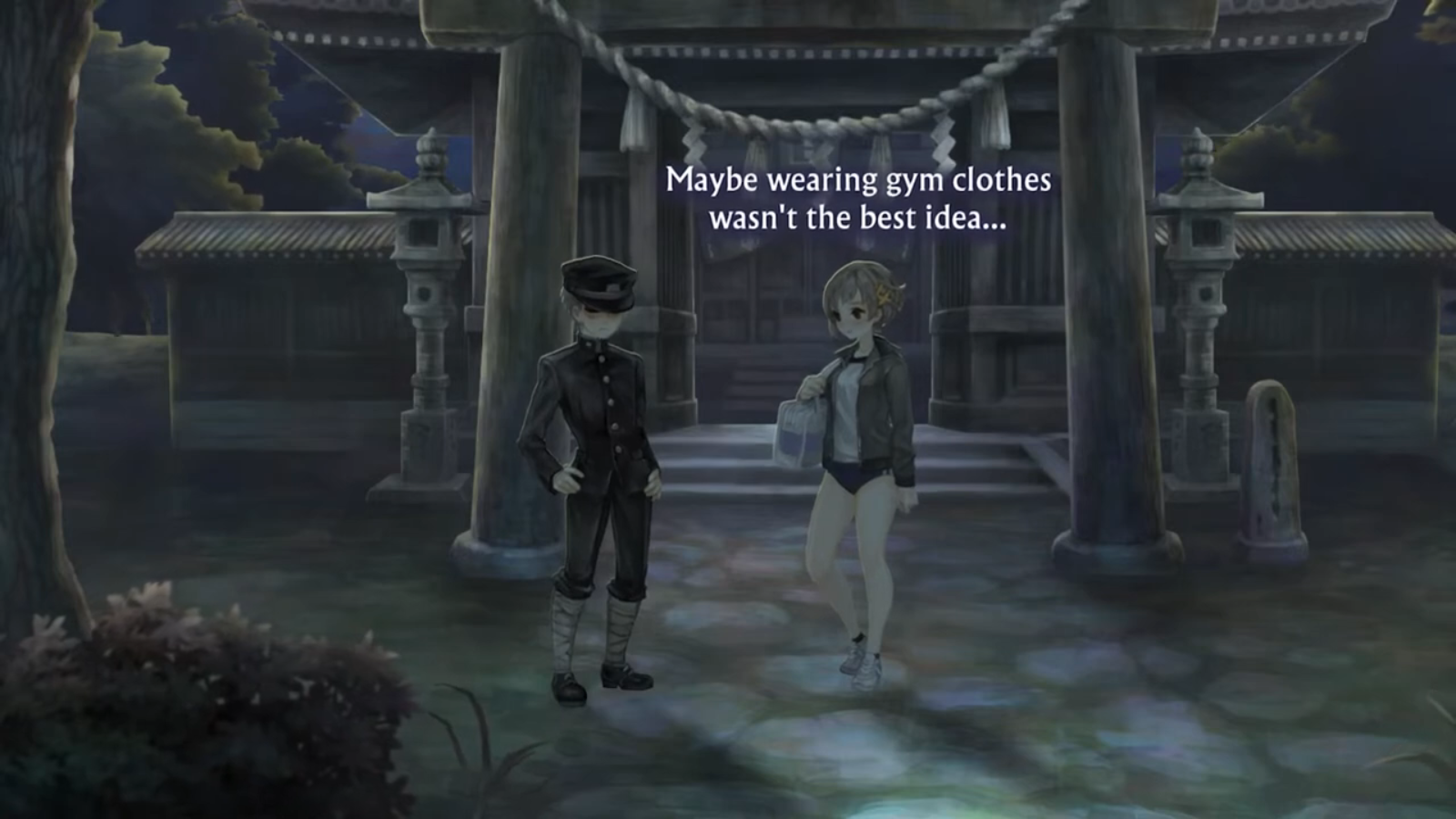
Following an air raid and a brief scare for Keitaro when he learns that the Tamao household was hit by a direct bomb (but thankfully, everyone escaped long before it landed) Keitaro would eventually pilot his Sentinel to stand at the beach to ward off the American Weapons. But the way he describes them makes one thing clear: they weren’t weapons from the USA, they were Kaiju. Shortly afterward the Sentinel teleports him 40 years forward into the future, where he’s stuck until he can get it back.
From there his route deals with him adjusting to this unfamiliar land, and it’s truly one of the best “fish out of water” stories I’ve ever seen. His reactions to “modern” conveniences like soda and “hemborger meat” are genuinely entertaining, along with him having to accept that a lot has changed in Japan: women don’t have to cover up as much in public, high rise buildings are commonplace, and a lot of the traditional values that were once upheld have been dropped. And he takes the knowledge that Japan surrendered surprisingly well, even admitting that he doesn’t care that they lost, but sues that as motivation to get back and change what happened. That being said though his route isn’t all pleasant experiences, as running into Chihiro again, who pretends to be Gouto’s little sister. It really throws him for a loop, as he knows that she’s either over forty years old or dead in this time period (the latter being particularly worrisome, as they don’t have a family plot). Overall, it’s one of the stronger stories in the game, and would take first if not for the remaining two characters.
Number 2: Megumi Yakushiji
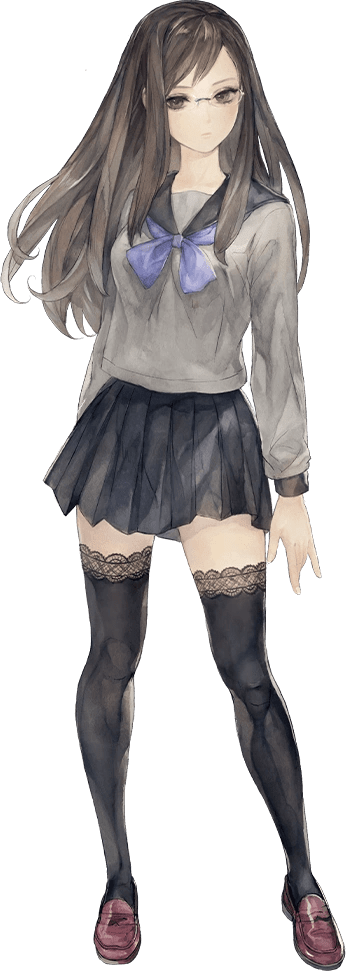
A young girl who pines for Juro Kurabe finds herself in a situation where she’s close to him, but can’t remind him on who she really is. Even as she subtly hints at their former relationship, he either rebuffs her or is oblivious towards her advances. Nearing her wits end, she’s approached by a talking cat who tells her that he can help her get Juro’s memories, if she does something for him.
Firstly, I love how her whole route is basically a homage to the magical girl genre, which is great for a few reasons. Firstly, her English voice actress is the talented Cristina Vee (Mr. Cosmia should know who that is, and if he doesn’t i’ll be disappointed), who played Sailor Mars in one of the show’s many dubs. She’s frequently joined by a black cat that can talk (who also happens to be voiced by Ben Diskin, another Sailor Moon VA) who gifts her a magical gun with which to hunt witches. Unlike the other homages that the game throws at you this one feels very in line and with enough care to feel like a loving tribute as opposed to genderswapped E.T and Greasehog Day.
Megumi’s route begins with her and Tomi Kisaragi walking past Satsuki Pond Park on a rainy, foggy day. Tomi can tell that Megumi is bummed and asks what’s wrong,

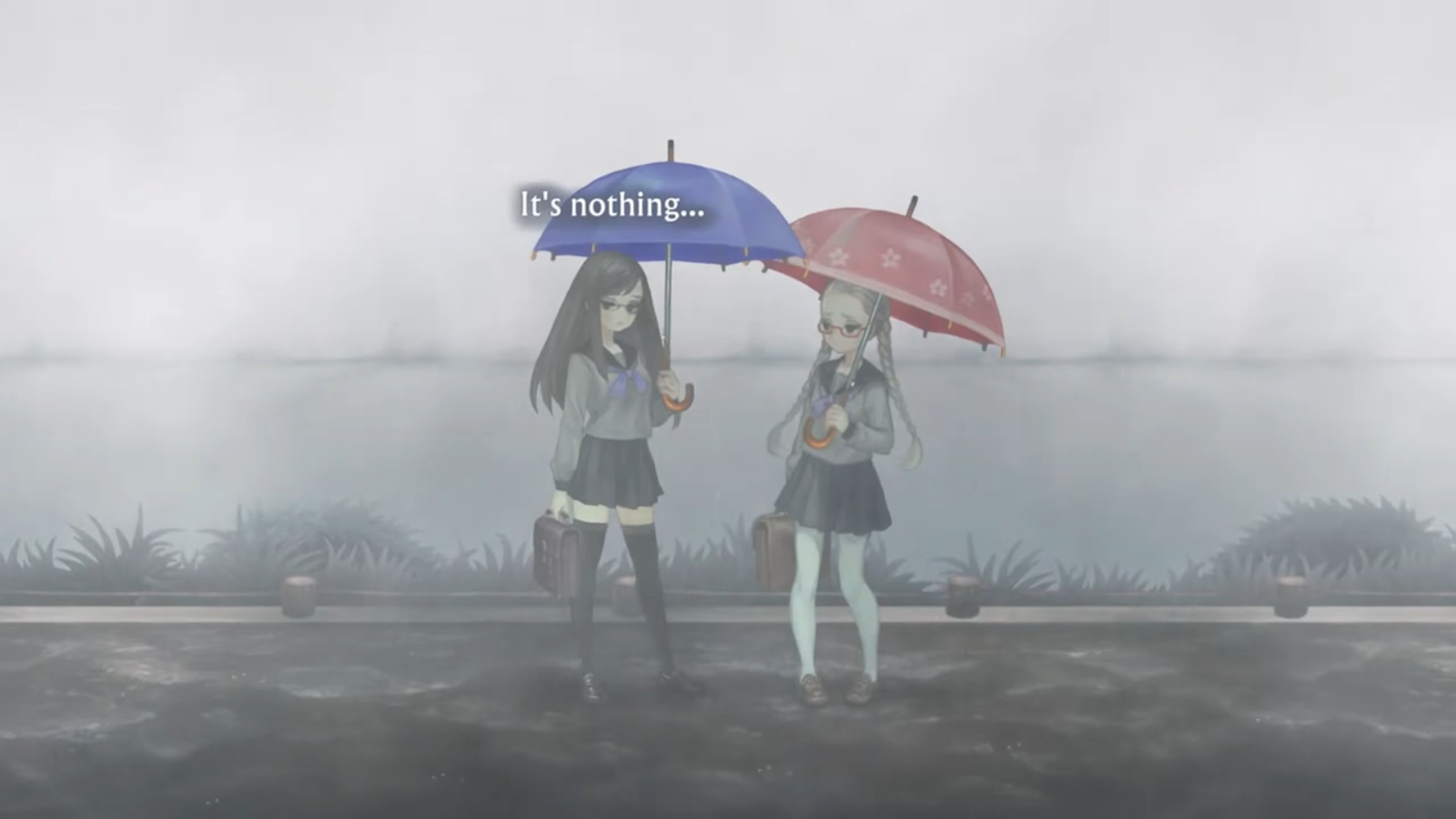
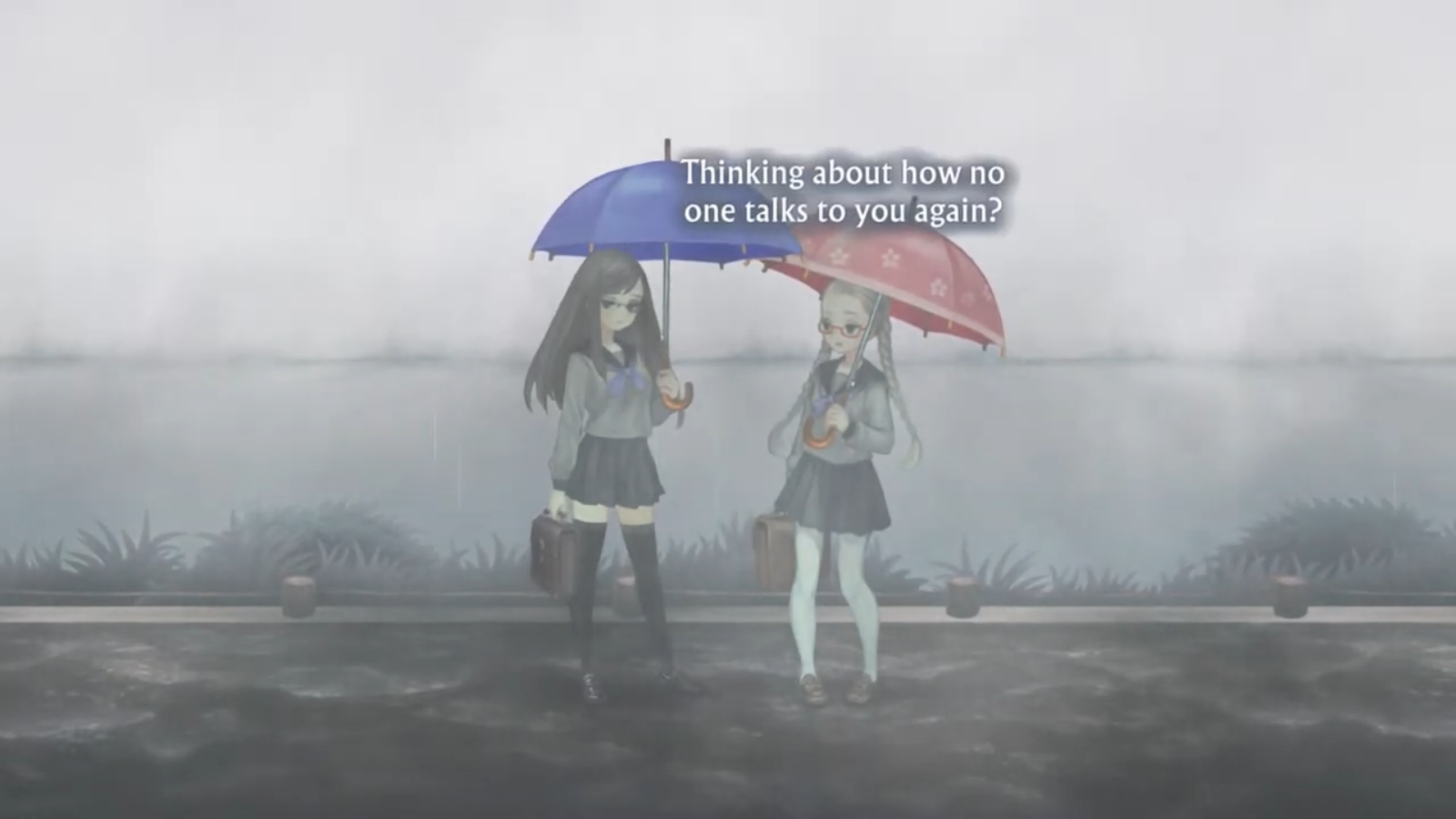
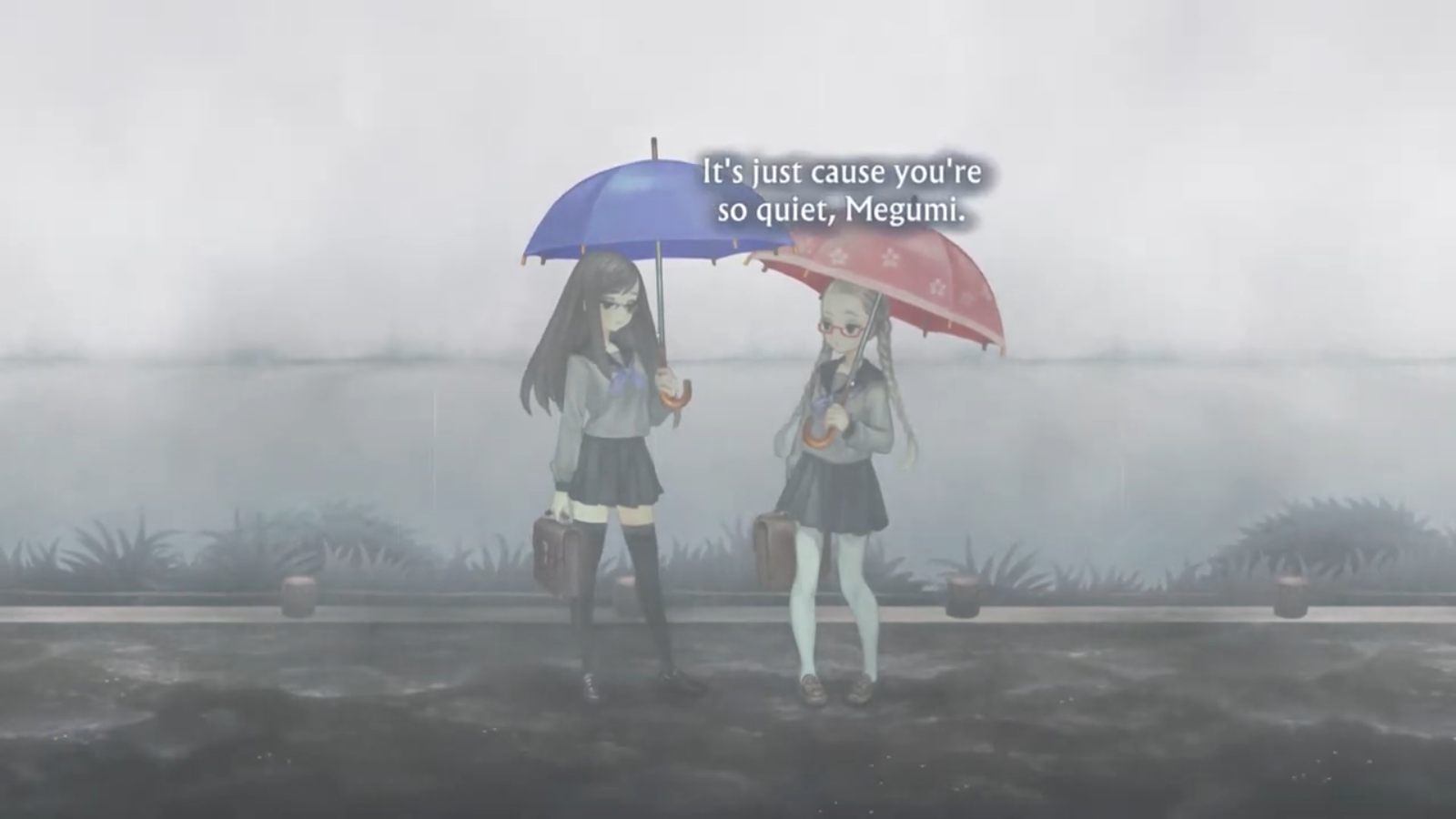
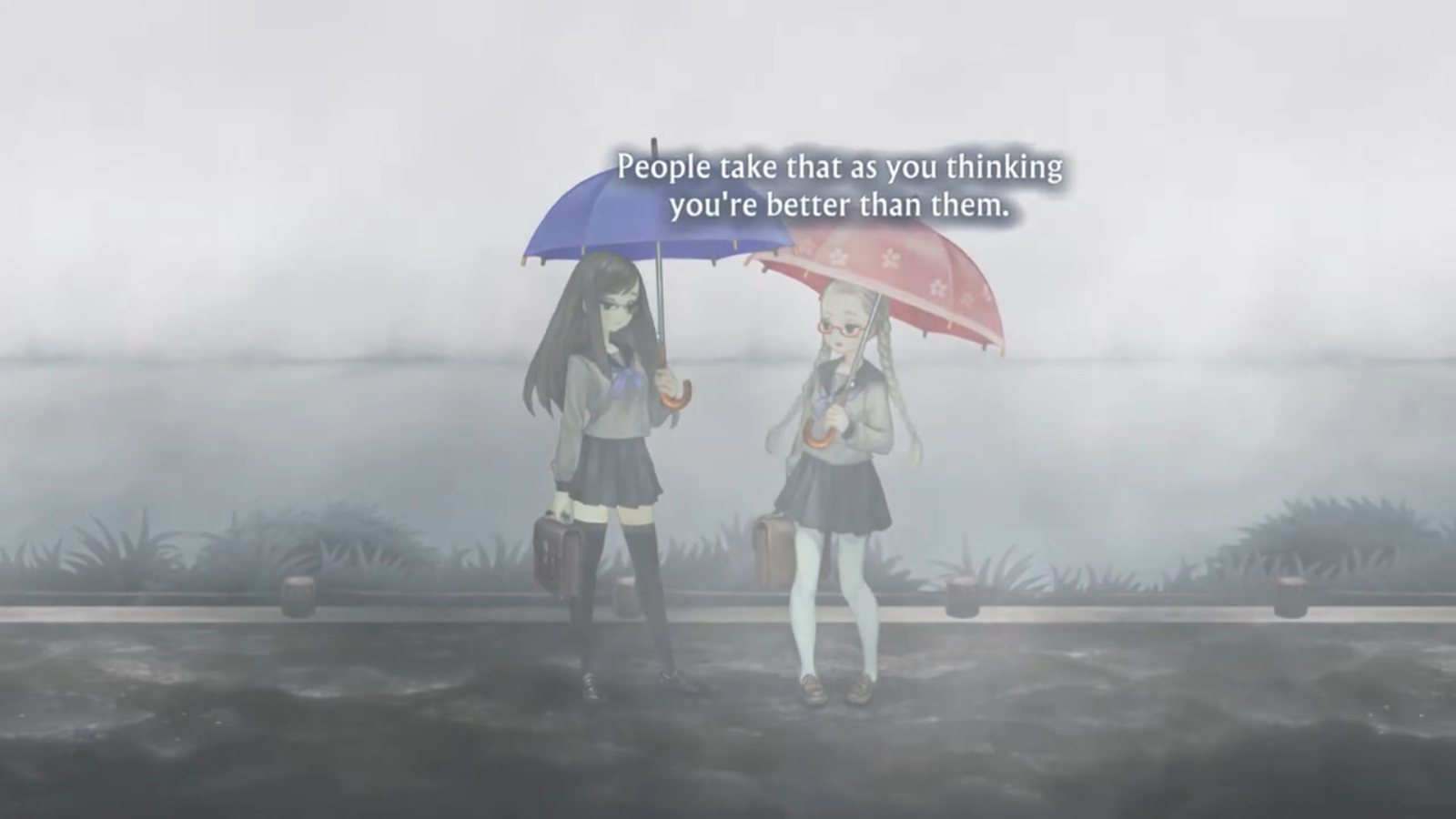
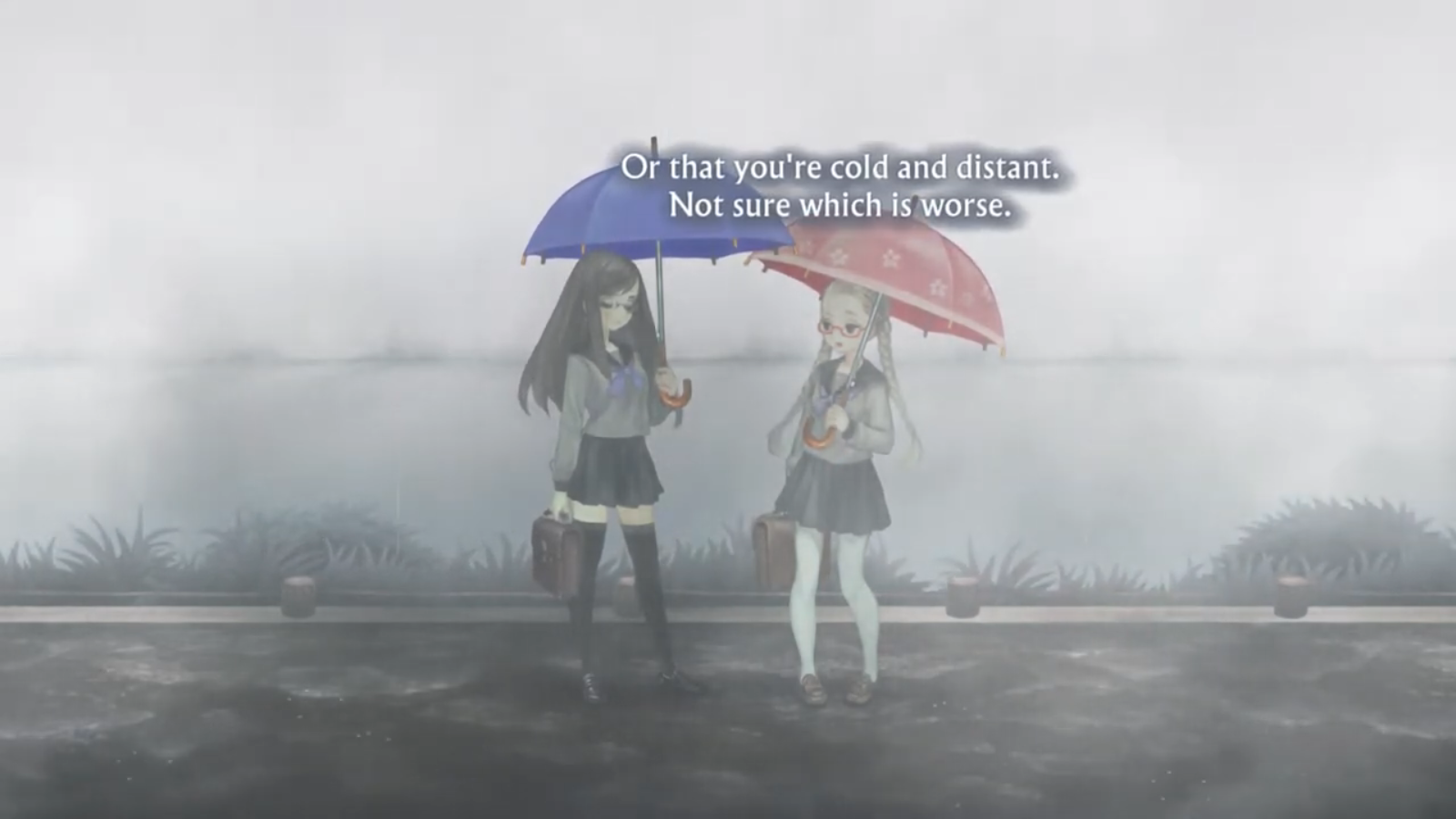
And this scene right here cements her as a relatable character. Growing up I was the quiet kid who went to school and didn’t have many friends. It wasn’t that i didn’t want them, more to the point of I couldn’t find many things in common with them, and it took till high school for me to find people I truly relate to. It isn’t long till a Sentinel falls into the pond in front of them, and out comes young man, who asks for the year. On realization that it’s 2024, he tells them his name is Juro Izumi and that they’re coming.
Flash back to 1985 in front of Sakura High School, Megumi wanders out of the building and sees a cat in the middle of the path. She tries to get its attention, but it wanders off. Lost in thought she crosses paths with Morimura, and muses that the west building doesn’t exist yet, and flashes back to the conversation she had with Juro. He came to say goodbye, as he’ll be going off to fight the kaiju alone. Megumi is against this, stating that it’s reckless and that he shouldn’t have to fight them alone, as the previous attempt with help failed. However, Juro doesn’t want to sit idly by while monsters tear apart his home and endanger his friends, so he has to go. Tomi informs him that the monsters are heading near the port, and he bids them farewell, but not before telling them of a woman named Morimura and to listen to what she says.
After the flashback, Morimura tells Megumi to stay focused, but her mind still lingers on her love. She asks how Juro is doing, to which the school nurse retorts with the harsh truth.
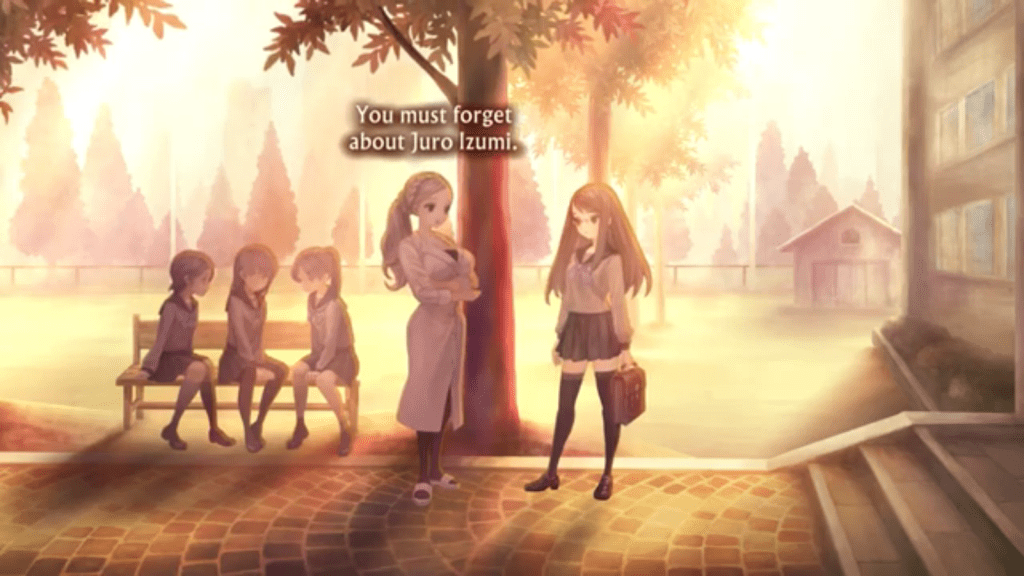
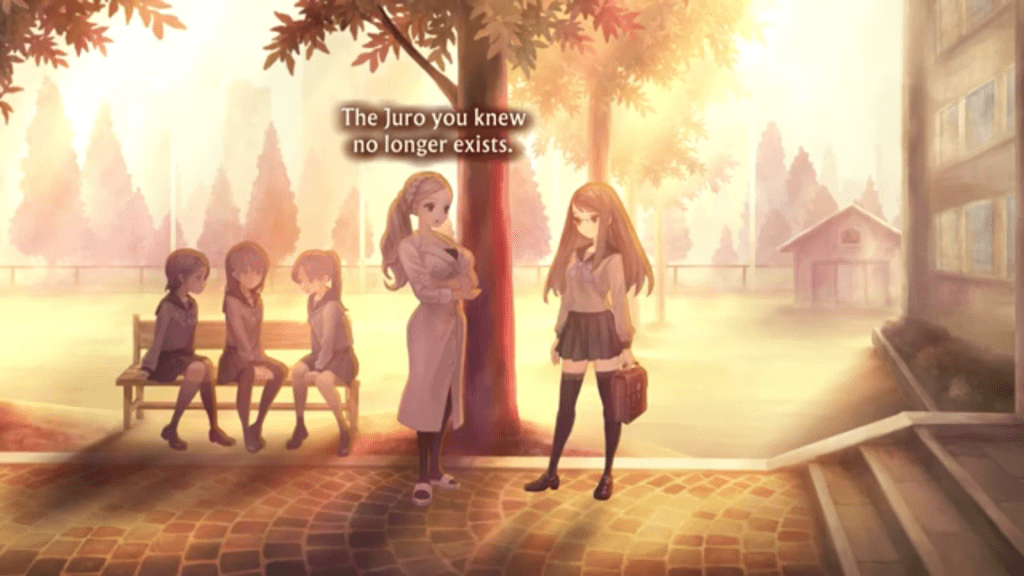

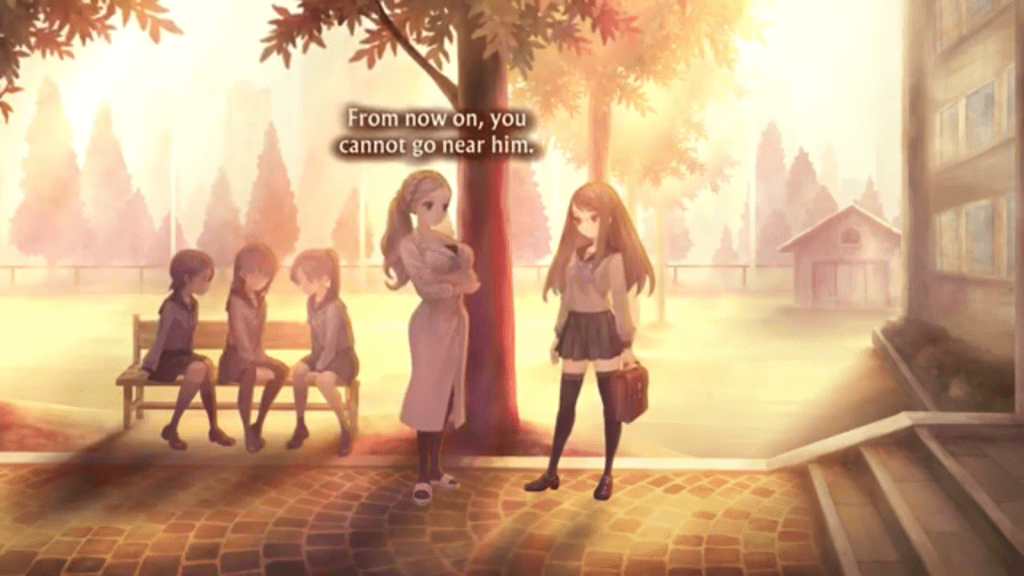
The two look on to see Juro (Kurabe, as he is now) being shown around the school by a young girl, who reminds him to take his medicine. Despite Megumi’s pleas, Morimura is adamant that this is for his own good, and that Juro Izumi would want this. A few months after this exchange, Juro ascends some stairs while Megumi slowly trails behind him until she encounters the cat from before. She calls him a kitty, to which it surprises her by correcting her.
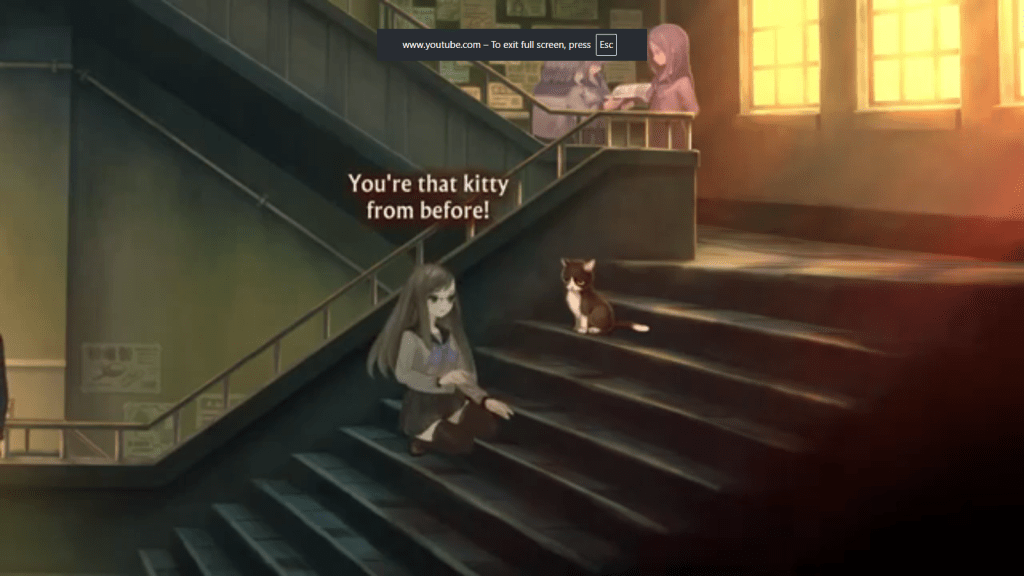
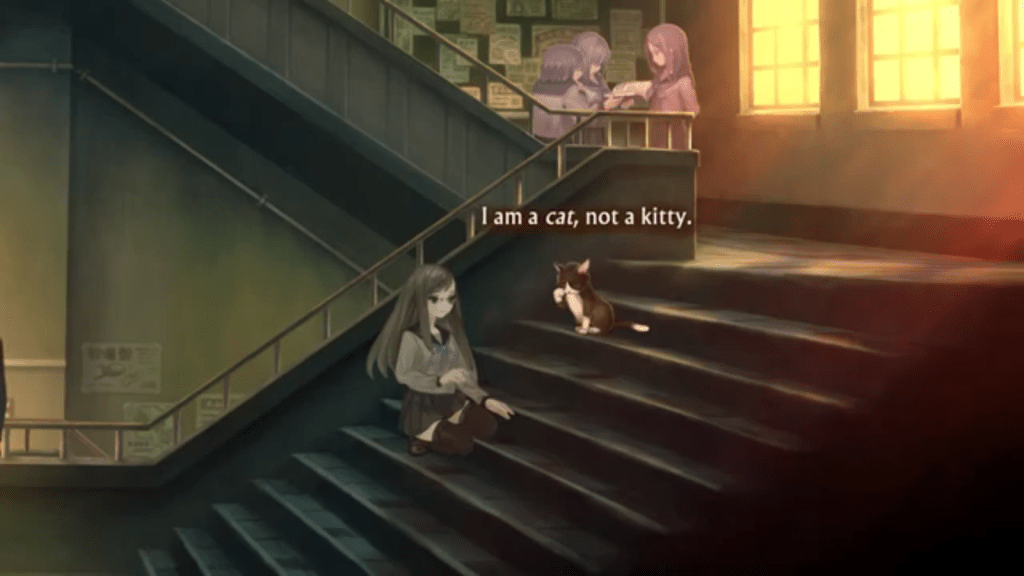
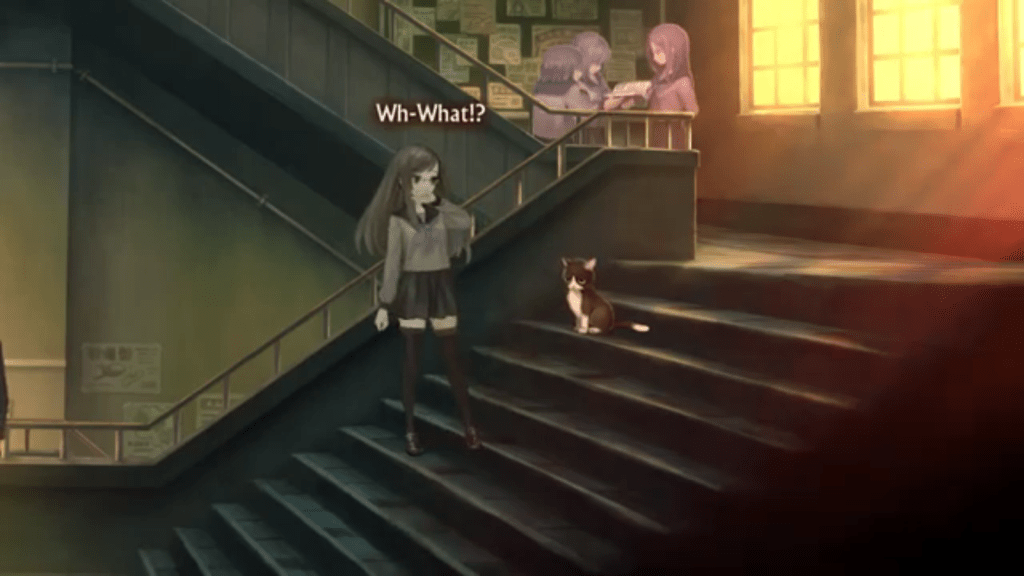
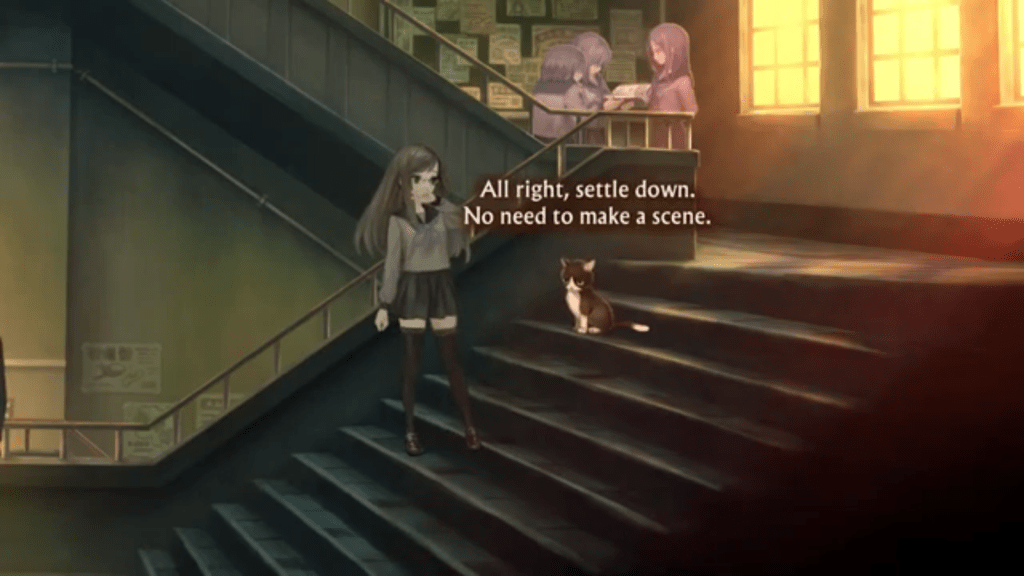

Eventually, she calms down after the cat reveals he knows who she is, and tells her that she’s the one who called for him. He then states he’s here to help her fulfill her deepest desire: Bringing Juro Izumi back. But like most cats he doesn’t do it for free, and offers a binding contract to her where she’ll help him with something to be discussed at a later date. The cat tells her that he’s from another world, and that a code destroyed it, so he’s here to stop it from destroying this one. But obviously, he can’t do it himself as he’s a cat: he lacks thumbs and those are necessary for his mission. You can decline his offer, to which he’ll be pissed off and skulk away, though states that it’s a good thing you’re skeptical, as it’s better than her believing everything she’s told. Once he’s gone, she ponders out loud (in close proximity to other students with no faces) the cat’s offer.


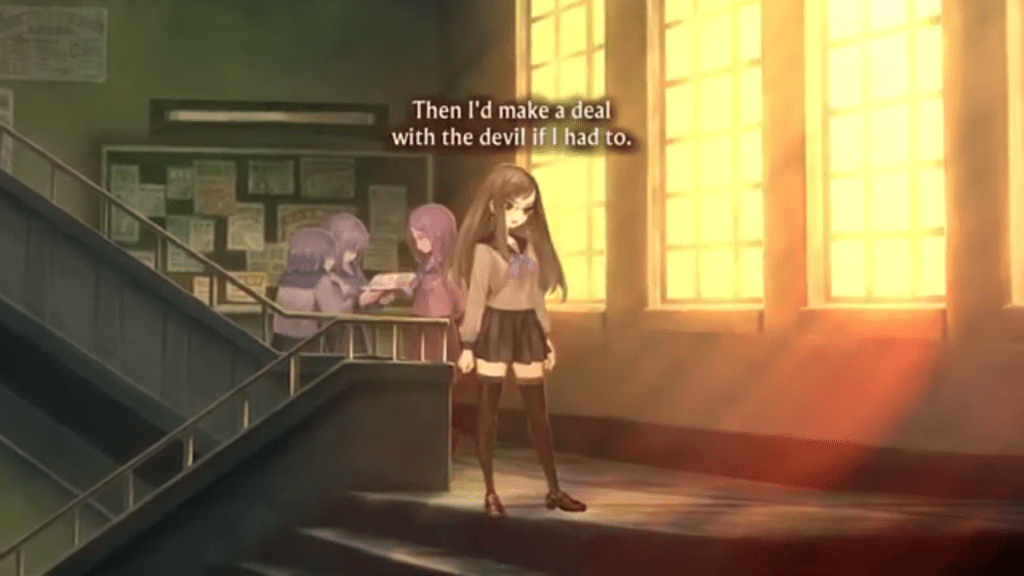
There’s more to the story, but that’s a good introductory point. I thoroughly enjoyed this route for its callbacks and delivery. Something about Vee’s voice acting always puts me at ease whenever I hear it, and she definitely portrays Megumi with a degree of sadness to her voice, but with a faint hope for something better deep down.
Number 1: Ryoko Shinonome
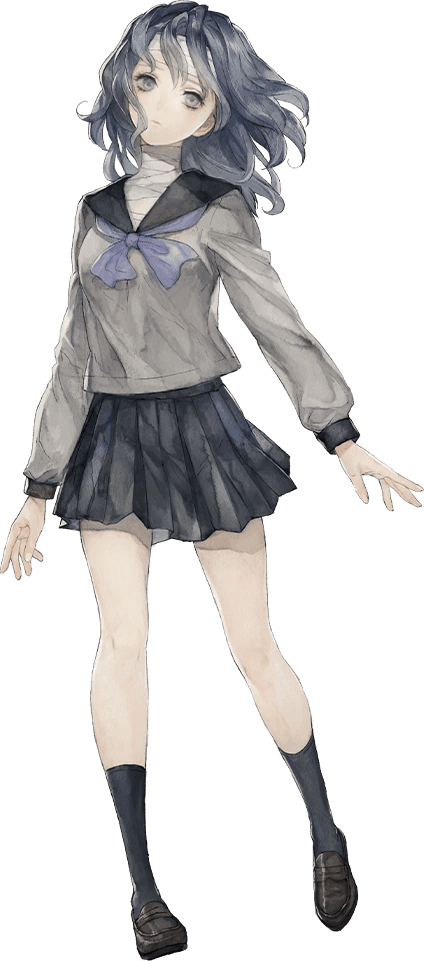
Here we are, the end of the line and my favorite character in the game, Ryoko Shinonome. Mr. Cosmia might be surprised why I didn’t chose Megumi, but there’s a good reason why that is. She’s an agent who tried her hardest to get within the good graces and love of Tetsuya Ida (a thirty two-ish year old man), but suffered a tragic incident that left her mind broken. Despite her affliction, she tries to understand her situation and coverups in spite of her mind fog. And while I could go into detail like I did with the others, I’m not going to do that, as I think her route is better explored by watching it with one’s own eyes. I could make jokes like “Press X to take your medicine” but that would not only be tasteless, but a disservice to the character. While I’m leaving most of her route out, I will discuss the part that endeared me to her as a character.
Near the end of the route it’s revealed that due to an accident, her brain was severely damaged, causing memory loss and periods where she would black out due to the painful headaches. Nurse Morimura backed up important memories related to sentinels and gates, and how to operate them, but nothing else beyond those pertinent to the mission was saved. In other words, Ryoko Shinonome knows only how to pilot a sentinel and use a time gate, the former of which will likely kill her from prolonged exposure and already gave her a terminal condition. She can only do one job, and that job will result in her demise. And perhaps its a bit morbid, but I relate heavily to that.
Without giving much away about my private life, I work for a company that I hate. It claims to care a great deal about the planet, yet their own actions (or inactions) severely harm the surroundings and used cheap materials in the construction of its facility, which isn’t very safe given what I do. While I’ve worked there for quite some time, I haven’t accepted positions to other departments when offered, as I reasoned that this isn’t something that I’d want to do for the rest of my life. I don’t think it’s going to give me any useful skills as I have recently found a true calling that I’m good at, and am waiting for an opening to make it my career. But until that day comes, I only know how to do one job, and that one job can kill me.
The Finale (obvious spoilers)
So after everything that you go through in all of the stories, you’re forced into one final gauntlet of enemies to protect the last tower. And make no mistake, it is not an easy fight. I lost the first six attempts because of poor planning, and honestly would’ve never been able to beat it if it weren’t for online guides. The game throws everything and the kitchen sink at you, you’re surrounded on all sides by kaiju that just keep coming, so the game expects you to have an all star team that can handle any situation. Or, you could do what I do and rely on Natsuno’s overpowered standard attack that pierces armor and has great range with Yakushiji and Amiguchi providing backup, Nenji, Hijiyama and Sekigahara running around and everyone else on defense. Every so often, the idol who oversees the event will chime in, letting you know about the progress, but near the end everything will just rush for the tower. Kaiju will start getting through, and buildings will catch on fire around you. But when you do succeed, the screen cuts to black.
All of the pilots are still in contact with each other in what seems to be an empty void (presumably space), Okino is revealed to still be alive (though prior to this Takatoshi was the only one who knew) and their idol guide chimes in as well. And a few things are revealed:
- The sentinels weren’t giant mechs (well, in the simulation they were, but in reality no), rather they were giant pods that the chosen few have been sleeping in.
- Reconnecting the final terminal forced the mainframe to detect the many abnormalities in the programming (the Kaiju, the glitches, etc.) which resulted in the emergency escape procedure, freeing the kids from their pods.
- However, their bodies weren’t ready for the external environment, so that was why they were in the pods. By the time the final fight is over, all of them are “finished cooking” as Nenji Ogata puts it.
- And the most important thing: everything that was in the five sectors that represented different eras was all AI. Every person, building, blade of grass was all made and managed by the Universal Control.
I’ll have my own grievances on this later, but their idol informant tells them some things about their new home
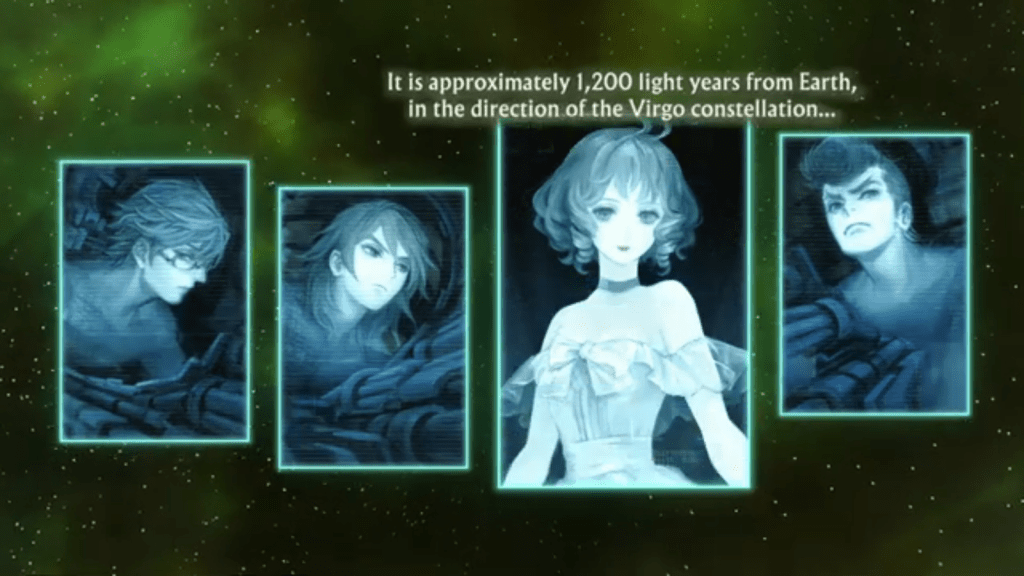
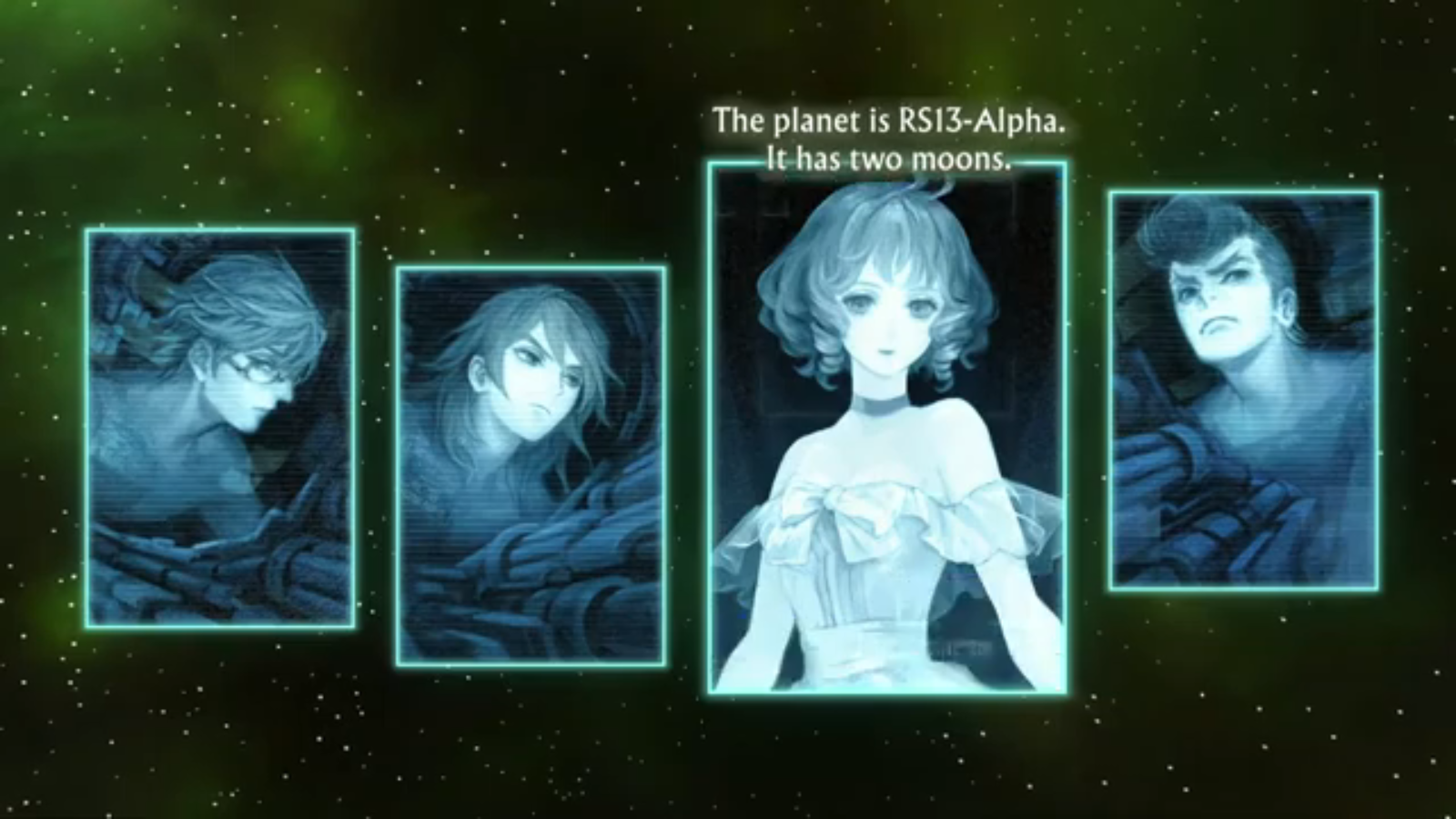
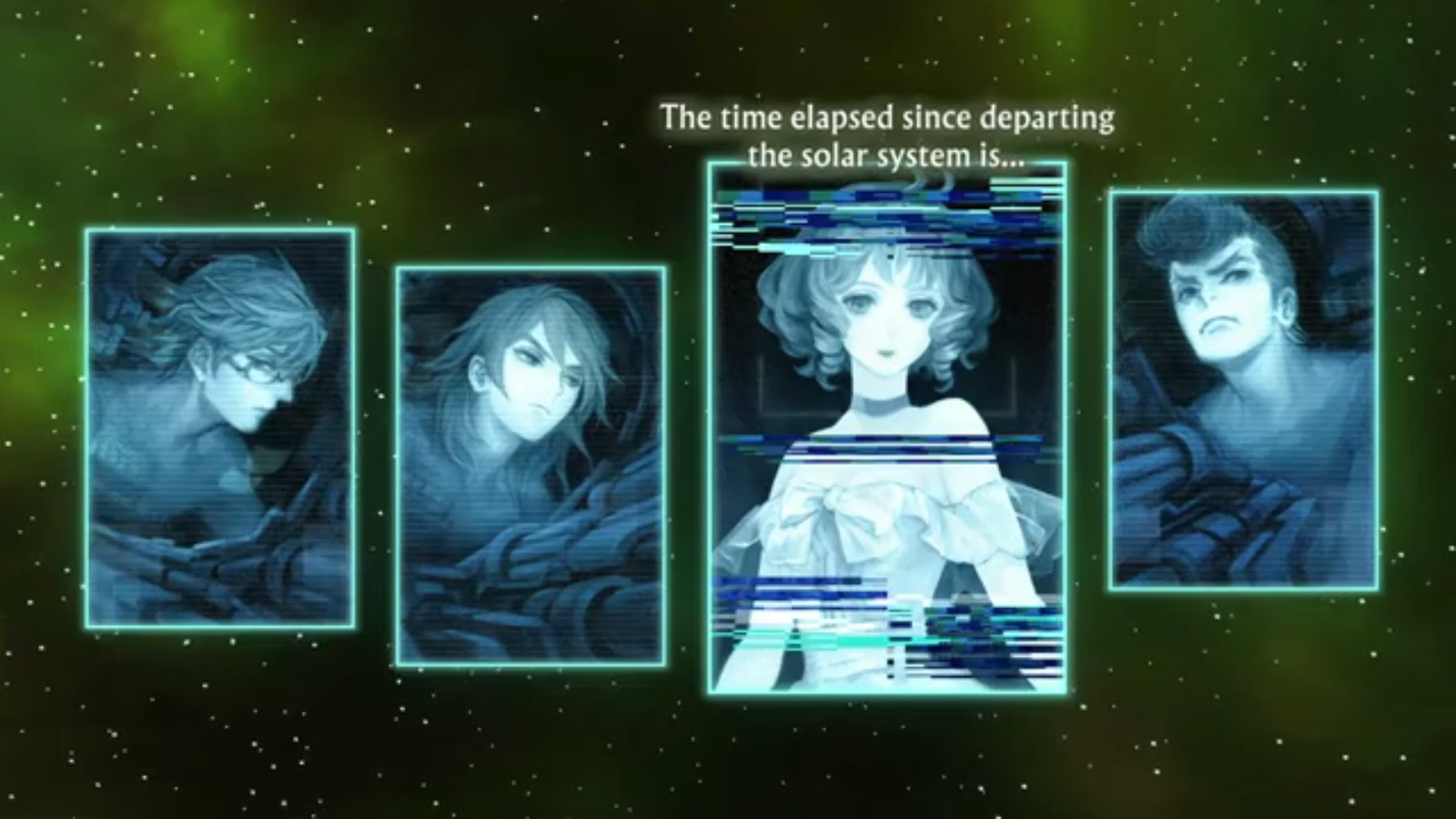
She’s cut off by Nenji before she gives the time by the way, not that it’d matter as I know it’d be an astronomically large number. Footage of Professor Morimura addresses the chosen children, stating that despite their best efforts, humanity went extinct, but there is still hope among them as she explains.
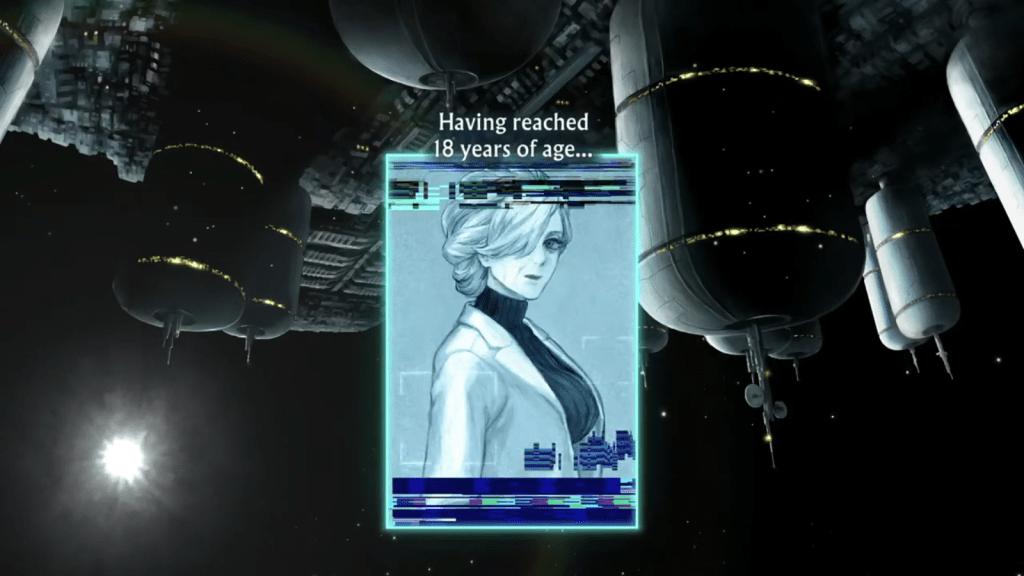
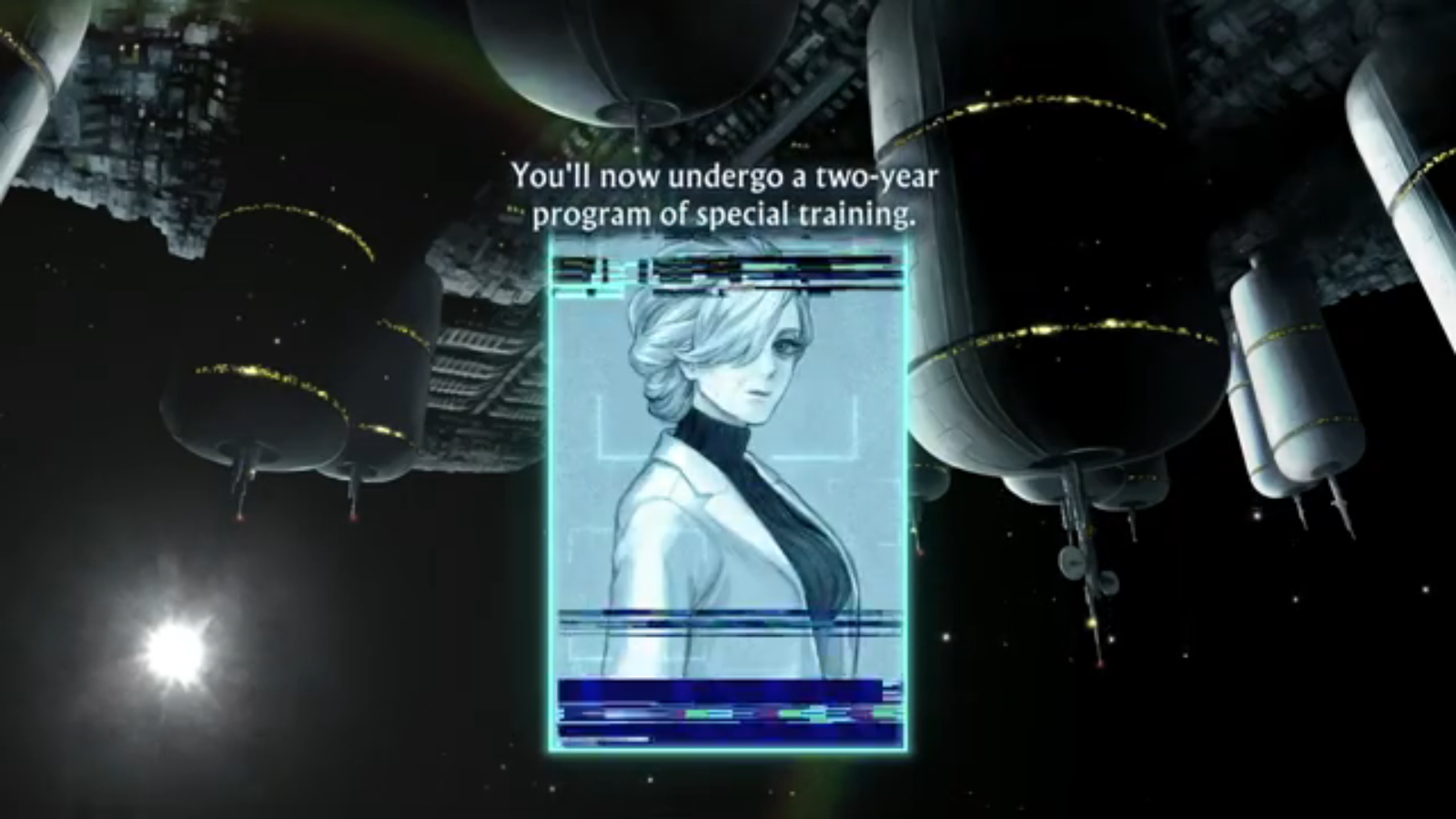
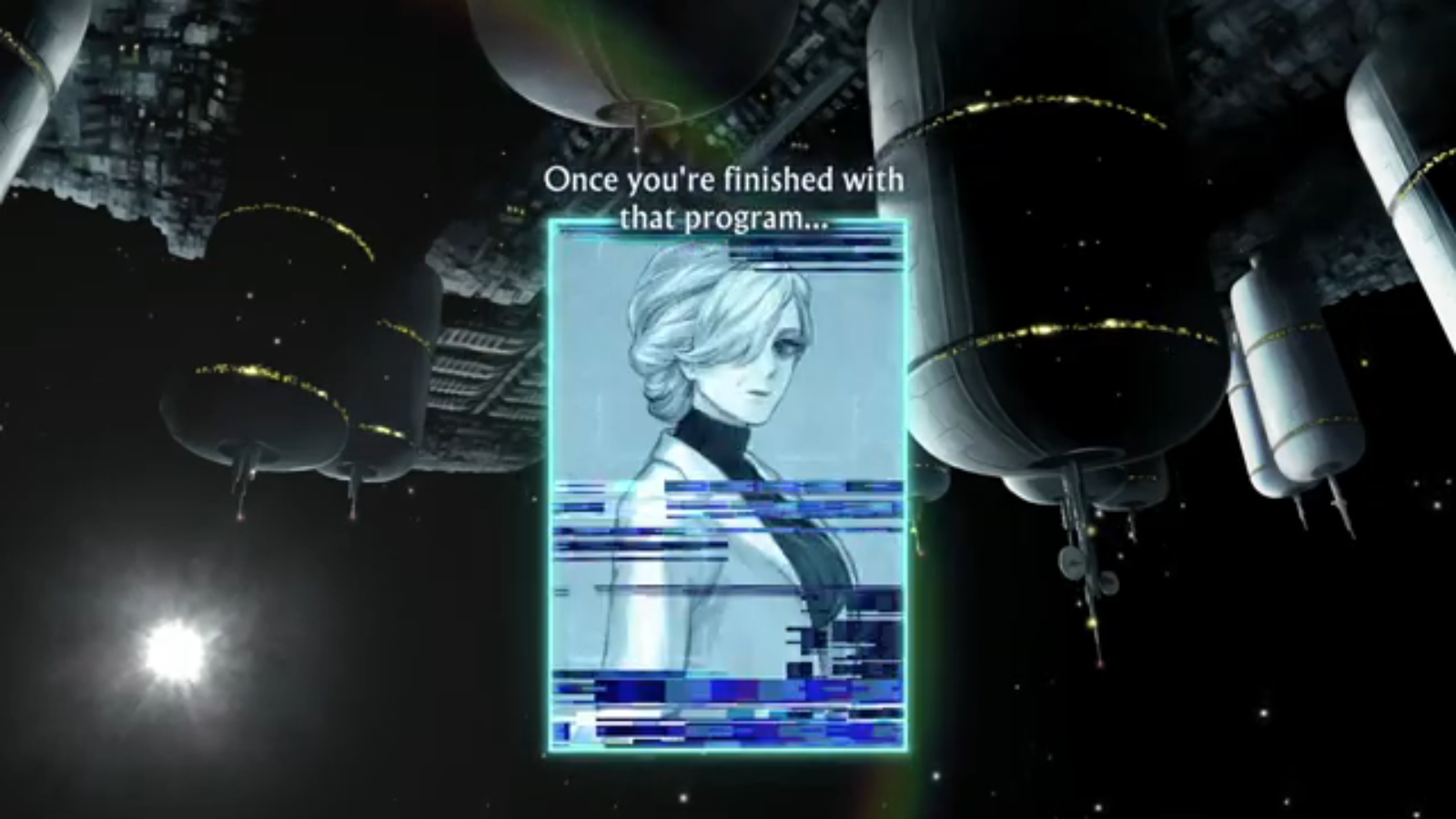
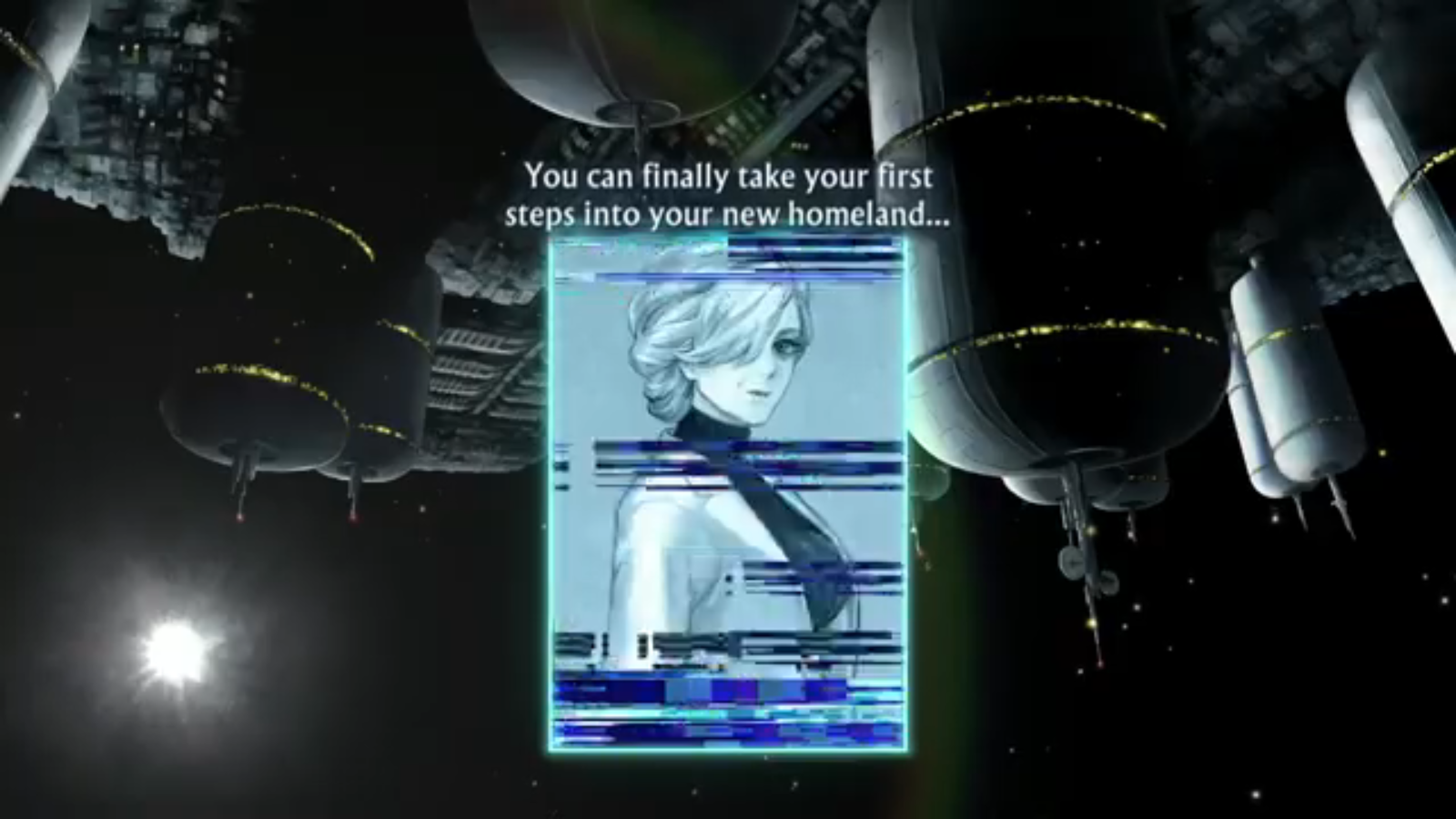
They also gave the children a “massive cache of genetic information to the new world” which is ripe with DNA from various flora and fauna that used to inhabit earth (including humans). And a part of me is just wondering how the hell they got all of that information? did they raid the frozen zoo at the San Diego Zoo? or was some poor schmuck chosen to go around with hypodermic needles to collect the blood of animals (ANY animal he found) that he found around the world. But whatever, after a two year program in mindscrew academy, the kids are released from their pods and Juro’s first sight in his real body is darkness. The pod finally opens, and he is greeted by Yakushiji, nude as the day she crawled out of her mother’s womb but minus the placenta and blood. They embrace each other, able to finally meet and enter a new world. Juro’s final monologue states that this plan was meant to save humanity, and that they know what they must do, they are going to live. The camera pans out to a sprawling field of flowers with the pod facility off to the left, with a sunset shining over their new home, and then credits.
Final Thoughts
What to say about this experience? that’s the real question on everyone’s mind. The story itself at the end of the day seems simple enough on paper: Humanity’s screwed, send a few kids out to repopulate. But it’s the little details to that story that get me. And I’ll air my grievances out now in another bulleted list.
- If the children were put in those pods to grow and gestate (Tamao Kurabe’s EXACT WORDS) how were their bodies maintained? Did they just put sleeping teenagers in pods and call it a day? Bodies need to be stimulated to work you know, otherwise bed sores will develop and their muscles will atrophy from lack of use. And how was nutrition handled? were IVs inserted into their arms to give their bodies what they needed? and if so, where did all the waste go when their bodies finished digesting it? Comatose people still need to intake food and relieve themselves, so where did it go? I’m afraid to ask, but how were they cleaned?
- More to the point, how exactly did Juro manage to walk out of the pod with such a muscular frame? If i’m to believe that he’s been in stasis for 2 years that boy’s legs aren’t going to be working 5 minutes after waking up.
- There are fifteen of the chosen children in the new world, great, but there’s a few things wrong with that, being that there’s not enough genetic diversity to sustain a healthy population. If I’m to assume that they plan on using the human DNA that they have to make more people, then how will that be regulated? how much of it is unique enough to give genetic variety? And failing that, assuming they all pair off into seven couples (I’m going to just assume that there’s an even amount of girls and guys in that specific situation) then what of that one straggler? who does he get to mate with? Do they have to wait till one of the couples produces a child of the opposite sex to continue the next generation? There’s a reason why Noah’s ark is so easily shut down by believers in science and genetics, because two pairs of a specific species is not enough to repopulate an environment.
- And speaking of Noah’s ark, they also have massive cache of genetic material to bring back various species that were native to earth. If I’m to believe that they intend to release them on this new planet, how is that going to affect the ecosystem? We know next to nothing about what lived there before the kids were released, though the field of flowers implies a few things (pollinators have to exist for them to exist, like bees or hummingbirds. Those pollinators have to have predators, and those predators need other prey beyond those pollinators). So they’re just going to release a bunch of animals and hope for the best? what a dumb plan.
- Also, do they even know anything more about the planet beyond its earthlike capabilities? Is there anything edible to eat? did the foundation provide them with food/medicine? any wild predators that could make mincemeat out of them? Or are they supposed to eat the massive cache of genetic information till they figure it out.
I don’t normally resort to memes to get my point across, but I think i’ll make a special exception this one time, this one meme perfectly surmises my whole idea on the plan that the game (and by extension the writers) created.
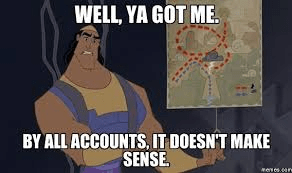
And I know what you’re probably thinking “It’s just a game Spartan why are you picking on it so much!” it’s science fiction, that is why. If you’re going to have your characters go through X Y and Z, you need to have a very good plot to support that. And this game certainly doesn’t do that, and I fail to see a world where it does for me at least. It’s a time travel story that understands time travel, but not enough to the point where it REALLY understands it. So if someone would ask me if would recommend this game, I would say no, I couldn’t in good conscience as I don’t think it uses its plot effectively.
FINAL VERDICT
What to give a game that muddles its theme? On one hand that’s the most glaring issue on an otherwise perfect game, but on the other hand everything else from artwork, to voice direction and gameplay they all are top notch as expected from ATLUS. I certainly enjoyed a lot of the returning VAs from their previous works in the game trades that I’ve done with Mr. Cosmia…..
8 out of 10, the -2 comes from the plot and traits system. I can go lower but this is where it stays. So I wonder what’s next on the game trade horizon?
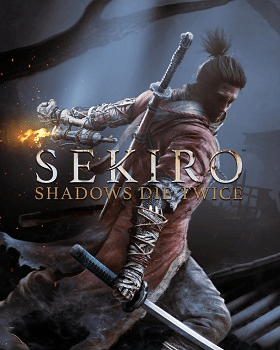
……
Oh powers that be, why must you torment me so?
 Cosmia