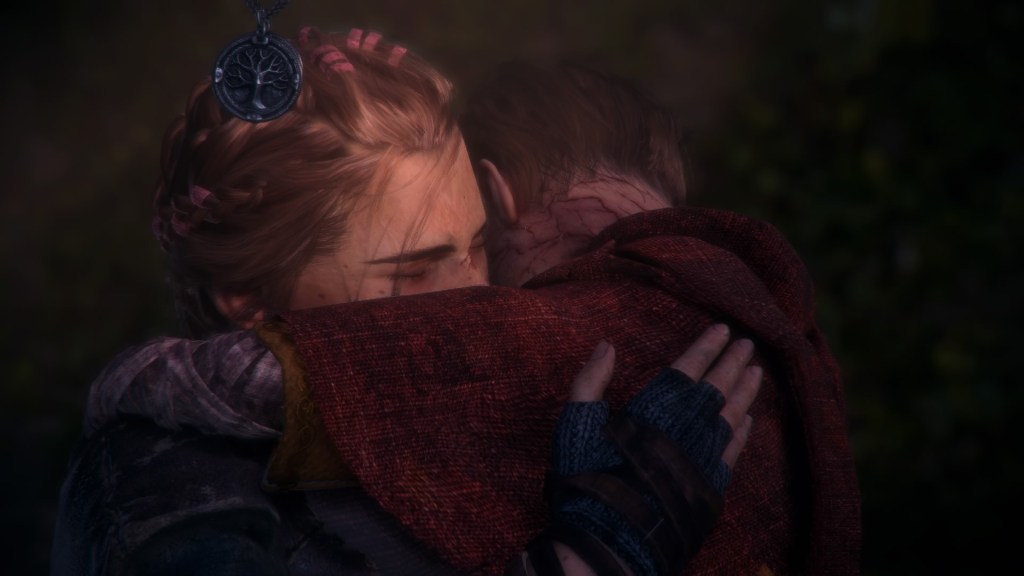
Welcome to the Game Trade Review, where I give my take on games a friend had me play after playing it one time. Today I will talk about a game I finished over the holidays. A lovely game about kids getting their lives disrupted by religious fanatics and a mysterious disease. A Plague Tale: Innocence was never the kind of game you’d play for escapism, but it’s certainly providing even less of that today. It is worth noting that this game came out in 2019, so anything that happened since then has no influence on the making of this game. I’m not here to write some half-assed college essay about the role of disease in media. I’m sure there’s some interesting things to be said there, but I’m good. I’m here to talk about what I think about this game. So let’s get into it. Disclaimer: this review will contain spoilers.
The Story
Plague Tale is one of those movie-like games where gameplay follows a highly controlled narrative. The characters are modeled to look like actual people, and you are encouraged to empathize with them as if they are. Much of the game’s overall quality hinges on the story. After all, the game is built in such a way to effectively tell it. To see whether or not this game’s story is good enough to justify the movie-game approach let’s start from the top.
The story begins from the perspective of a young lady named Amicia de Rune. She lives in some quaint big ass estate in rural-ish France in the 1300s with her family and her dog. But something weird happens while they’re out practice hunting or whatever so rip dog. When they come back home Amicia soon finds that her mysteriously dead dog is not her only problem. Unexpectedly, the French inquisition arrives and murders damn near everyone they can find. Which is mostly the nameless servants that worked there. Honestly something feels a bit off with that choice. You only get a vague idea of how much these people have supported the de Rune family. Yet they all die, upping the body count and trauma for the kids to go through. It makes sense that if these kids were rich in the 1300s they’d have a lot people working under them. It makes sense that if the French Inquisition came with bad intentions they’d kill everyone they found besides Hugo. Something doesn’t sit quite right with me in how this is portrayed here though.
While the workers of the estate aren’t the focus of the story they very much helped make it possible. They built the de Rune estate that was large enough to be difficult to thoroughly search. They didn’t give any information away to help the Inquistion find the kids. Some of them watched Amicia and Hugo sneak by without saying anything, even though they might have lived if they had done so. Killing the servants also occupied the soldiers that may have otherwise been able to spend more time actually finding the kids. It is safe to say that Amicia and Hugo would never have escaped without their sacrifice. I feel this game could do a bit more to highlight this fact, but it’s hard to imagine how without them spending more time showing the peaceful life before everything goes to shit. Alternatively, they could spend a bit more time thinking about Gabrielle and all the other folks that died after the chapter they died in. That’s not exactly a common occurrence in this game. So let’s acknowledge them now, thank you brave workers, your sacrifice will not be in vain… at least not after my 35th retry!
Due to the tight lips of their father and the workers along with some lucky timing Amicia and Hugo are able to escape their house. They almost get caught by the dude guarding the door, but their mother Beatrice shows up just in time to knock him the fuck out m8. Together they manage to escape with the help of some dude and Beatrice tells them to find Laurentius to help Hugo. Hugo was born with a mysterious blood condition that needs an experienced alchemist’s help to treat.
Beatrice stays behind to protect the kids. She presumably dies along with Mr. Some Dude, but as it turns out she actually lives later. Amicia’s convinced she died though, along with everyone else in the estate. Thus Amicia and Hugo have suddenly lost everything besides each other. Under these conditions they have to face an outside world ravaged by war and plague head on.

The beginning of the story is honestly pretty effective for the most part. You aren’t given enough time to get attached to all the people that died, but it’s still pretty shocking seeing all the servants and such get murdered. Nothing you learned about the father, the dog, or anyone else indicates that they deserve what happened there. I get the sense they decided to get to the French Inquisition murdering everyone part so quickly because it’s a video game and that’s where the action is. That’s fine honestly, but the end result is that the loss is significantly more emotionally impactful for the characters in the game than it is for me the player. I barely get to see what they had before it’s gone, while Amicia’s been living that life for 15 years apparently. By the way, I would not have guessed she was 15 at all if I didn’t look that up. This is a LOT for a 15-year-old to have to deal with. It’s also a lot for a 5-year-old to have to deal with too tbh, even if Amicia does most of the dirty work.
So with this set up we’ve got some nice mystery. We want to know what the hell killed the dog and also what’s up with Hugo’s blood. Also as a result of this setup we got some traumatized children with only a vague idea of what to do next. This set up has a lot of potential because it has a solid hook and a lot of ways it could go. It also lets you play as a French girl, which may or may not be a good thing depending on your perspective. While I wasn’t especially emotionally invested at the start, it did seem like things could get quite interesting.
After the kids successfully escape they end up in a nearby town that’s not especially welcoming. Everybody shuts their windows as they walk by, and there’s a lot of big white Xs painted on some of the doors. From what I gather this marks households affected by the plague so that others may avoid them.
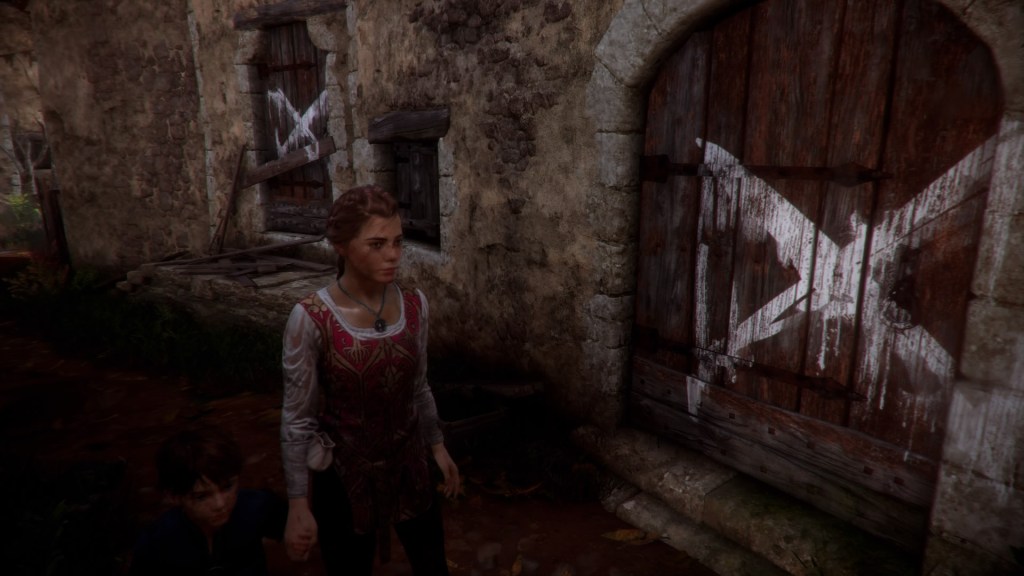
The surviving townsfolk don’t seem to be taking this whole plague thing very well. They’re burning people at the stake for uh, some reason. I guess they’re convinced the plague is caused by witchcraft or some shit. When they see Amicia and Hugo walking by in their nice rich people clothes shit gets real. The townsfolk automatically assume that the rich kids are responsible somehow and chase after them. This results in a somewhat tedious gameplay sequence where you just kinda keep running and are only occasionally in any actual danger. The dramatic music keeps on going though~
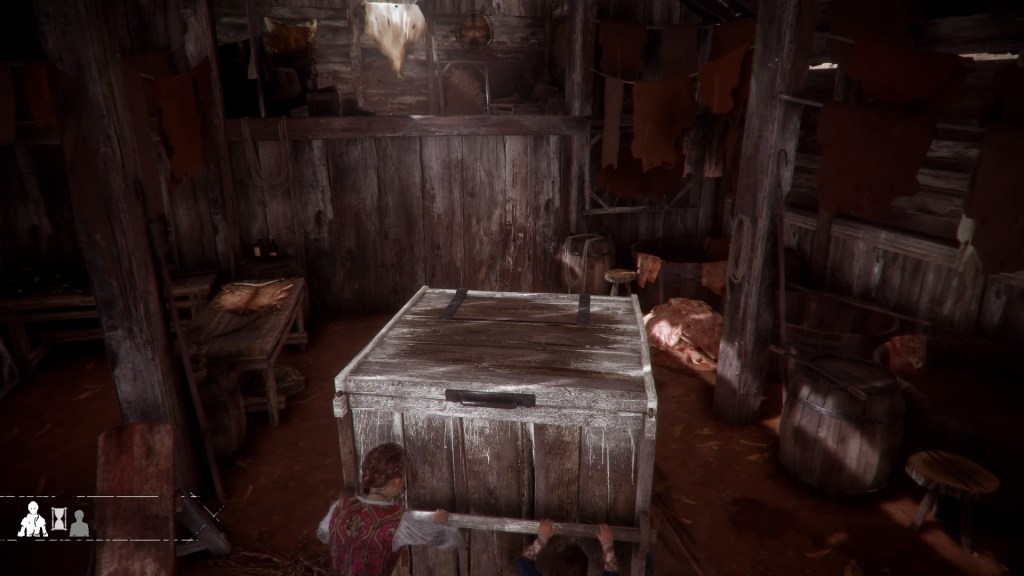
Eventually they get saved by a random grandma, and she gives the kids a brief respite. They got to rest a bit, get some clothes that stand out less, and upgrade Amicia’s sling. The kind elderly woman shows that not everyone in the town is caught in mass hysteria turning them into terrible people, it’s just that most of them are! Honestly, the psychological breakdown of communities during plagues is an interesting subject to me. There’s a lot of potential there, but ultimately this story is not about them. We only get a general idea of how the plague is affecting them, and the most important thing to know is that these conditions make the town inhospitable to the protagonists. So their next step is to go to a church that may or may not be completely abandoned. But hey, if it’s not abandoned there’s someone that could theoretically help out. So that’s where they go next.
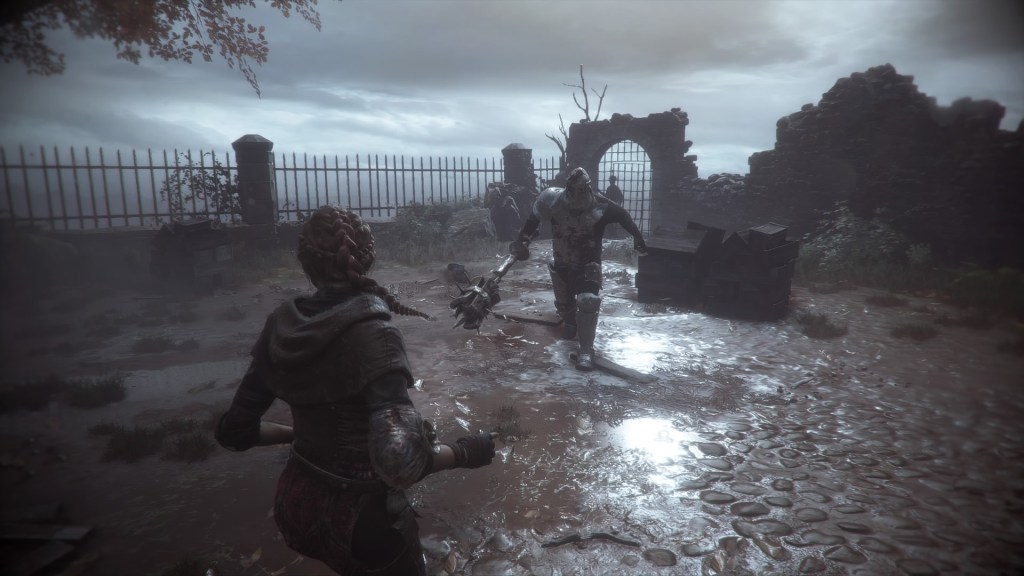
When they enter the church it does seem pretty damn empty at first. But once they look around enough they eventually notice a monk guy casually walking around outside and they try to talk to him. He doesn’t seem particularly receptive at first but he eventually gives in and tells them where they should go to find that Laurentius guy they’ve been looking for. Before they leave the church they end up having a little bit of a rat problem.

It begs the question why the rats decided to cause even more trouble right when Amicia and Hugo showed up. I thought this was just dramatic convenience at first, but it turns out later that Hugo’s blood disorder is a rat power disorder. So the rats being drawn to where Hugo is actually makes some sense in retrospect. They don’t know anything about that at this point in the story though. All they know is that there’s a swarm of bloodthirsty rats out to get them and that the only way to survive is by carefully avoiding them. They’re weirdly afraid of fire and other strong light sources and the church has enough torches laid out to help make escaping possible. As such, they manage somehow.
And… do I really want to keep summarizing the plot with snarky commentary along the way? Is this really the best way to discuss the story in the first place? Probably not honestly, but I’m not sure what the better way to do it is. After the point I summarized the rest of the story is largely about Amicia and co.’s efforts to save Hugo, deal with whatever other shit comes up, and figure out what the deal is with the French inquisition. As I mentioned earlier Hugo’s condition gives him special rat powers, and evil pope wants to use Hugo for uh, French domination or whatever. It makes sense that the Inquisition would do everything they did to get ahold of Hugo. Evil pope wants rat powers himself to do evil or whatever. It’s a bit outlandish of a concept, but within the premises of this game it makes sense. Perhaps it’s just not to my tastes.
The middle of the story was pretty good for the most part. Seeing all the dangerous situations Amicia and Hugo go through just to live is engaging. You want to see them make it through after all the stuff they’ve been through. Hugo may be a little shit sometimes but he’s also 5. Saving him feels like a worthwhile cause for Amicia to keep going. Amicia probably would have a much easier time surviving if she got rid of him earlier, but she would not be able to live with herself. Hugo and Amicia were largely kept separate before the events of this game because of his condition. In spite of them not being very familiar with each other at first they bond rather quickly. After a certain point they’re pretty much inseparable… until the point where they were separable.
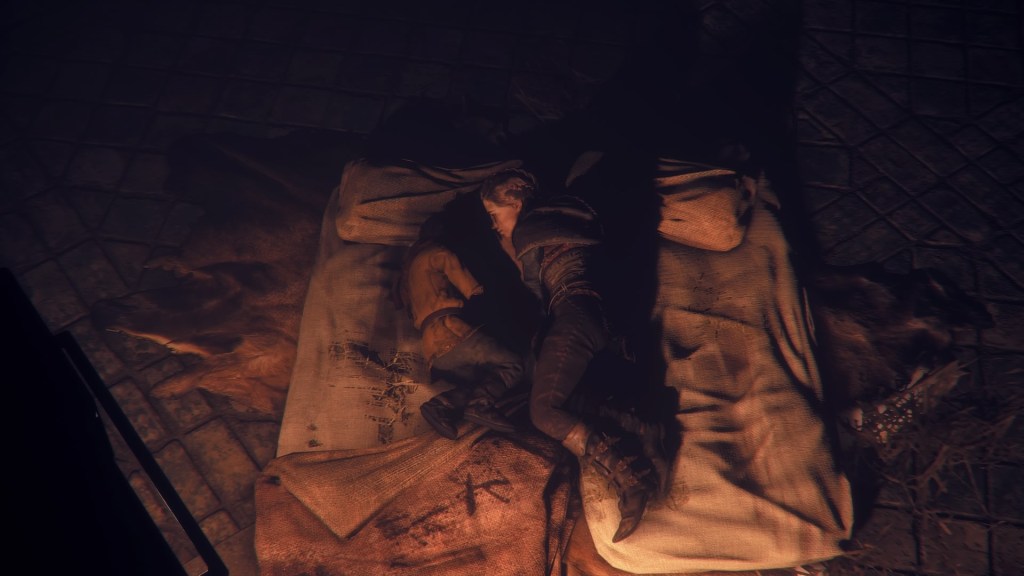
When Hugo learned that Amicia lied about their mother being dead he disappeared into the night straight into the Inquisition’s clutches. Was it the right choice for Amicia to lie? Debatable really, things might have turned out the same way if she told the truth. I guess the lesson here is if you lie you better not get caught out on it. Otherwise, your baby brother will get kidnapped and converted to Rat Jesus. I will carry this important message with me throughout my life.
When Hugo dipped Amicia was super torn up about it, which leads into a rather trippy dream(?) sequence. She walks through her memories in search of Hugo. She sees the old lady and she gives her shit, and she sees Laurentius who also gives her shit. Except it’s probably in Amicia’s head, so she’s giving herself shit. Or is it? It’s never really explained afterwards, and that’s fine.
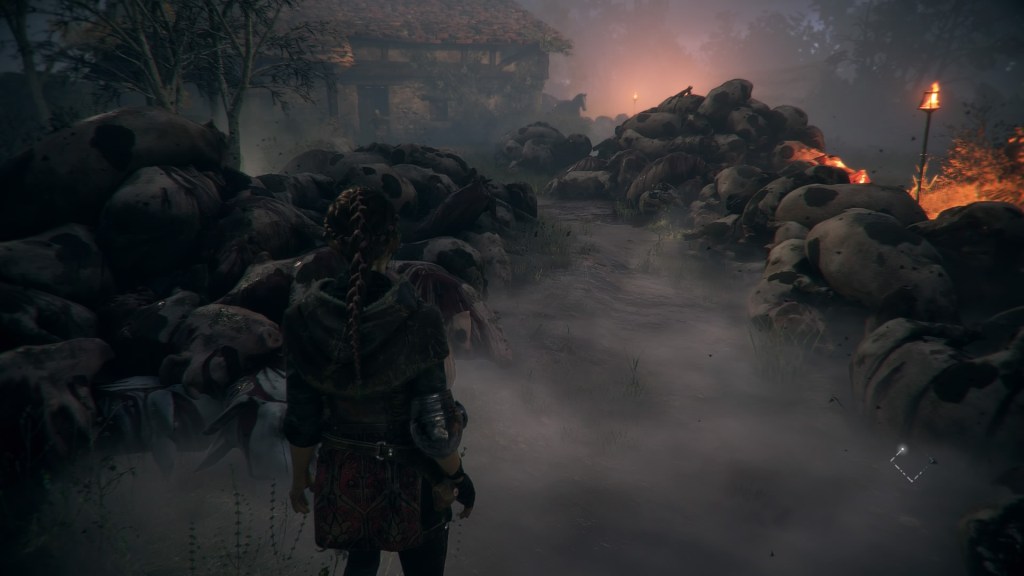
This part is interesting in no small part because it’s so different from the rest. It hardly advances the story besides indicating where Hugo ran off to, but it takes time to engage with Amicia’s feelings on the matter. We see how lost she feels without him and her self-criticism. We also get a reminder of all the crazy shit she’s been through already to protect him. I must say the editing to connect all the different scenes she walks through is well done. What fascinating things can happen when the game lets the story go on for a bit without having to do a whole ass stealth mission. This is definitely one of the strongest parts of the game for me.
After that we get to see Hugo’s point of view for once, and he just… casually escapes out of his cell through a cabinet that happens to connect to another room? Were they really not aware of that when they put Hugo in there? Seems like a massive oversight. But either way Hugo’s able to sneak his way to his mom. When he frees his mom she teaches him about his rat powers.
Because uh, as it turns out Hugo’s blood condition was a rat power disease. Evil Pope wants Hugo for his blood, such that Evil Pope could have rat powers himself. This is the reason why the Inquisition was on their ass all game, and I guess it makes sense. It makes sense within the game’s story any way. Yes, it is believable that medieval people would do all that horrible stuff for the sake of rat powers. Rat powers are a good thing to have, they make life easier. Well, they would in a vacuum any way. Alas, the slowly killing you part and the Inquisition on your ass part definitely make life a lot harder for Hugo, and rat powers is his way to turn things around a bit.

So Hugo comes back with good ole’ Nicholas to murder Amicia or whatever. Hugo’s somehow able to stay mad at Amicia that long somehow. Hugo is a true hater, befitting of the rat lord. But then Amicia talks to him and is nice so they’re friends again. But then Nicholas was still there and he killed Arthur, and then Amicia and Hugo work together to kill him. We get a boss battle that’s kind of like the Abyss Watchers but lamer. To be fair fire sword guy is a more exciting boss fight than mace guy. I liked the part where Arthur suddenly had a lot of dialogue and then died. Gotta remind us why we’re supposed to care about him before he dies y’know.
So now that the whole gang’s back together, except some of them are dead. And the surviving sister’s pissed at Hugo because of it but she’s still pissed at the Inquisition more so she helps the crew out one last time. They need to save their mom who’s still captured for reasons I didn’t bother to explain They storm the castle. There’s this annoying part where Rodric pushes a cart blocking some archers and then he fucking dies. Nobody talks about him again but rip that guy. Either way they somehow make it to the end where they fight Evil Pope and he has a white rat army. Hugo’s got a black rat army and the rat armies fight. I’m pretty sure this is not meant to be a racial thing, but I’m glad we weren’t controlling the white rats.
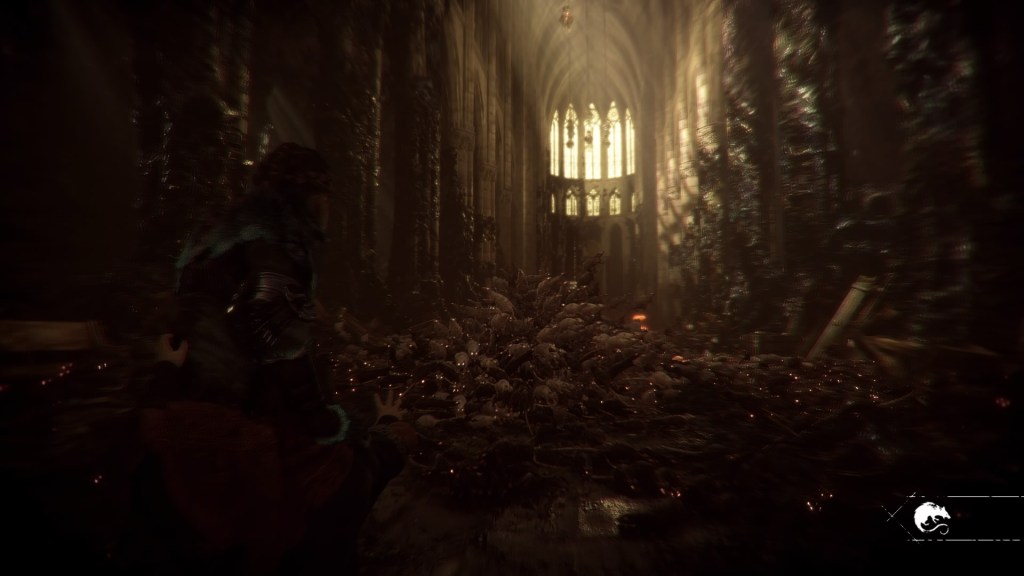
So they manage to defeat Evil Pope after throwing a rock at his head 3 times. It is not entirely clear to me why this old ass man needs that many rocks to kill him. Maybe rat powers come with additional durability, idk. Either way, with him and Nicholas dead the Inquisition is no longer a problem. At least it isn’t until the sequel any way, but who knows maybe someone else will cause problems there. Regardless, they get to reunite with their mother and ride off into tomorrow. Inspirational stuff. So remember kids, if you ever get oppressed for your rat powers, stick with the people you love and it will maybe work out somehow.
So that’s the story, they start out as rich kids losing everything and at the end they’re broke kids with rat powers and a stronger bond. Inspirational stuff. As for how I feel about this story it’s… good for the most part I guess? The overarching storyline went in a kind of strange direction, but it makes sense within the bounds of what they established. It was clear the rats weren’t operating the same way normal rats would from the start. The fantastical developments later related to said rats doesn’t feel completely random as a result. Even so, I can’t say the plot really kept me invested. When I finished a chapter I almost always put the game down afterwards. I guess I’m just not that into the rat power plot.
To be fair, the emotional core of the game is not in the rats but in the relationship of two siblings. They were almost strangers at the start, but they were able to become quite close pretty quickly. In spite of various points of tension between them they end up even closer in the end. I like that kind of story, though some of those points of tensions felt a bit forced. I do not have siblings myself, but I imagine if one did have siblings they may be able to connect more with it. Probably. I’m willing to give this game the benefit of the doubt on this front though.
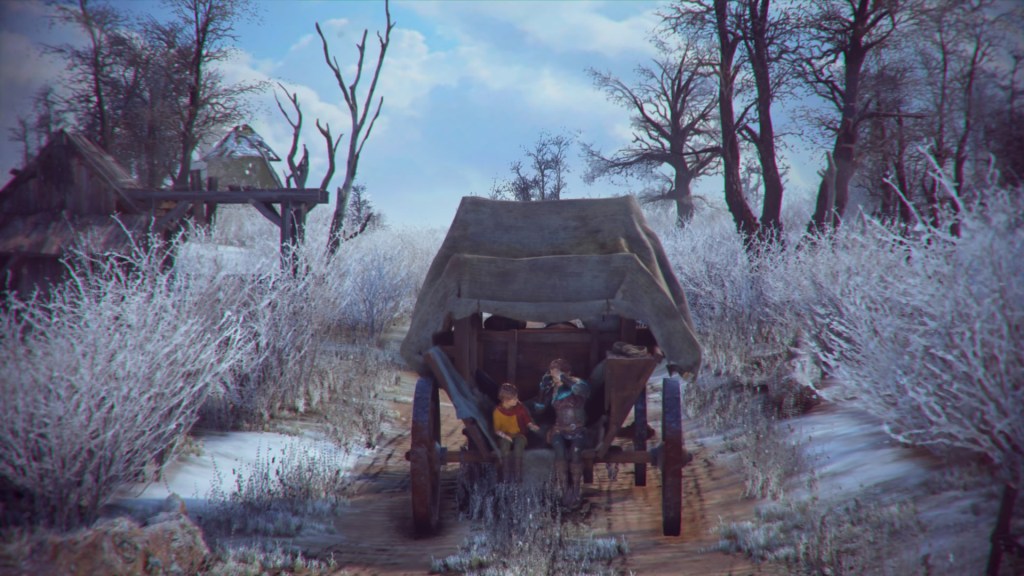
While the sibling aspect is strong, I feel the story is lacking some things. For starters, it’s called A Plague Tale: Innocence and yet the plague feels more like a backdrop than a particularly important story element. I guess if you treat the rats as representative of the plague there are PLENTY of those, but the plague itself felt almost irrelevant after the first few chapters. Which is a shame, because I think there’s plenty of interesting things that could be explored there. I guess that means I should revisit Pathologic 2 and finish it this time huh. Probably.
There’s also the Innocence part of the title to consider. This game does feature two innocent kids losing their innocence, but I don’t think the game really spends enough time dwelling on that. They’re walking over piles of corpses, killing people, and all that fun stuff that rightfully should traumatize the hell out of them. I don’t think the story really spends much time showing how that trauma affects them. It’s always onwards to the next thing, with little attention given to what they’ve lost along the way. Perhaps that’s the only way they’re able to hold it together in the first place. Even if that is the case, they don’t really effectively show it. I guess that kind of stuff doesn’t fit well into a stealth mission.
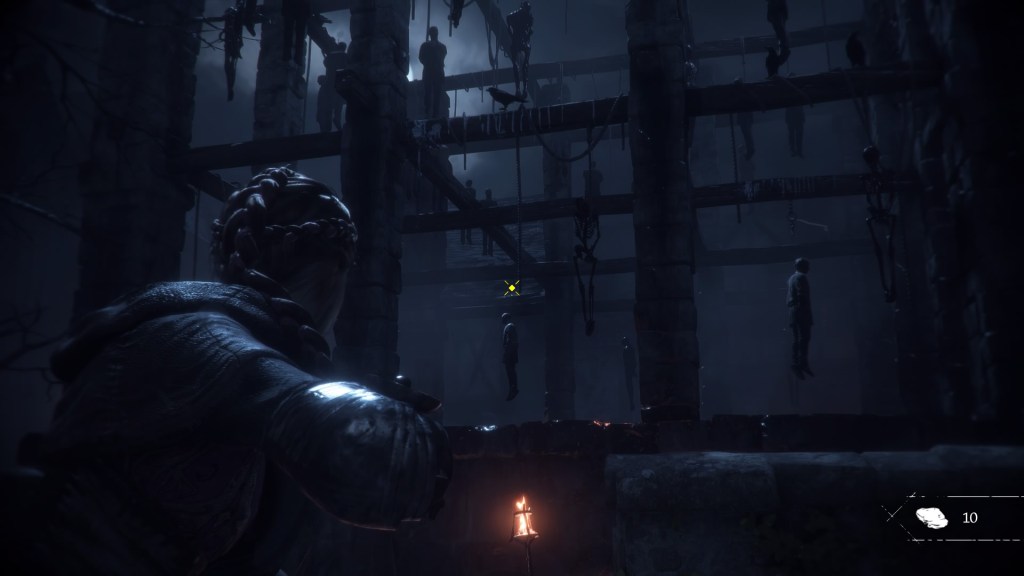
The Cast
For me to enjoy a story it helps a great deal for me to be invested in the characters moving it along. It’s hard for me to care what’s happening when I don’t care about the parties involved. This is not a universal requirement; sometimes other aspects are strong enough to make up for deficits in character. For example, I couldn’t give less of a shit that my character in Bloodborne has no discernible personality. That game isn’t about who the Hunter is, but what the hunter’s up against. I can’t say the same about Plague Tale though, because the story is very much about the siblings. So them kids better be good. The good news is they kinda are.
Amicia is a perfectly serviceable YA novel protagonist. She’s relatively normal besides her weirdly high talent for murdering people with slings and doing alchemy on the fly. She has some quirks that make her feel more like a distinct person, but she’s ultimately a normal teenage girl. That’s fine. Her emotions and actions are largely believable. She’s able to not be a terrible person in spite of a bunch of shit in life pushing her in that direction. She’s forced to make some tough decisions and doesn’t always nail them. Even so, she never feels like someone you shouldn’t be rooting for. She passes the standards of being a good protagonist but uhhh… yeah I can’t say all that much beyond that.
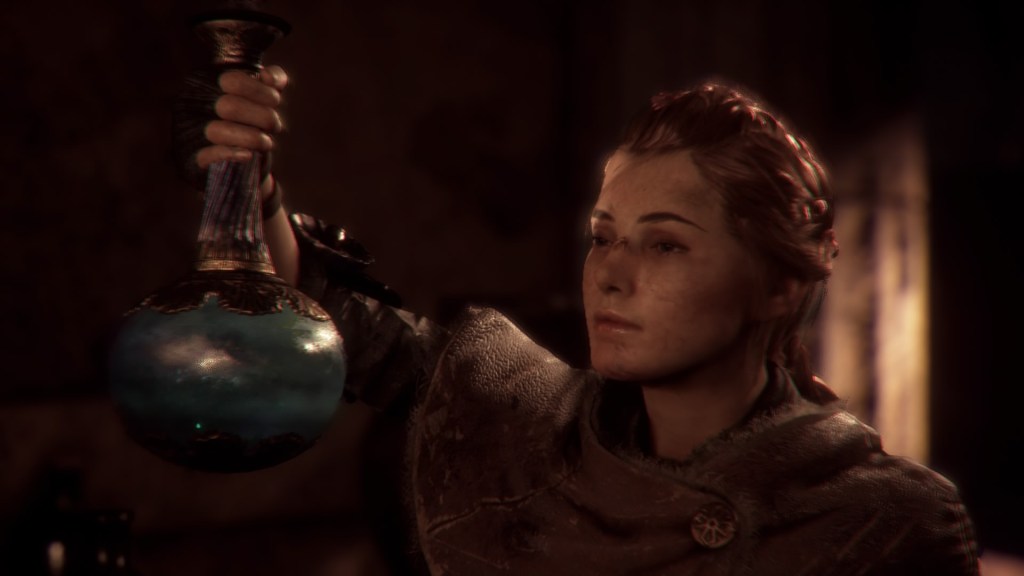
Hugo is a little kid and mostly acts like one. I feel like he should’ve trusted Amicia enough to confront her about the mom thing instead of running away immediately, but whatever. We couldn’t have a Hugo stealth sequence and rat powers otherwise. Rat powers are very important after all. He’s turning into a bit of a fucked up kid by the end, but I can’t blame him for that. The things the Inquisition has put him through would fuck up any kid. I am usually not fond of child characters, though Hugo is mostly believable and not that annoying so he’s a step above most.
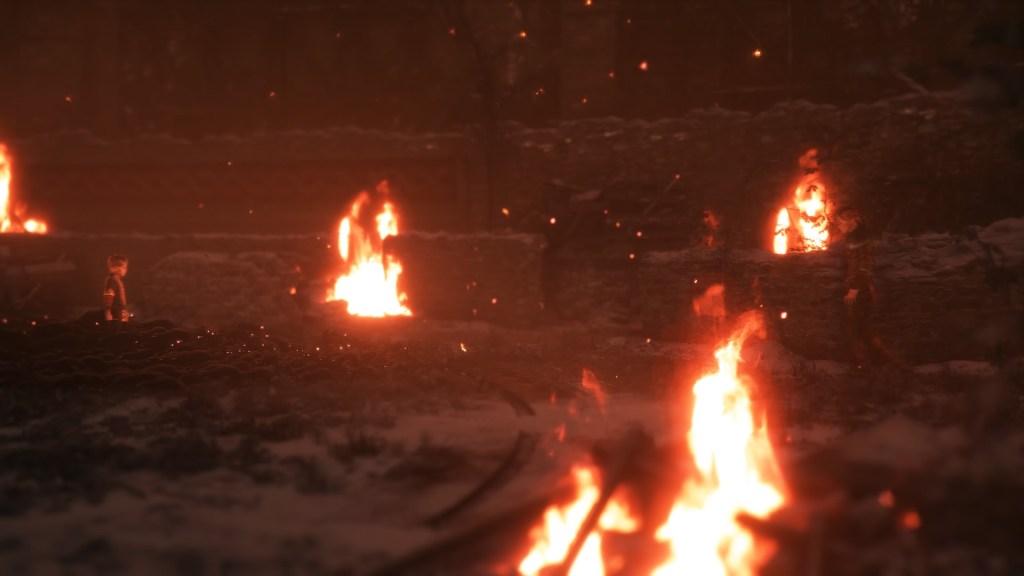
As for the rest of the cast uhhh… they exist. The ones on Amicia’s side are bros and the ones on the other side are not so nice. None of them really stand out much, but I wasn’t completely bored by their presence either. They were perfectly decent overall. So now I’ll briefly give my takes on each of them. Rodric got a raw deal and the sequence where he died was annoying as hell to play through. But to be fair he doesn’t really do much but knock people out any way. Knocking people out is pretty helpful though.
Beatrice serves her narrative purpose well enough while also being cool and smart so that’s nice I guess. Lucas is a nerdy kid that’s pretty helpful so that’s also cool I suppose. Mélie is also a person that exists that had some good dialogue sometimes. Her brother was kinda cool when he finally got some substantial dialogue. Then he died soon afterwards so uh, rip him. I appreciate how the side characters are pretty good at not getting themselves killed until a cutscene happens. Yeah that’s about it. As for the best girl question, it’s Amicia by default so good job Amicia for being an occasionally engaging protagonist.
The Assorted Other Stuff I Want to Touch On
One thing this game does legitimately well is how the environments are designed aesthetically. The game goes for a realistic style which is not my favorite for video games. However, it has a great sense of color. The colors are striking without being unbelievable. Each area feels distinct in both form and color. This is the part of the game that I can unequivocally approve of.

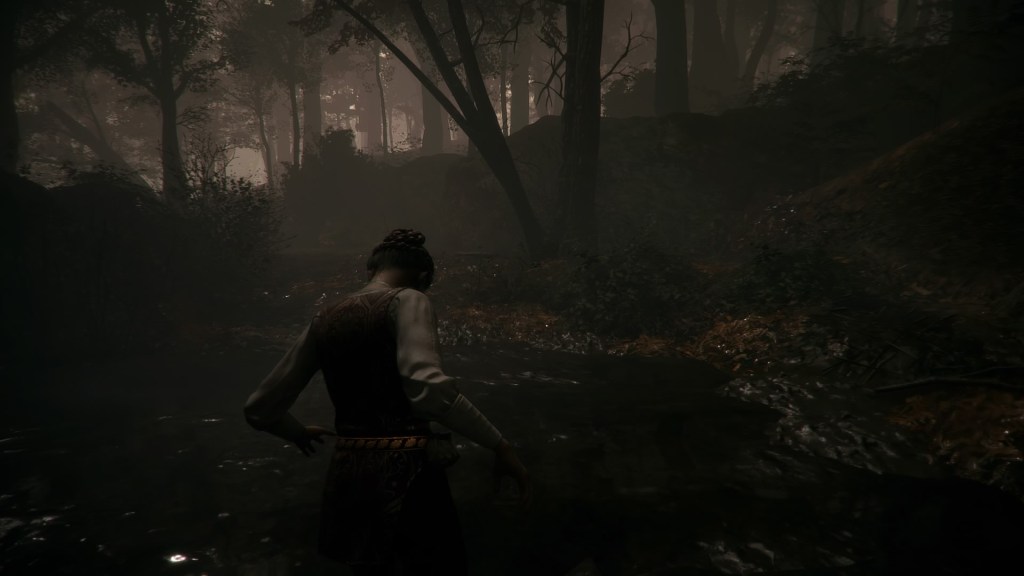
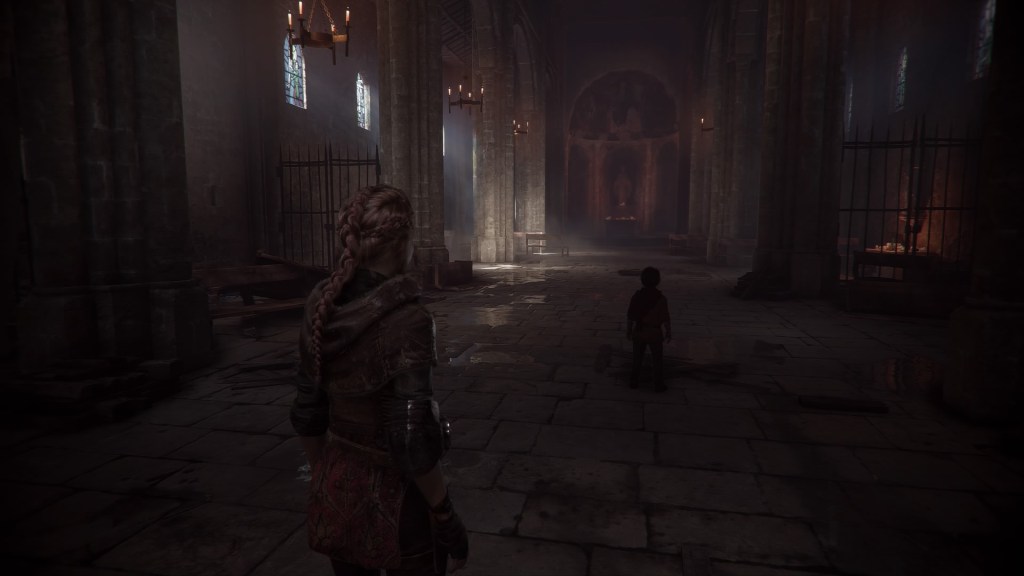
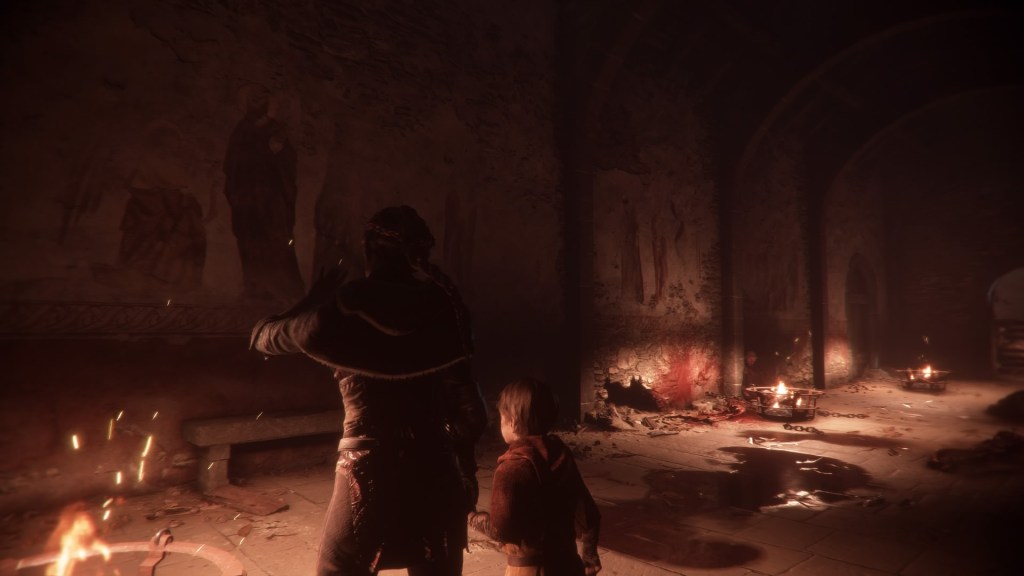
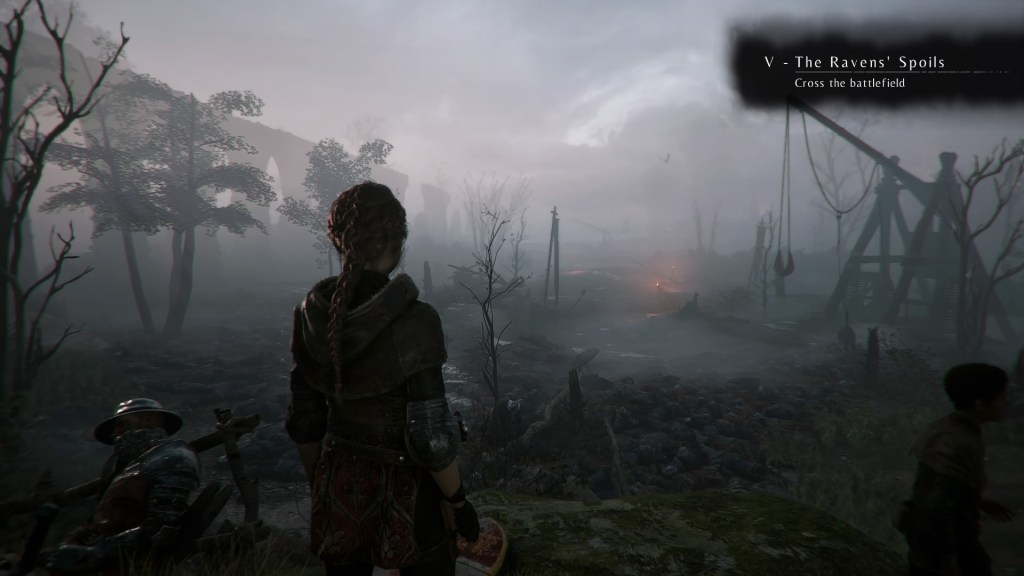
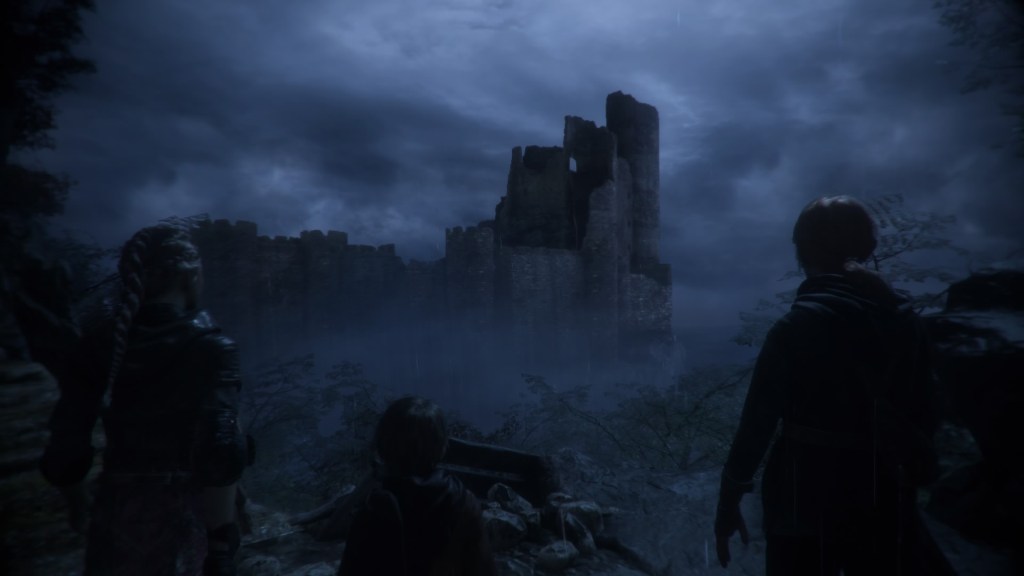
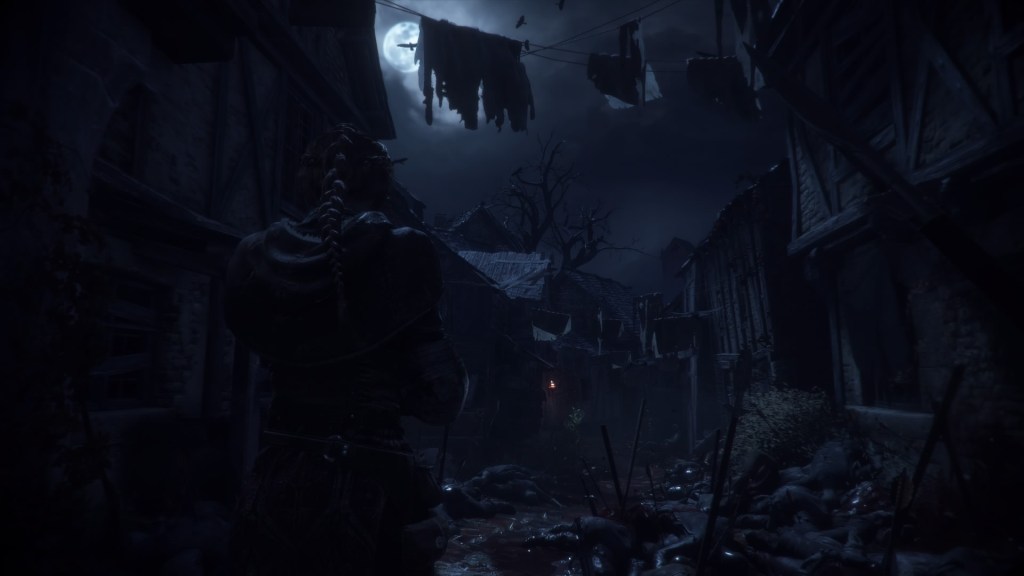
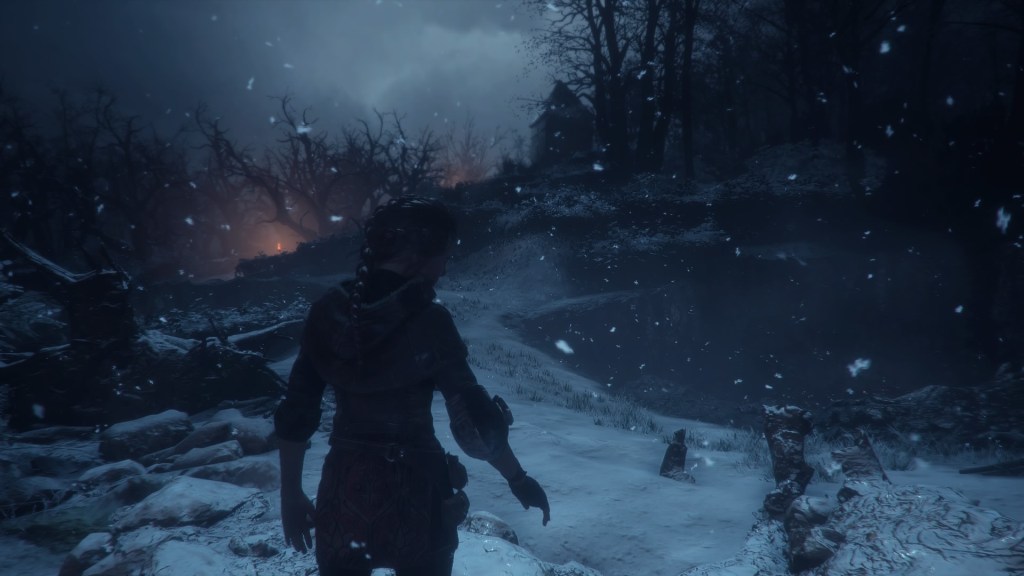

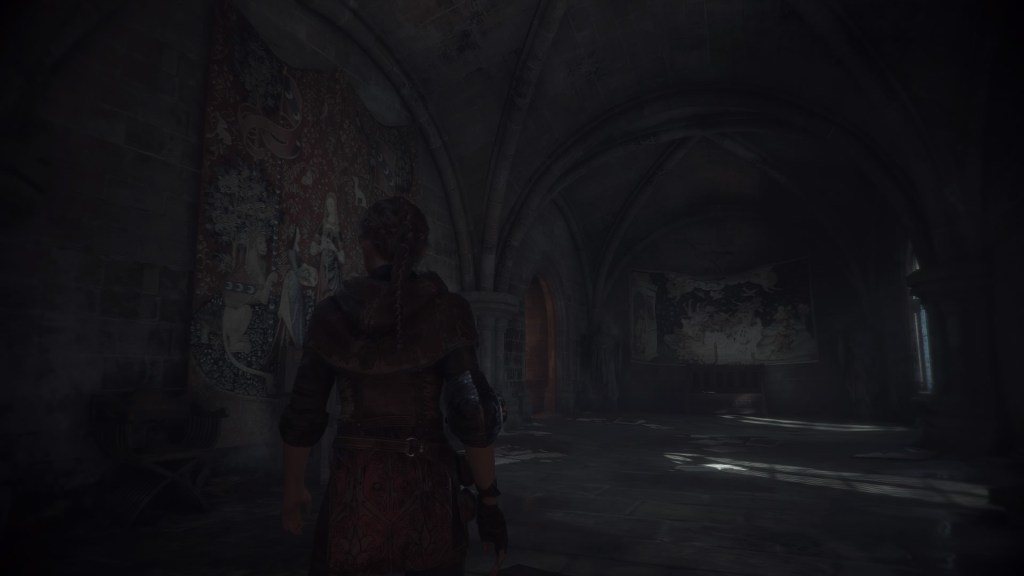
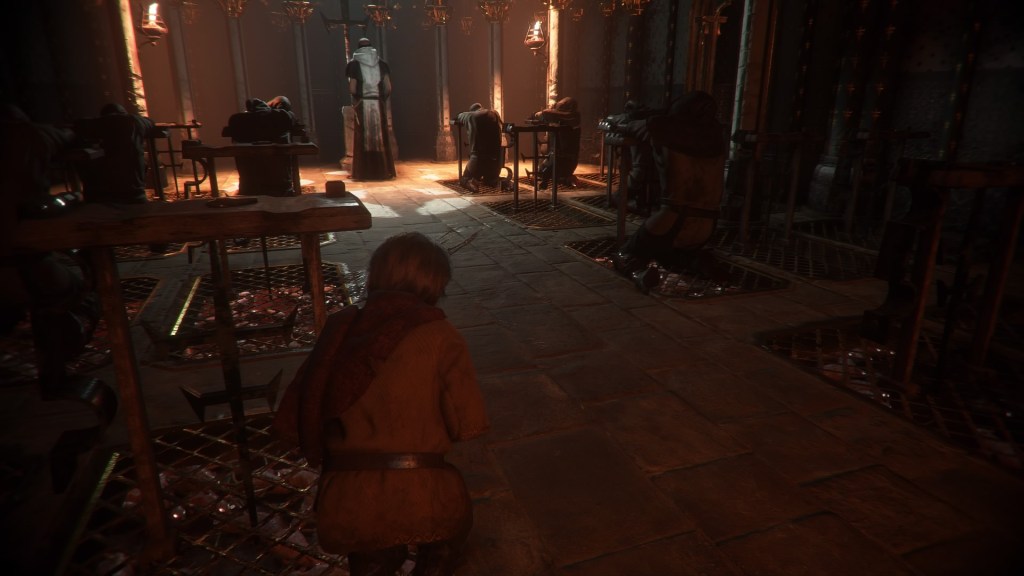

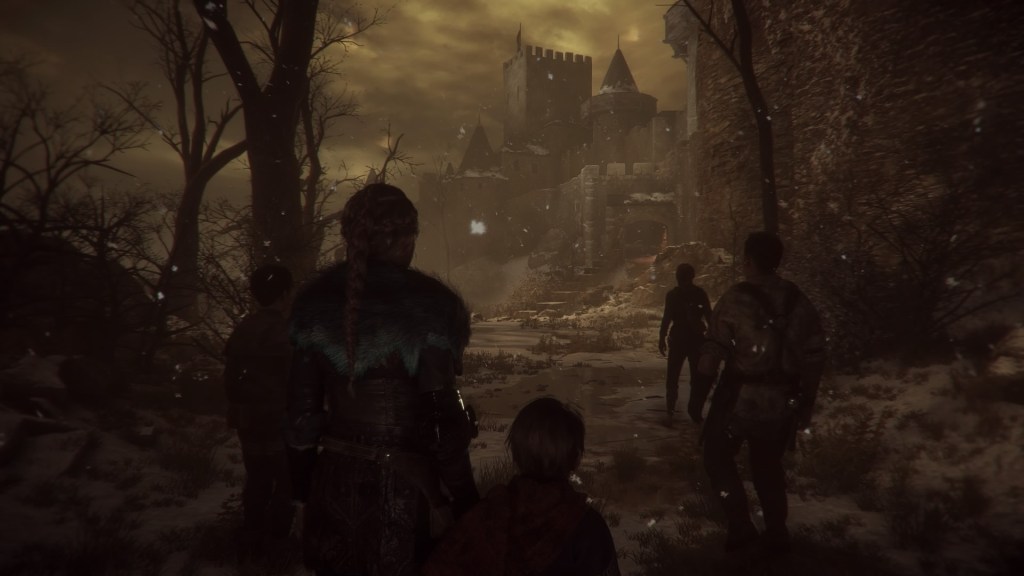
The environments have good atmosphere and good visual storytelling. A lot of what you can learn about the world these kids are in can be found by just thinking about what you’re walking by. That’s a great thing.
The voice acting in the game was kind of stilted at times, the delivery really could have been better in plenty of places. To be fair, some of the blame goes towards the unnatural sounding lines themselves. They sometimes felt unnatural, blatantly only said for gameplay or narrative reasons. It was mostly fine though. Some of them had decent French accents and most of them didn’t try at all to have one. The voice acting was also generally better during important scenes. Amicia’s voice actress Charlotte McBurney was prob the best performance. At least they got the MC right.
The music was good and fits the setting. Traditional instrumentation with modern composing, production, etc. can go a long way. Even so, there’s not much I’d want to go back to and listen to just as regular songs. And… I think that’s about it.
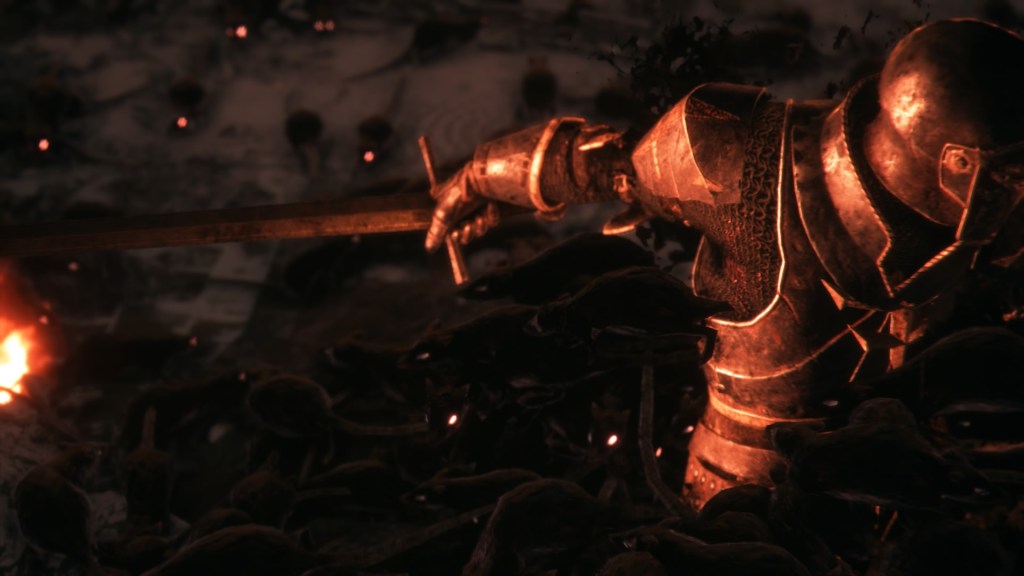
Oh wait, never mind. There’s one more thing I neglected to mention. The Game Trade has a time honored tradition of acknowledging the rodent quota whenever appropriate. Its origins are a dumb inside joke that I don’t feel like explaining. What you do need to know is that games with mice, rats, or other rodents are given a premium for containing them. Plague Tale has plenty of rats to go around. We’ve got seas of rats, rat towers, ratnados, rat powers, and rat wars. Clearly if any game has a sufficient amount for the rodent quota it would be this one. On this metric the game passes with flying colors.
The Gameplay
It’s finally time for the gameplay section of the game. This is usually the most important part for a video game but maybe it isn’t in this case. Plague Tale is one of those movie games where everything moves along in a heavily guided way. You can vary the path Amicia takes to get past the guards, but that’s all. Your only impact on the story is making sure she survives to get to the next step. If you don’t play things won’t move forwards for them, but the path is clearly laid out. I don’t think there’s anything inherently wrong with this approach. I love Danganronpa and the gameplay plays a similar role there. I can accept the gameplay not having much to it when the focus is experiencing a story. Still, I would hope that the gameplay adds to the experience, and that it’s not so bad that it’s distracting. Now let’s see how Plague Tale’s gameplay holds up with this in mind.
Much of the gameplay is built around Amicia’s use of the sling, which I suppose is a pretty clever and believable weapon to build a game around. It’s kinda fun using it to knock out people’s lanterns from afar and watching them get eaten by rats. It’s not so fun when you have to use it to knock out a horde of men coming at you in a line. To be fair, I don’t think this task would be easy to accomplish irl either, but it’s annoying as hell to play through. The way the sling locks on semi-reliably is good though. I think this sling, along with many other gameplay elements would be incredibly frustrating if they were implemented in a clunkier manner. I give my props to the developers for designing it about as well as sling heavy gameplay feasibly could be. I guess I’m just not that into sling gameplay.
Rocks aren’t the only thing you can throw though, and this is where the gameplay gets a bit more interesting. Amicia can craft a bunch of alchemy shit on the fly, including a fire thing, a fire extinguishing thing, a smelly thing, and a permanent sleep thing. This growing list of tools gives Amicia more options to deal with her problems. Early in the game there is usually a very specific solution to each problem. Once you got more tools under your belt and more complex environments things become less streamlined. Even so, there’s a limit to how useful most of the tools are.
Most of the alchemy tools in Amicia’s arsenal have specific niche use cases. If you are in a situation where they do not apply they might as well be useless. For instance there’s a chemical that melts people’s helmets off. It’s very useful for a situation where a dude has a helmet you want to melt off. If there’s no dudes with a helmet to melt off it is pretty much useless. Admittedly, some of the other options aren’t quite as limited. The fire stuff has a bit more flexibility to it for instance. Even so, there’s a clear limit to how creative you can get with these tools. It is usually pretty obvious what you’re supposed to use in a given situation. When it’s not obvious, that usually means there’s a few viable options you can mix and match. Ultimately the alchemy system is solid but I find myself wishing there was more depth to it.
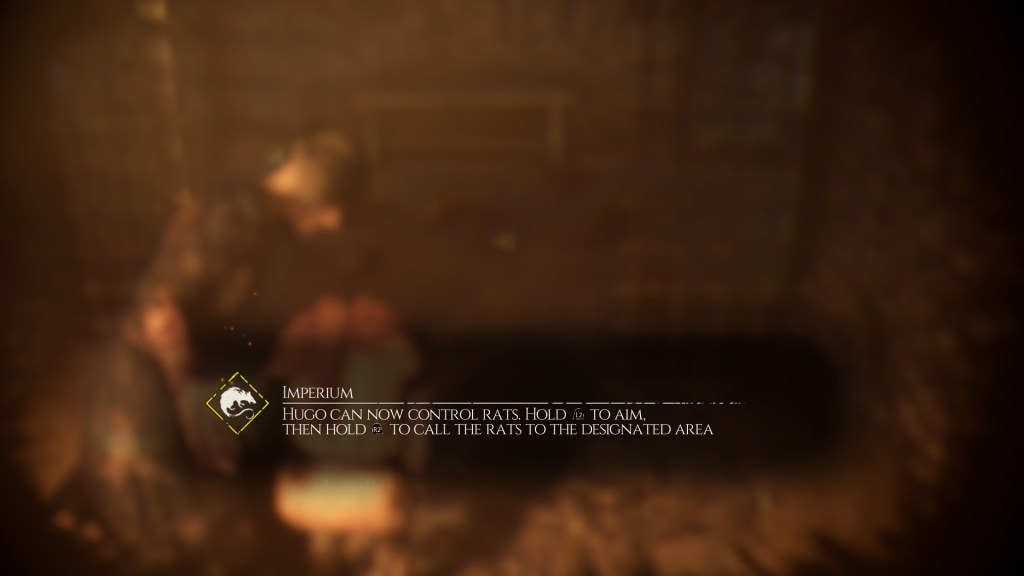
The upgrade system is… also fine. I imagine you could play through the whole game without upgrading at all without too much issue. But a lot of them do make things a little easier, as Amicia says. The differences are often subtle enough that I hardly notice them. I guess it’s hard to notice a stealth upgrade being more effective when I don’t know what situations it actually made the difference in. Was there a situation where my upgrades helped me avoid detection when I would have gotten caught otherwise? Probably, but I wouldn’t know.
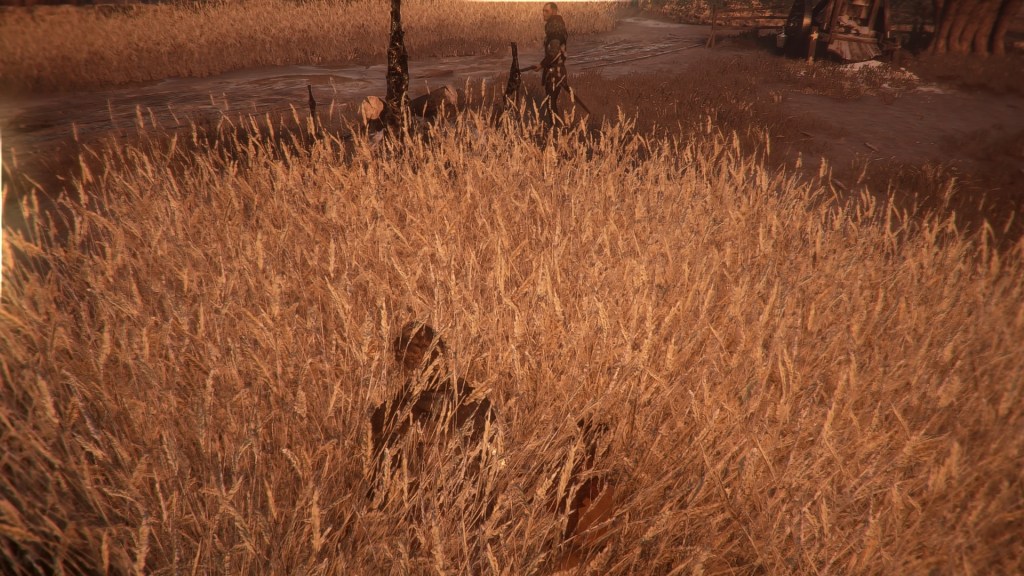
That brings me to the stealth mission side of the game. Sometimes instead of throwing rocks at people’s heads it’s much more prudent to just sneak right by them. I have played my fair share of games with mediocre to goodish stealth segments. I am glad this game turned out to have more depth to its system than Genshin Impact. Still, it certainly didn’t feel like anything special. Your options for stealth include sneaking by at the right time, hiding in foliage, throwing a pot for distraction that was conveniently left lying around when you need it, and throwing rocks at metal things. It’s not especially complicated or interesting, but it works. It’d better than having to kill all these dudes with a sling when they all one shot you.
This game also features enemies you can neither kill with a rock nor sneak by. The rats are so numerous you need a different set of measures entirely. Like fire and weird spotlight things other people set up that Amicia can make use of. They operate by a completely different set of rules from the Inquisition folks. They’re more like environmental hazards you can use light and fire to play around. So it suddenly turns into more of a puzzle game than stealth when they show up. Sometimes I wonder what would happen to these kids if they just ran into a room with rats where there wasn’t any light source or material to make use of. What if there wasn’t a corpse hanging around? What if that torch wasn’t there? A lot of stuff feels awfully convenient, but I suppose the game would be impossible/more frustrating if they weren’t there. Such are the tradeoffs between immersion and enjoyable gameplay.
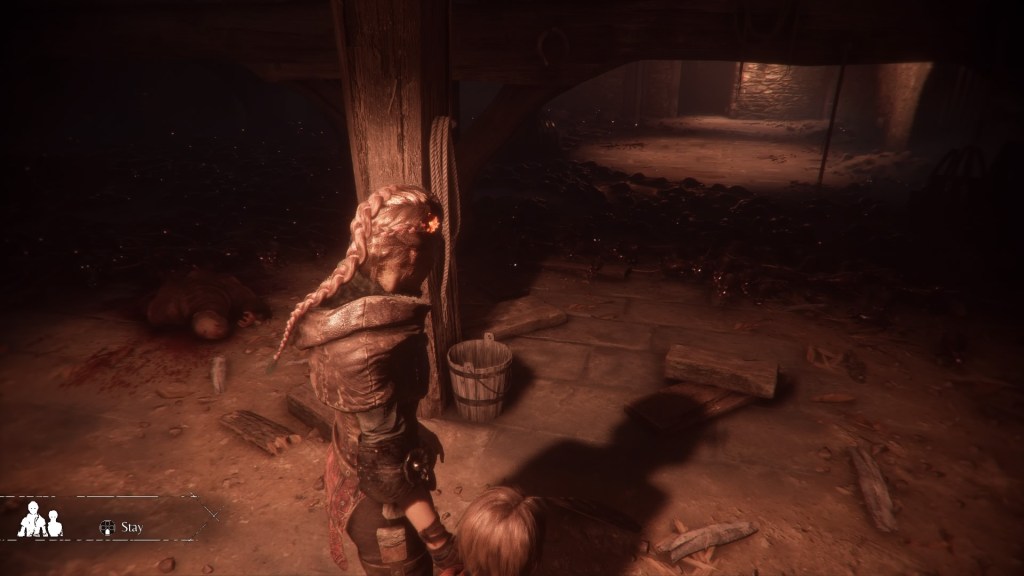
Sometimes both rats and soldiers are around at the same time. This can lead to some interesting plays because the rats will totally kill the soldiers if given the chance as well. And then towards the end you can make the rats move at your will, which is quite fun and also has little in the way of downsides. The only reason you can’t use rats to handle literally every problem is that there’s a limited supply of rats. If a group of rats swarms one dude they’ll stick to him for the whole time. This mechanic was very convenient when the rats weren’t on our side, and it adds a point of balance when they are on our side. Even so, it’s quite strong and fun to use. It makes sense to lock such abilities to the end. I wonder how they handle rat powers in the sequel game… I also wonder if I’ll ever bother playing it.
Next I’d like to give a special shout out to the AI of Hugo, Lucas, Rodric, and Mélie for being pretty good at not getting themselves killed. As AI they follow instructions but otherwise stick close by you. It would be very frustrating if these AI allies were programmed clumsily in a manner where they occasionally acted suicidal. Like, losing because of something completely outside of your control is stupid as hell. And that’s a real risk if your AI ally causes a game over when they die as well. That only happened to me a few times though, and when it did happen it was honestly mostly my fault. Also I like how Rodric’s special ability is literally just knocking them the fook out m8. It’s fun. Who’s getting one shot now m8?
That brings me to the final gameplay matter I’d like to discuss, the difficulty. This is a game where one slip up will often lead to your death. If the soldiers catch you, they kill you. If you get shot by an arrow you die to death. If the rats get you, they get you. And if your allies die in-game before their cutscene comes around you take an L immediately. With such unforgiving mechanics one would think this game would be pretty tough. Like shit, even games like Dark Souls let you survive a hit or two before you bite it. However, in Plague Tale you’re playing as a somewhat fit teenager, not a weird zombie thing. Regular teenagers do tend to die when they get bashed in the head and then sliced with a sword. They also tend to die pretty quickly when they get swarmed by bloodthirsty rats Re:Zero style. Does that actually happen irl though? Point is, the instant death mechanic is not unreasonable.

As it happens, the mere presence of instant death for mistakes does not automatically lead to great difficulty. It means the cost for screwing up is great. But how likely is it that you screw up in the first place? If you stay in the light the rats won’t ever get you. If you stay hidden the soldiers won’t find you. And even if you don’t stay hidden they’ll slowly fill up their alertness gauge giving you time to correct your mistake. Well, it fills up quicker if you show up right in front of them, but common sense prevents that from happening usually. Also if you fuck up you’re almost always reset right in the section you screwed up on, letting you retry easily. The cost of dying is lost time and feeling kind of bad watching Amicia get killed. Compared to certain other games that’s not too big of a deal honestly. I didn’t clear everything on my first try, but trial and error got me through most of it fairly quickly… besides that damn cart segment any way.
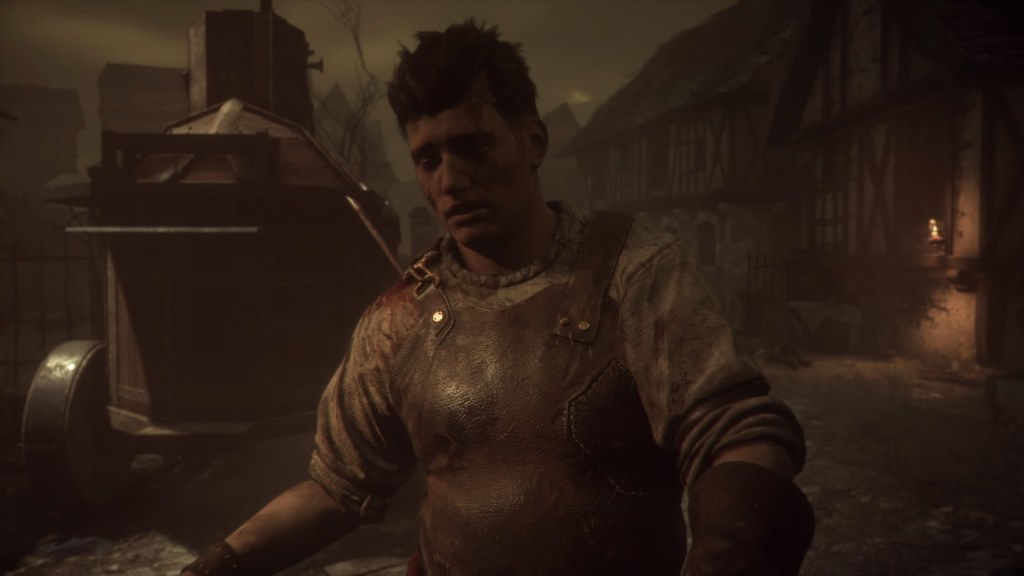
I think that about covers it gameplay wise. Is the gameplay especially unique or interesting? Rarely. Is it fun? Sometimes. Is it challenging? Occasionally. So overall the gameplay’s thoroughly alright. One thing I will give it credit for is being decently polished. It is easy to imagine the ways in which it could have been a significantly more frustrating experience. But it’s well made enough that such problems do not arise much. That polish can disappear when you try to solve problems in a way the game doesn’t anticipate though.
The Verdict
Plague Tale is a stealth game, a puzzle game, a heartbreaking story of children getting caught up in bullshit they’re not responsible for, and more. Nothing else does this particular combination of things quite as well, but that’s mostly because nothing else does that in the first place… to my knowledge. It is a unique game overall though many of the individual elements are rather standard. I can see why people would love this game, but there’s a limit to its appeal for me. I wasn’t fully onboard with the story, and the gameplay’s not good enough to make up for that. Maybe the sequel’s better, maybe not. Either way as far as A Plague Tale: Innocence goes I’m feeling about a 6.5/10.
Tune in next time for when I talk about something else entirely. Or maybe it won’t be me talking at all. We’ll see~
 Cosmia
One response to “A Plague Tale: Innocence Game Trade Review”
[…] trade where we judge the game based on the presence or absence of rodents. Last time I played a game with an abundance of rodents. Unfortunately, I cannot say the same this time. Pikmin’s enemies do not strictly follow the […]
LikeLike